
Your crisis manual is a lie. It’s a cold, plastic binder that can’t hold the weight of a grieving parent’s stare or the hollow silence of a broken hallway. You’re carrying the safety of an entire community on your shoulders, and it feels like one wrong word could bring the whole thing crashing down. With 233 K-12 school shootings recorded in 2025, the stakes aren’t just high; they’re everything. You’re tired of clinical manuals that feel detached from the raw reality of student trauma. You want to know how to handle a crisis at school without losing your soul or your professional authority in the process.
I’ve been in the trenches, and I’m here to tell you that radical transparency is your only way out. While the Department of Education has reserved 10 million dollars for Project SERV grant funding in 2026 to help schools recover, money alone won’t heal your culture. You can lead with heart and still maintain total control. This guide provides the immediate, actionable steps you need to navigate the aftermath of a crisis with clarity. We’ll explore a step-by-step action plan that prioritizes human connection over a corporate script. It’s time to stop just surviving the chaos and start leading your campus toward a real, lasting recovery.
Key Takeaways
- Master the “Golden Hour” of crisis management to stabilize your campus and set the tone for a resilient recovery.
- Learn how to handle a crisis at school by leading with radical transparency and ditching the detached, clinical language of standard manuals.
- Develop a communication strategy that balances hard facts with emotional heart to keep your community informed and supported.
- Implement postvention strategies that identify high-risk students and prevent the “contagion effect” from spreading through your halls.
- Identify the right moment to bring in expert youth motivational speakers to provide the long-term support your staff and students need.
Immediate Action: The First 24 Hours of a School Crisis
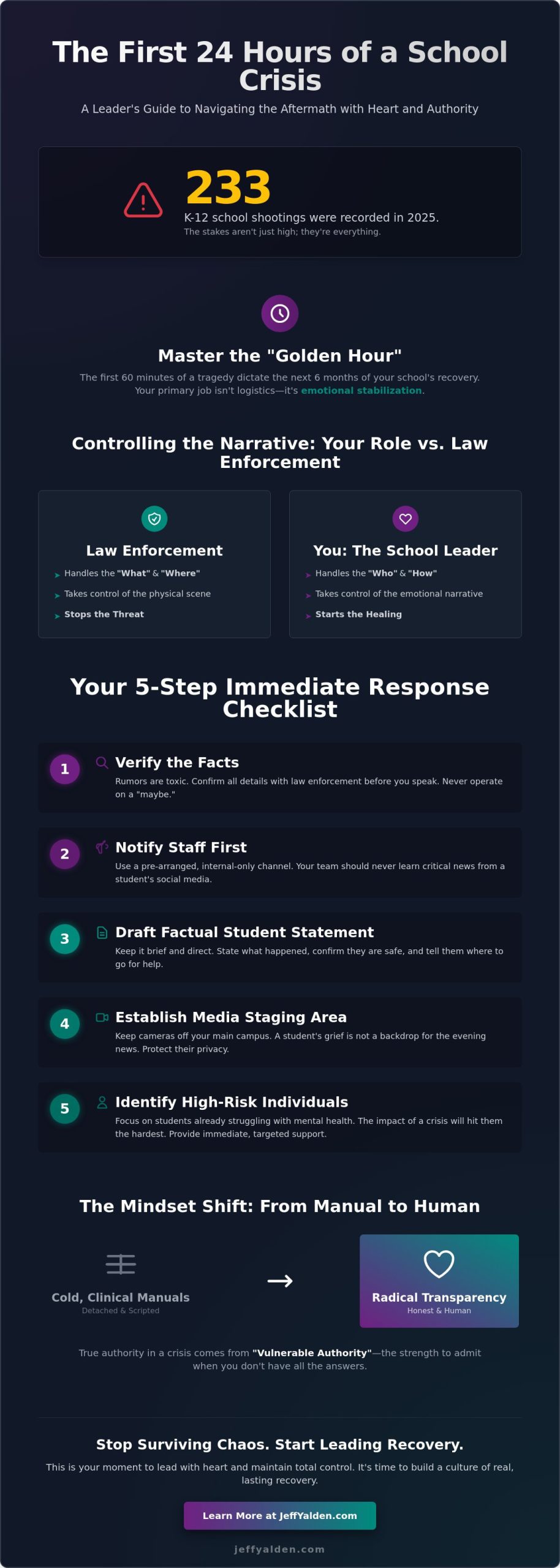
The sirens are fading, but the silence that follows is even louder. You’re standing in the center of a storm, and every eye on campus is fixed on you. This is the “Golden Hour.” In the world of crisis management principles, the first sixty minutes of a tragedy dictate the next six months of your school’s recovery. With 233 K-12 school shootings recorded in 2025, the reality of this moment is heavy. If you’ve been wondering how to handle a crisis at school, understand this: your primary job isn’t just logistics. It’s emotional stabilization. You have to move fast, but you have to move with heart.
Your Crisis Response Team (CRT) needs to be activated with a whisper, not a scream. Panic is a contagion, and as a leader, you are the vaccine. While law enforcement takes control of the physical scene, your job is to take control of the narrative. They handle the “what” and the “where.” You handle the “who” and the “how.” They stop the threat; you start the healing. Don’t let the technicalities of a police investigation strip away your humanity. Stay present. Stay visible. Your authority comes from your presence, not just your title.
Securing the Emotional Perimeter
Before you address the whole school, you have to find the “inner circle.” These are the students who saw it happen, the best friends, and the teachers who were in the room. They are the most vulnerable. Move them to a “safe room” immediately. Avoid high-traffic areas like the cafeteria. Choose a space that feels grounded, like the library or a theater, and ensure it’s staffed by people who can stay calm while others are falling apart. Psychological First Aid is a compassionate, evidence-based approach used to provide immediate support to students and staff by meeting their basic needs and reducing their initial distress after a traumatic event.
The 5-Step Response Checklist
- Verify the facts. Rumors are toxic. Never speak on a “maybe.” Confirm the details with law enforcement before you open your mouth.
- Notify staff first. Use a pre-arranged, internal-only channel like a private messaging app or a quick huddle. They shouldn’t find out the news from a student’s social media post.
- Draft a factual student statement. Keep it brief. Tell them what happened, tell them they are safe, and tell them where to go for help.
- Establish a media staging area. Keep cameras off your main campus. Your students’ grief is not a backdrop for the evening news.
- Identify high-risk individuals. Look for those who are already struggling with mental health issues; they will feel this impact the hardest.
Leading with Radical Transparency: The Mindset Shift
Clinical manuals are safe. They provide a checklist. They offer a script. But they lack a pulse. When a real tragedy hits your hallways, that cold binder in your desk drawer won’t help you look a grieving student in the eye. If you’re searching for how to handle a crisis at school, you have to start by throwing away the mask of the “perfect leader.” People don’t need a robot in a suit right now. They need a human being who is brave enough to be real. This is the shift from damage control to a healing mindset. It’s about moving toward the pain instead of trying to manage it away.
You might feel the urge to have every answer immediately. Resist it. True authority in a crisis comes from what I call “Vulnerable Authority.” It’s the strength to stand before your community and admit when you don’t have the facts yet. This guide to navigating institutional crises emphasizes that honesty builds more trust than a polished, empty promise ever could. When you’re transparent about the “I don’t know” moments, you create a culture where others feel safe to be uncertain too. You aren’t losing control; you’re gaining credibility.
Breaking the Silence with Honesty
The biggest mistake a principal can make is trying to force “business as usual” twenty four hours after a tragedy. It’s a lie, and your students know it. When 40% of high school students are already battling persistent feelings of sadness or hopelessness, ignoring a crisis only deepens their isolation. You have to name the elephant in the room. Whether it’s suicide, community violence, or a sudden loss, speak the truth. Normalizing the struggle starts at the top. If you’re okay with being “not okay” in front of your staff, you give them the oxygen they need to breathe again.
Supporting the Supporters
While you focus on the students, don’t forget that your teachers are drowning in the same sea. They are the front line. They’re holding the hands of crying teenagers while their own hearts are breaking. Your staff needs a separate, dedicated space to process their trauma without the pressure of being “on” for the kids. Integrating teacher self-care professional development into your long term recovery plan isn’t a luxury. It’s a necessity for survival. If you want to see your campus thrive again, you must invest in the emotional health of the adults in the building. A youth motivational speaker can often bridge the gap between pain and hope, but the healing starts with the culture you build today.
Communication Strategies: What to Say When Words Fail
Words are the only thing holding the ceiling up right now. If they’re empty, everything collapses. Learning how to handle a crisis at school means realizing that your script matters less than your soul. People can smell a corporate PR statement from a mile away. It’s cold. It’s clinical. It’s a lie. You need to speak from the heart, but you need the facts to back it up. Every announcement should follow a simple rhythm: facts, feelings, and future steps. Tell them what’s real. Acknowledge the pain. Point toward the next move. This isn’t about looking perfect; it’s about being present.
Never say “no comment.” It’s a magnet for conspiracy theories and it fuels the rumor mill on social media. If you don’t have the answer, say so. “We’re working with authorities and will update you at 4:00 PM” is a promise. Silence is a threat. Use your social media channels to push out micro-updates that stabilize the energy. Don’t let a “rumor engine” define the narrative of your school. You are the source of truth. Your delivery matters as much as your content. If you’re reading from a teleprompter with no emotion, you’ve already lost the room.
Addressing the Student Body
Timing is everything. Don’t rush into a massive gathering if the energy is still volatile. This is the “Assembly Trap.” Sometimes, the safest place for a student is in a small classroom with a trusted teacher. However, once the initial shock passes, high school assemblies become the ultimate tool for a cultural reset. You need that collective moment to look them in the eye and say, “We’re still here.” Use phrases like “We’re walking through this together” to build resilience. Avoid “Everything is back to normal,” because it isn’t. Normal is gone. You’re building a new reality.
Navigating Parent and Community Anxiety
Parents aren’t just looking for info; they’re looking for peace. With 2024 reports showing that 20% of students aged 12 to 18 reported being bullied, parent anxiety is already at a boiling point. They’re terrified for their kids. Set up a dedicated information hub immediately so they aren’t clogging your emergency lines. Consider a “Parent Seminar” approach. Bring them in, not just to talk about the crisis, but to educate them on how to support their kids at home. You have to balance FERPA privacy laws with the community’s desperate need to know. Be as open as the law allows. Radical transparency doesn’t mean breaking the law; it means being honest about why you can’t share certain details.
Postvention as Prevention: Navigating the Aftermath
The sirens have stopped. The news cameras have packed up and moved on. You think the worst is over. It isn’t. In fact, this is where the real danger begins. Postvention is the work you do after a tragedy to ensure it never happens again. If you’re still wondering how to handle a crisis at school, you have to look at the “contagion effect.” Trauma isn’t static. It moves. It spreads. Without a clear plan, one student’s struggle can trigger a wave of copycat behaviors across your campus. You need to be a “vulnerable authority” now more than ever.
Bringing in a postvention speaker for schools is a move of strength, not weakness. It provides your community with an outside voice that can say the things you can’t. It’s about breaking the silence before it becomes deadly. With about 14% of teenagers globally facing mental health disorders as of 2026, the margin for error is zero. You have to balance the need for structure with the reality of grief. Routine is a safety net, but flexibility is the heart that keeps it from breaking.
The Postvention Checklist
Recovery doesn’t happen in a weekend. It’s a marathon. You need a system that tracks the energy of your building over months, not just days. Start by monitoring the digital hallways. Watch social media for memorialization that turns into glorification. There’s a fine line between honoring a life and making a tragedy look attractive to a struggling peer. You also need to loosen the academic grip. You can’t expect a student to care about a geometry final when their world just ended. Adjust expectations during the acute phase and schedule “long-tail” check-ins at the 30, 60, and 90 day marks. That’s when the initial support fades and the reality of the loss truly sinks in.
Building Resilience in the Wake of Trauma
Tragedy can be a catalyst. It’s a brutal way to learn, but it’s an opportunity to rebuild your school’s DNA. This is where you focus on building resilience in teens through intentional character education. Your student leaders are your greatest asset here. They have the pulse of the campus in a way you never will. Empower them to lead the healing. If you’re ready to transform your culture from the ground up and turn this pain into purpose, consider bringing in a teen motivational speaker to help your students find their footing again.
Long-Term Support: Bringing in Expert Intervention
You’ve done the heavy lifting. You’ve secured the perimeter and spoken the truth. But now, the adrenaline is wearing off and the exhaustion is setting in. Recognizing when your local resources are overwhelmed isn’t a sign of failure. It’s a sign of wisdom. You can’t be everything to everyone. Your counselors are doing incredible work, but they are often too close to the trauma. They’re grieving too. They’re living in the same community and feeling the same shock. This is where you need to look outside your walls. Understanding how to handle a crisis at school requires knowing when to step back and let an expert intervention team carry the emotional load for a while.
There’s a massive difference between clinical counseling and motivational crisis intervention. Clinical work is the slow, deep healing that happens in a therapist’s office. That’s vital, but it’s not enough to heal a whole campus. You need a catalyst. You need someone who can walk into a room of five hundred hurting kids and break the tension with radical transparency. Jeff Yalden doesn’t just offer a speech; he offers a lifeline. He helps schools move from surviving to thriving by speaking the language of the students. He’s been there. He’s lived it. And he’s ready to help your community find its voice again. This isn’t about a quick fix; it’s about a permanent shift in how your school handles the weight of the world.
The Value of an External Voice
It’s a strange psychological truth: students often listen to a stranger more than they listen to the adults they see every day. Familiarity can sometimes breed a filtered response. When a teen mental health speaker walks onto that stage, the filter drops. They see a vulnerable authority who isn’t there to grade them or discipline them. They see a mirror. Booking an expert isn’t just a one-day event. It’s a way to sustain the conversation long after the assembly ends. It’s about the Radical Transparency workshops that empower both staff and students to own their stories and support each other.
Your Next Steps Toward Healing
Healing is a choice you make every single day. Once the dust settles, conduct a Post-Action Review. Be brutal. Be honest. What worked? What failed? Use those insights to invest in preventative mental health education for the next school year. Don’t wait for the next tragedy to bring in school assemblies or a youth motivational speaker. Make mental health a permanent fixture on your annual calendar. With 14% of teenagers globally facing a mental health disorder in 2026, the need for proactive support is urgent. Pairing your crisis response with robust teen suicide prevention programs ensures you’re not just reacting to tragedy but actively protecting your students before the next crisis arrives. You have the power to change the trajectory of your school. Don’t lead alone. Reach out. Let’s start the healing together.
Lead Your Campus From Pain to Purpose
The binder on your desk won’t save your school. Your heart will. We’ve covered the critical nature of the “Golden Hour” and why radical transparency beats a clinical script every single time. You now have the roadmap for postvention that actually saves lives. But remember, knowing how to handle a crisis at school is only the first step. The real work happens in the long tail of recovery. It’s about choosing to lead with your scars instead of your title. It’s about refusing to let silence win.
You don’t have to carry this burden by yourself. Jeff Yalden brings over 30 years of experience in school crisis intervention to your hallways. As a specialist in teen suicide postvention and the author of “Teen Suicide: The ‘Vulnerable’ Truth”, he knows exactly how to bridge the gap between trauma and hope. Don’t wait for the next wave of anxiety to hit. Book Jeff Yalden for Immediate Crisis Support or Postvention Speaking and give your students the external voice they need to heal. Your campus can thrive again. Stay strong. Stay real. You’ve got this.
Frequently Asked Questions
What is the first thing a principal should do when a crisis occurs at school?
The first thing you must do is verify the facts with law enforcement and activate your Crisis Response Team immediately. Don’t let the rumor mill dictate your first move. While you’re securing the physical scene, your heart has to be focused on the emotional scene. You’re the anchor for the entire building. If you’re wondering how to handle a crisis at school, it starts with your presence. Be visible. Be calm. Be the leader your students need right now.
How do you tell students about the death of a classmate without causing more trauma?
Tell them the truth in small, familiar groups like their homerooms rather than a massive assembly. Avoid graphic details and keep your message brief and factual. Your goal isn’t to explain the “why” yet; it’s to acknowledge the “what.” Give them a safe place to cry and process. Let them see that you’re hurting too. Honesty builds a bridge that clinical scripts just can’t touch. It’s about being a human first and a principal second.
What is school postvention and why is it important?
Postvention is the strategic response you launch after a suicide or tragedy to prevent further loss and stabilize the community. It’s about stopping the “contagion effect” before it takes root in your hallways. You’re identifying high-risk students and setting up long-term check-ins. This isn’t just about cleaning up; it’s about rebuilding the culture from the ground up. Postvention is literally life-saving work. It’s the difference between a school that breaks and a school that heals.
How can teachers support students during a crisis while managing their own grief?
Teachers need permission to grieve in front of their students instead of acting like robots. When a teacher says, “I’m struggling today too,” it gives students the green light to feel their own pain. You must provide your staff with separate debriefing sessions and teacher professional development focused on wellness. If the adults in the building aren’t supported, they can’t be the safety net the kids need. Resilience is a team sport.
When should a school bring in an outside crisis intervention speaker?
Bring in a youth motivational speaker when your local staff is exhausted or when you need an outside voice to break through the silence. Sometimes kids need to hear from a “stranger” who has lived through similar trauma to feel seen. An external expert provides a fresh perspective and a “vulnerable authority” that internal staff can’t always project. It’s a bold move that shows your community you’re serious about long-term healing and radical transparency.
How do you prevent “suicide contagion” after a student death?
Prevent suicide contagion by avoiding the glorification of the death and strictly monitoring social media for memorialization that crosses the line. You have to identify students who were close to the deceased or who already have a history of mental health struggles. Equipping yourself and your staff to recognize teen suicide warning signs before a crisis escalates is one of the most powerful tools in your prevention arsenal. Focus on the available support resources rather than the method or the “why.” Complementing these efforts with evidence-based teen suicide prevention programs gives your campus the proactive framework it needs to stop the trauma from spiraling into another tragedy. This is how to handle a crisis at school without letting the trauma spiral out of control and into another tragedy.
What are the long-term effects of a school crisis on campus culture?
A crisis can leave a lasting shadow of anxiety, but it can also be the catalyst for a deeper, more resilient culture. You’ll likely see students becoming more empathetic and staff becoming more focused on mental health. The key is to keep the conversation alive. If you bury the trauma, it will fester and return. If you face it with radical transparency, your school will emerge stronger, more connected, and more protective of one another than ever before.
How can I improve my school’s crisis management plan for 2026?
Update your 2026 plan by conducting a post-action review of your current systems and ensuring you’re compliant with the updated COPPA Rule regarding biometric data. You need to move beyond physical security and invest in proactive mental health programs. Incorporate a youth counselor or life coach into your annual strategy. Don’t wait for a tragedy to fix a broken system. Make your plan a living document that evolves with your students’ real-world needs. Part of that evolution means training your staff to recognize the teen suicide warning signs that standard checklists often miss, so you can intervene early and protect your most vulnerable students before a crisis ever begins.
