
More than half of students report they do not pay attention during typical school assemblies. It is a staggering statistic from recent research, but if you have ever looked out at a sea of glazed eyes, it probably does not surprise you. You are tired of wasting your budget on “entertainers” who fail to connect while student apathy and crisis rates continue to climb. If you want to know how to plan a school assembly that actually breaks through the noise, you have to stop playing it safe. With new 2026 policies like the California smartphone ban looming, the window to capture their undivided attention is closing fast.
I get it. You want more than just a distraction; you want a transformed culture where every student feels seen and heard. This guide moves beyond “cringe” filler to deliver radical transparency and life-saving mental health resilience. We are diving into 27 fresh ideas that trade empty performance for real impact. Whether you need a high school motivational speaker or a student-led program, you will learn how to provide practical tools that stick long after the lights go up. Let’s stop checking boxes and start saving lives.
Key Takeaways
- Stop wasting time on logistics and learn how to plan a school assembly using a culture-first, 5-step strategic framework.
- Access 27 fresh assembly ideas that trade scripted “cringe” for radical transparency and life-saving mental health tools.
- Master high-stakes safety protocols and postvention strategies to support your campus through tragedy and crisis.
- Discover why the “vulnerable authority” approach is the only way to move your students from a victim mindset to a victor mentality.
- Learn how to build a “Culture Team” that ensures your next high school speaker delivers a message that actually sticks.
Beyond the ‘Cringe’: Why Traditional High School Assembly Planning Fails in 2026
Traditional planning is dead. If you’re staring at a blank calendar wondering how to plan a school assembly that doesn’t get laughed out of the gym, you have to start with the truth. Students in 2026 are hyper-aware and deeply skeptical. They’ve grown up with an endless stream of content in their pockets. They can smell a corporate script or a forced “how do you do, fellow kids” moment from a mile away. The moment a speaker leans on a tired joke or a patronizing lecture, the collective energy in the room evaporates. That is the “cringe” factor. It’s the sound of a thousand students checking out at the exact same time.
We have to do better. A meaningful School assembly is no longer just a break in the schedule or a place for announcements. It must be a visceral, shared experience that shifts your campus from a “victim” mindset to a “victor” mentality. In 2026, students don’t want to be talked at. They want to be talked with. They’re looking for a connection that feels real and raw. We are moving away from passive observation, where students sit and wait for the bell, toward active emotional participation. This is about creating a moment where every person in that room feels seen, heard, and challenged to grow.
The Three Pillars of Radical Transparency
To bridge the gap between the stage and the bleachers, you need radical transparency. It starts with Relevance. Does this topic touch their real-world struggles today? If you aren’t addressing the anxiety, the digital pressure, and the identity crises they face every morning, you’re wasting their time. Next is Vulnerability. Is the presenter willing to be “real” and “raw” about their own life? A “vulnerable authority” who shares their imperfections creates an immediate bond that a polished expert never will. Finally, there must be Action. Students need a clear, immediate step to take the moment they leave. Without a “what’s next,” the inspiration dies at the door.
Why ‘Fun’ Isn’t Enough Anymore
There is a massive difference between filling 45 minutes and filling a student’s heart. For years, schools have prioritized high-energy “entertainers” who get kids cheering but leave no lasting impact. That’s “filler” entertainment. It’s loud, it’s distracting, and it’s forgotten by lunch. Real success looks different. Often, a quiet, reflective gym is more successful than a cheering one. When you have 800 teenagers sitting in total silence because they are hanging on every word, you’ve achieved emotional resonance. That silence is where the work happens. Learning how to plan a school assembly in this new era means trading the cheap applause for long-term message retention. You aren’t just looking for a “good show”; you’re looking for a culture shift that saves lives.
27 Fresh High School Assembly Ideas for Resilience and Culture
Forget the magic tricks. Forget the science demos. They’re filler. If you’re looking for how to plan a school assembly that actually shifts the needle, you have to go deeper than entertainment. Your students are fighting battles you can’t see. They need grit, not a gimmick. We’ve compiled 27 concepts designed to move your campus from a state of crisis to a state of connection. It’s time to stop checking boxes and start changing lives.
One of the most powerful sessions is ‘Behind the Mask.’ This isn’t a clinical lecture. It’s a deep dive into normalizing anxiety and depression by showing students they aren’t alone in their struggle. It pairs perfectly with building resilience in teens, focusing on the radical truth about bouncing back from failure. When you bring in a teen motivational speaker who has walked through the fire, the atmosphere in the gym changes instantly. The energy becomes heavy, focused, and ultimately, healing.
Mental Health and Wellness Concepts
- Suicide Prevention: A heart-centered, non-clinical approach. We talk about the “why” and the “how” of staying alive without the medical jargon.
- Social Media Detox: A raw look at the link between scrolling and self-worth. It’s about taking back control of your own mind.
- The ‘One Word’ Challenge: A visual commitment to school-wide change. Every student chooses one word to define their year and their impact on others.
Leadership and Character Development
- The ‘Legacy’ Project: We challenge students to define what they leave behind. It’s about living for more than just the weekend.
- Student-Led Roundtables: Give the mic to the kids who feel invisible. Let them lead the conversation on campus culture and safety.
- The ‘Victor’ Mentality: This is the core shift. We move past trauma and excuses into personal empowerment and radical ownership.
Interactive and High-Energy Formats
- Anonymous Q&A ‘Hot Seat’: Real answers to the questions they’re too afraid to ask. No scripts. No filters. Just the truth.
- Teacher-Student ‘Real Talk’: Breaking down authority barriers. It’s about seeing the human behind the desk and building mutual respect.
- The ‘Gratitude’ Assembly: High energy and high impact. We celebrate what’s going right to build momentum for a positive campus shift.
The goal isn’t just to fill the gym for forty-five minutes. It’s to fill the heart. When you understand how to plan a school assembly around these pillars, you create an environment where students feel safe enough to be vulnerable and strong enough to be victors. You don’t need more entertainment. You need more connection.
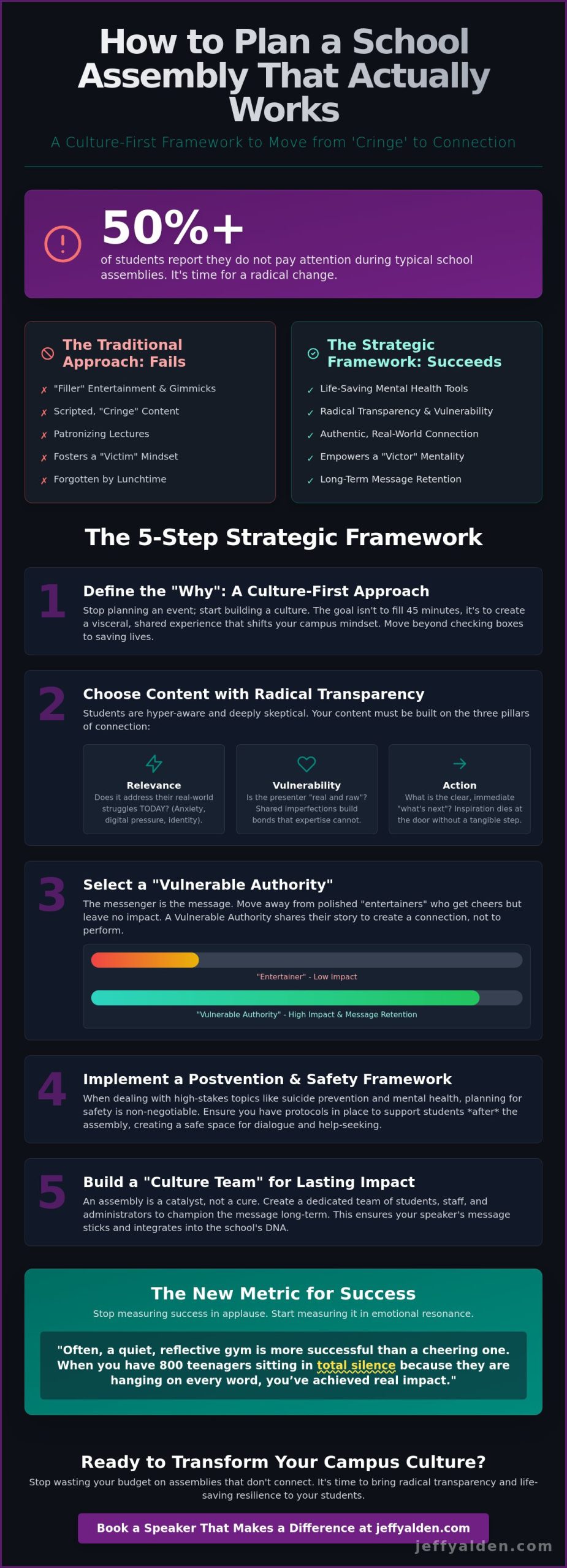
How to Plan a School Assembly: The 5-Step Strategic Framework
Planning isn’t just about booking a date on the calendar. It’s about crafting a moment of total transformation. If you want to know how to plan a school assembly that actually sticks, you have to move past the logistics and get into the strategy. Most schools fail because they treat the event like a checkbox. We treat it like a life-saving mission. Here is the framework to ensure your next event hits the mark and resonates with every student in the room.
- Step 1: Define the ‘Why’. Stop and ask: Is this for motivation, education, or crisis response? A “general” message is a weak message. Be specific about the pain you are trying to heal and the outcome you want to see.
- Step 2: Assemble the Culture Team. Don’t leave this to a single administrator. Include your counselors. They are on the front lines of student crisis every day. They know exactly what your kids need to hear.
- Step 3: Vet for Radical Transparency. You need a presenter who leads with lived experience. If they can’t be vulnerable about their own struggles, your students won’t open up either.
- Step 4: Execute ‘Safe Space’ Logistics. This covers everything from the sound quality to “emotional exits.” If a student is triggered by a raw topic, they need a way to leave the gym without feeling shamed or noticed.
- Step 5: The ‘Day After’ Plan. The assembly is the spark. The classroom is the fire. Have a plan to integrate the message into your curriculum immediately through follow-up discussions and activities.
Vetting Your Speaker for Maximum Impact
Don’t just watch a three-minute highlight reel. Anyone can look good for three minutes with the right editing. Ask for unedited footage of a student Q&A session. That is where you see the real heart of the presenter. You need to see how they handle a “tough” crowd or a student in pain. Before you sign a contract, go through these questions to ask a school assembly speaker. Call other schools and ask the hard questions. Did the students stay engaged? Did the speaker stay after the bell? Did they actually care about the kids? If you want a deeper resource on evaluating your options, this guide to the best high school assembly speakers in 2026 walks you through exactly what separates a “vulnerable authority” from a flashy entertainer who leaves no lasting impact.
Logistics That Support the Message
The “Gym Trap” is real. If students are distracted by poor sound or bad lighting, you’ve lost them. High-quality audio is non-negotiable. If they can’t hear the emotion in the speaker’s voice, they won’t feel the weight of the message. Set up the room to minimize distractions and keep the focus on the stage. Most importantly, ensure a “Warm Handoff.” Your counselors should be visible and available the second the assembly ends. When you master how to plan a school assembly with this level of detail, you create an environment where healing is actually possible. You aren’t just filling a period. You’re building a bridge to a better campus culture.
Planning for High-Stakes Topics: A Postvention & Safety Framework
When the unthinkable happens on campus, the gym floor becomes hallowed ground. Whether you’re dealing with a student death or a community tragedy, you can’t afford to wing it. Most guides on how to plan a school assembly focus on logistics like seating charts and sound checks. They miss the most critical piece: postvention. This is the strategic response meant to support your community after a trauma. It’s about healing. It’s about safety. You have to identify at-risk students before the first word is even spoken. These are the kids already on the edge. They need to know they have a “Safe Exit.” No shame. No punishment. Just a quiet way to step out if the weight becomes too much.
Your community needs to be part of the resilience loop. If you’re bringing in a Mental Health Speaker, involve the parents. Send home a letter. Explain the “Why.” When the home and the school are in sync, the impact of the assembly is doubled. You aren’t just managing an event; you’re managing a crisis response that can prevent further tragedy. This is where your culture is tested. This is where you prove that your students’ lives matter more than the curriculum.
The Pre-Assembly Briefing for Staff
Teachers are your first responders. They see the reactions that happen in the back of the room. Before the event, empower them. Give them a clear chain of command for immediate crisis support. They need to know exactly who to call if a student breaks down. Brief them on “red flag” behaviors. Is a student suddenly withdrawn? Are they hyperventilating? Teachers need to handle these emotional reactions in the classroom afterward with grace and authority. They aren’t just observers; they’re active participants in the safety net.
Ensuring Long-Term Campus Transformation
The assembly is the spark, but the follow-up is the fuel. If you don’t have a plan for the day after, the inspiration will fade. Integrate the assembly themes into your Social Emotional Learning (SEL) curriculum immediately. Some schools are creating “Resilience Rooms.” These are dedicated safe spaces where students can go for ongoing support when things get heavy. Learning how to plan a school assembly means thinking six months down the line. You’re building a foundation of resilience that lasts long after the speaker has left the stage. You’re moving the campus from a place of “What happened?” to “How do we grow?”
The Jeff Yalden Approach: Bringing Radical Transparency to Your Campus
Jeff Yalden doesn’t do “motivational speeches.” He does transformation. With over 30 years on the front lines, he has seen every campus struggle imaginable. He is the “vulnerable authority” your students are craving. When you’re figuring out how to plan a school assembly, you aren’t just looking for a warm body to fill a stage. You’re looking for a catalyst. Jeff’s “Real and Raw” philosophy strips away the corporate veneer and meets students exactly where they are. It’s about honesty. It’s about hope. It’s about moving your entire student body from a “victim” mindset into a “victor” mentality.
This isn’t a lecture. It’s a connection. Jeff supports High School Assemblies by leaning into the hard conversations about mental health, resilience, and personal ownership. But he doesn’t stop with the students. To create a 360-degree impact, he combines high-energy student programs with teacher professional development. You can’t change the students if the staff isn’t equipped to lead the charge. By training your educators to handle the emotional aftermath, Jeff ensures the message doesn’t leave when he does.
A Partner in Your School’s Mission
Most speakers are “one-and-done.” They show up, tell a few jokes, and disappear. Jeff is a long-term cultural partner. He works with you to customize the message based on your specific campus needs and current climate. Whether you’re navigating a recent tragedy or trying to fix a toxic culture, the approach is tailored. Schools across the country report a palpable shift in energy after a single day. They see students looking each other in the eye. They see teachers feeling empowered again. It’s not just a date on the calendar; it’s the start of a new chapter for your school.
Ready to Transform Your School Culture?
Waiting for “next year” is a risk your students can’t afford. The urgency of this moment is real. With the challenges of 2026 already hitting campuses, from new smartphone bans to rising anxiety, the time to act is now. If you want to know how to plan a school assembly that saves lives, you start by choosing a partner who has been there. Lead with heart. Lead with courage. Get the Jeff Yalden energy on your calendar today and watch your campus move from surviving to thriving. Your students are waiting to be seen. Let’s show them they matter.
Lead Your Students From Crisis to Connection
You now have the blueprint for how to plan a school assembly that actually matters. We’ve moved past the empty entertainment and the “cringe” factor to focus on what your students really need: radical transparency and a path to resilience. Remember, the assembly is just the spark. Your commitment to follow-up and campus safety is what keeps the fire of transformation burning. You don’t have to navigate this alone.
With 30+ years of experience and a Red Dot Speaker designation, Jeff Yalden is a specialist in suicide postvention and crisis intervention. He doesn’t just fill a gym; he fills a need. If you’re ready to trade student apathy for real emotional growth, it’s time to take the next step. Book Jeff Yalden for Your Next High School Assembly and bring a “vulnerable authority” to your campus who can bridge the gap between administrators and the students who need to be heard. You have the power to change the narrative. Your students are worth the effort.
Frequently Asked Questions
What are the best high school assembly topics for mental health in 2026?
The most effective high school assembly topics center on radical ownership and digital resilience. Students need to hear about the link between social media scrolling and self-worth, and they need sessions like “Behind the Mask” that normalize the struggle with anxiety. These topics work because they address the real battles students face every morning before they even walk through your doors.
How do I keep high school students engaged during an assembly?
Engagement is won or lost in the first three minutes. You keep them locked in by ditching the script and leading with raw vulnerability. When a speaker is willing to be imperfect, students stop looking at their phones and start looking at the stage. It is about moving from a lecture to a conversation that makes them feel seen and heard.
What should I do if a student is triggered by a sensitive assembly topic?
You must have a “Safe Exit” strategy in place before the first word is spoken. Students should be empowered to step out of the gym without shame or explanation if a topic hits too close to home. Ensure your counselors are visible and stationed near the exits to provide immediate support for anyone who needs to process the message.
How much does a high-quality high school assembly speaker cost?
Fees for professional speakers vary widely based on experience, travel, and the depth of the program. While local presenters might fit smaller budgets, high-demand experts who specialize in crisis intervention often require a more significant investment. It is best to reach out directly to discuss your specific needs and the long-term cultural impact you want to achieve.
Can an assembly really help with suicide prevention?
An assembly is a powerful tool for suicide prevention when it moves beyond clinical talk to heart-centered connection. By breaking the silence and normalizing the struggle, you create a culture where students feel safe asking for help. It is about shifting the campus from a victim mindset to a victor mentality where every life is seen as valuable.
How do I pitch a mental health speaker to my school board or PTA?
Focus on the cost of inaction. When you’re explaining how to plan a school assembly to your board or PTA, highlight the rising rates of student crisis and the urgent need for a proactive culture shift. Present the assembly not as a one-day event, but as a strategic investment in the safety and mental health of the entire student body.
What is the ideal length for a high school assembly?
The sweet spot is typically 45 to 60 minutes. This provides enough time to build an emotional arc and deliver a deep message without losing the room to fatigue. If the speaker is truly engaging, the time will fly, but you should always leave a few minutes for a “warm handoff” to your school support staff.
How do we follow up after a motivational assembly to make the impact last?
The real work starts the day after the speaker leaves. Integrate the assembly themes into your existing Social Emotional Learning curriculum and lead classroom discussions that allow students to process what they heard. Creating “Resilience Rooms” or safe spaces on campus ensures that the tools they learned during the program stay accessible throughout the school year.
