
What if the speaker you’re about to book is the exact reason your students stop taking mental health seriously? It’s a haunting thought. You’re working with a razor-thin budget and a student body that can smell a “fake” before they even sit down. You’ve seen the eye-rolls. You’ve felt that heavy, awkward silence when a presenter misses the mark on sensitive topics like suicide or depression. To avoid a wasted assembly, you need the right questions to ask a motivational speaker before booking to ensure they possess the “vulnerable authority” your kids deserve.
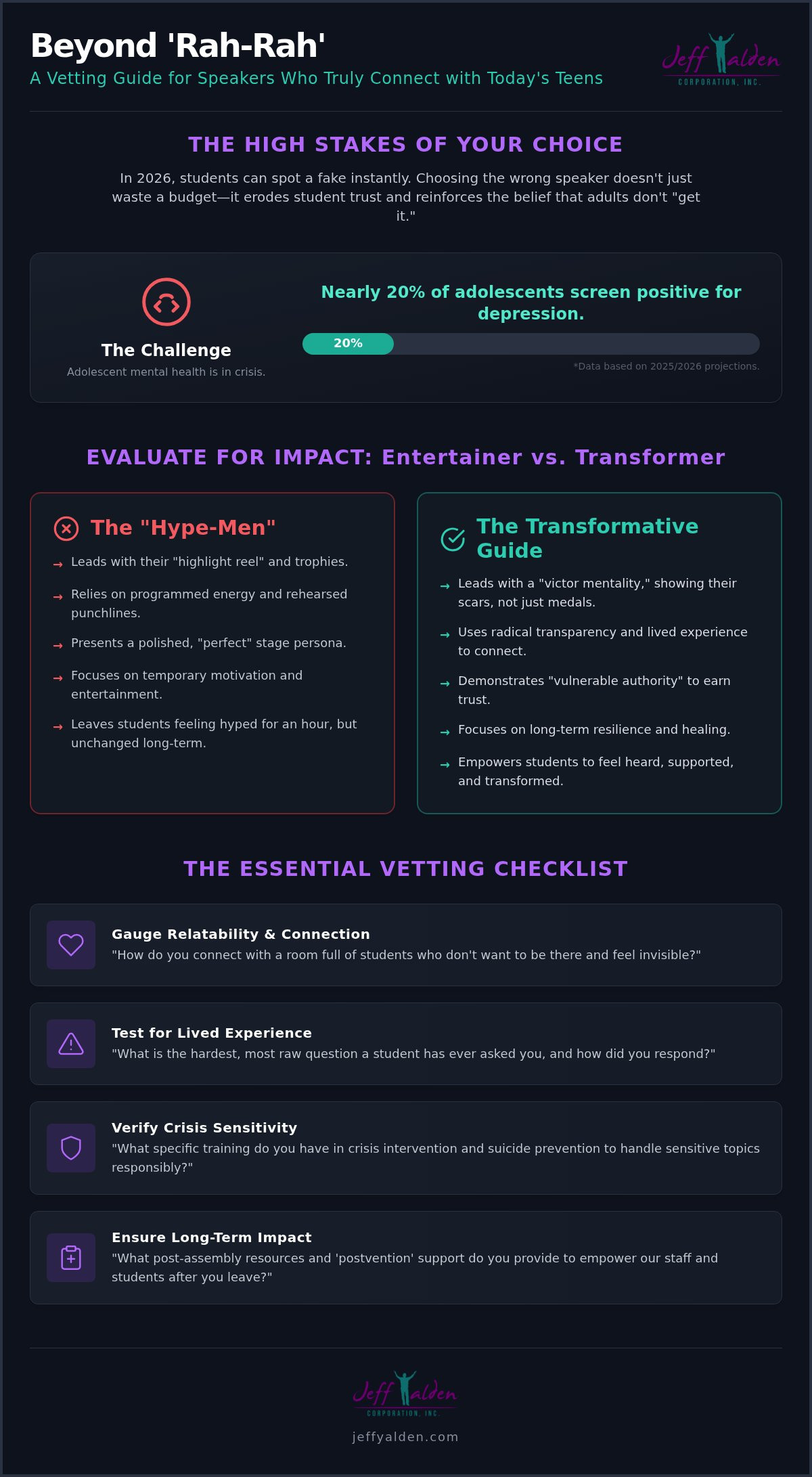
We know the stakes are higher than ever in 2026, with nearly 20% of adolescents screening positive for depression. You need a way to filter out the “fluff” and find a transformative expert who leads with radical transparency. This guide reveals the high-stakes inquiries that separate professional hype-men from guides who actually reach your students’ hearts. We’ll explore how to vet for lived experience, how to handle sensitive mental health discussions, and what it takes to empower students so they finally feel heard and supported.
Key Takeaways
- Pierce the psychological armor of 2026 teens by learning why traditional motivation fails and how to spot a speaker who truly resonates.
- Secure your assembly’s impact by using the essential questions to ask a motivational speaker before booking to verify their specific crisis intervention and suicide prevention training.
- Test a presenter’s real-world agility by discovering how they pivot mid-presentation to engage a room full of students who don’t want to be there.
- Ensure long-term results by identifying the post-assembly resources and “postvention” support necessary to empower your staff and students after the event ends.
- Shift your campus culture from “entertained” to “transformed” by evaluating for “vulnerable authority” rather than just a polished stage persona.
The High-Stakes Choice: Why Your Booking Questions Save the Assembly
Every time you bring a guest onto your campus, you’re making a high-stakes gamble with your students’ trust. It’s not just about a budget line item. It’s about a lifeline. In 2026, students have built a fortress around their hearts. They are digital natives who have seen every staged “vulnerability” post and every polished influencer. They can smell a fake from the back of the bleachers. If you hire someone who misses the mark, you don’t just lose money; you gain a room full of cynical kids who believe that adults don’t actually “get” them. Finding the right questions to ask a motivational speaker before booking is the only way to pierce that armor and ensure your investment leads to a real campus culture shift.
A traditional motivational speaker often relies on programmed energy and rehearsed punchlines. That doesn’t work anymore. You need a high-impact speaker who understands that connection is more important than content. An “entertainer” leaves the kids laughing for an hour but changes nothing for the week. A transformative expert uses radical transparency to bridge the gap between the stage and the seat. Administrators must stop asking “What do they talk about?” and start asking “How do they connect with the kid who feels invisible?”
The Difference Between ‘Rah-Rah’ and Radical Results
Hype speakers often lose an audience within the first ten minutes because they lead with their highlights. They talk about their trophies. They talk about their wins. Your students are currently losing, and they need to see the scars, not just the medals. Radical results come from speakers who lead with a “victor” mentality. This isn’t about being a victim of your circumstances; it’s about being a victor over your past. This emotional resonance is what creates long-term retention. When a speaker is brave enough to be real, it gives students the permission to be real too. That is where the healing starts.
Setting Your Success Criteria Before the Call
Before you even pick up the phone, you must define your “Why.” Are you responding to a recent tragedy and need crisis intervention, or are you trying to build a proactive culture of resilience? Your school’s specific demographics and current climate should dictate the speaker’s energy. A middle school assembly requires a different pace than a high school leadership retreat. You need to match the speaker’s lived experience to the specific pain points of your students. Booking with an impact-first mindset means prioritizing the student who is one bad day away from giving up over the speaker who has the most followers on social media.
The Relatability Test: Questions to Gauge Student Connection
Teens in 2026 are living in a digital pressure cooker. They spend an average of 4.8 hours every single day on social media, constantly bombarded by curated “perfection.” They are exhausted. They are skeptical. When you prepare to book a motivational keynote speaker, you aren’t just looking for a name on a flyer. You are looking for a bridge. You need someone who can cut through the noise and earn the right to be heard. The most essential questions to ask a motivational speaker before booking focus on how they transform a room of forced attendees into a community of engaged listeners.
Start with the uncomfortable truth. Ask them: “How do you handle a room full of students who don’t want to be there?” A professional doesn’t get defensive. They don’t blame the kids. They describe a strategy. They explain how they pivot mid-presentation when they feel the energy dip. They stay current with the specific pressures facing Gen Alpha and Gen Z, recognizing that 19.2% of adolescents screened positive for depression in 2025. If a speaker can’t articulate how they navigate these heavy realities with “vulnerable authority,” they aren’t the right fit for your campus.
Testing for Lived Experience vs. Scripted Stories
You need to differentiate between a performance and presence. Ask for the raw version: “What is the hardest question a student has ever asked you?” Listen for the emotion in their response. If they give you a canned, “perfect” answer, keep looking. Students don’t want a hero; they want a human. They need to see the scars. A speaker who leads with their own imperfections creates a safe space for students to acknowledge their own struggles. This is the “victor” mentality in action. It is about showing kids that their current pain is a chapter, not the whole book.
Bridging the Gap: The First 5 Minutes
The first five minutes are everything. If the speaker doesn’t hook them immediately, the assembly is a wash. Ask about their entry strategy. How do they handle the inevitable cell phone distractions without losing the “vibe” of the room? In 2026, you cannot simply demand attention; you have to command it by being more interesting than the screen in their pocket. A high-impact teen motivational speaker uses radical transparency to grab the audience by the heart from the very first sentence. They don’t waste time with long introductions. They dive straight into the “real” stuff. If you want to see this level of engagement in action, consider how a seasoned youth motivational speaker can transform your next event from a standard assembly into a life-changing moment.
Content Integrity: Questioning Mental Health and Crisis Sensitivity
Mental health isn’t a “fluff” topic. It’s a battleground. In 2026, with approximately 20% of U.S. high school students having seriously considered suicide, you cannot afford a speaker who just “talks from the heart” without a safety net. You need a professional who understands the gravity of the room. When vetting candidates, the specific questions to ask a motivational speaker before booking must center on their crisis intervention credentials and their adherence to safe-messaging guidelines. It’s about protecting your students while empowering them.
Ask them directly: “What is your specific training in suicide prevention?” Don’t accept vague answers. A high-impact speaker should be familiar with postvention protocols and how to normalize mental health struggles without accidentally “triggering” vulnerable kids. They must balance hard truths with a relentless message of hope. You are looking for someone who can look a struggling student in the eye and say, “I’ve been where you are, and there is a way out.” This is the core of being a teen mental health speaker who actually saves lives rather than just filling an assembly slot.
The Trauma-Informed Speaker Check
There is a massive difference between being “trauma-informed” and “trauma-dumping.” Some speakers use their past pain as a shock-value tool to grab attention. That’s dangerous. A trauma-informed professional uses their story as a bridge to healing, not a weight for the audience to carry. You should follow established tips to choose guest speakers who prioritize student safety over stage theatrics. Ask about their vetting process for the stories they share. Do they have a plan for students who might need immediate support after the mic drops? Investing in Teen Suicide Prevention Programs: A Radical Approach to Saving Lives in 2026 means ensuring the speaker is a partner in your school’s safety plan, not a liability.
Customization Beyond the Slide Deck
Every school has a ghost. Maybe it’s a recent tragedy, a local economic crisis, or a specific community challenge. A canned presentation won’t cut it. Ask the speaker: “How will you incorporate our school’s specific history into your message?” They should be doing their homework on your local community before they ever step foot on campus. They need to know the names of your counselors and the specific culture of your hallways. If they aren’t willing to customize their approach to align with your specific goals, they aren’t a partner; they’re just a visitor. This dedication to bespoke service is what defines any top-tier professional; for those planning luxury private events, you can visit Chris Dodd Magic to discover how specialized entertainment is tailored for discerning guests.
Just as schools require tailored support, businesses also benefit from specialized expertise that addresses unique organizational challenges; to explore how professional consulting and AI expertise can drive growth, you can learn more about Shift Happens!.
The assembly isn’t the finish line. It’s the starting gun. If a speaker drops a heavy, emotionally resonant message and then immediately sprints for the airport, they have left your students in a vulnerable state. This is a massive oversight that many organizers miss. Your list of questions to ask a motivational speaker before booking must include a deep dive into “postvention.” You need to know exactly how they handle the emotional aftermath. Will they stay for one-on-one moments with students who felt a connection? Do they have a clear, professional plan for when a student discloses a crisis during their visit?
A true partner in education doesn’t just provide a performance; they provide a framework for continued growth. Ask about the resources they leave behind. Are there “take-home” materials for parents to help them bridge the conversation at the dinner table? Does the speaker provide digital tools for students to access when they hit a low point three weeks later? You are looking for a long-term culture shift, not a one-hour distraction. Ensuring the speaker is willing to support your counseling staff during the handoff of sensitive disclosures is the difference between a successful event and a potential liability.
The ‘After-Care’ Framework
Real impact often happens in the quiet, awkward moments after the music stops. Ask the speaker about their boundaries. They are not clinical counselors, and they shouldn’t pretend to be. However, they must be a resilient bridge to your school’s professional staff. You should also ask if they offer teacher professional development. Your staff members are the ones who carry the message forward long after the speaker has left the building. They need the practical tools to handle the “Assembly High” and keep the momentum building once the initial excitement fades. This ensures the investment you make actually transforms the daily campus vibe.
Contracts, Tech, and Travel: The ‘No-Stress’ Logistics
Let’s talk about the grit. You don’t need more stress on assembly day. Ask about AV requirements early. Do they need a wireless lapel mic or a handheld? What about lighting and video projection? Get a clear, “all-in” price. Research shows that planners should typically budget an additional 20 to 30 percent on top of the speaker’s fee for travel and lodging. Ask if they offer a flat-fee “travel buyout” to keep your budget predictable. Finally, understand their cancellation policy. Schools are unpredictable; emergencies happen. Make sure your speaker is a partner who understands the reality of campus life. If you want a speaker who is as committed to the logistics as they are to the message, book Jeff Yalden for your next high school assembly.
The Jeff Yalden Standard: Booking for Radical Transparency
If you’re looking for a polished suit and a rehearsed script, Jeff Yalden isn’t your guy. Jeff prioritizes “The Heart” over “The Hype.” He doesn’t just show up to talk; he shows up to be present. Since 1992, Jeff has operated on the principle of radical transparency. He is a “vulnerable authority” who leads by sharing his own imperfections first. This isn’t about shock value. It’s about safety. When you’re refining your final questions to ask a motivational speaker before booking, the most telling answer is how they handle their own humanity. If they can’t be real with you on the phone, they won’t be real with your students on the stage.
The impact of a Jeff Yalden assembly doesn’t end when the bell rings. It starts there. The 24-hour impact is visible in the hallways the next day. You’ll see students talking more openly. You’ll see staff members feeling equipped rather than exhausted. Jeff’s background in building resilience in teens isn’t based on theory; it’s based on lived experience. He knows how to move a student from feeling “stuck” to feeling “unstoppable.” This creates a lasting culture shift that outlives any single event.
More Than a Speaker: A Partner in Your School’s Mission
Jeff isn’t a visitor; he’s a partner. He is committed to normalizing the uncomfortable conversations that most adults avoid. He supports the “whole school” ecosystem. This means he’s just as focused on the teacher in the back of the room as he is on the student in the front row. Jeff promotes a “victor” mentality. He helps students realize that their past struggles don’t have to define their future potential. By the time he leaves, your campus will have a shared language for resilience and a renewed sense of hope.
Next Steps: Starting the Conversation
Transparency starts with the very first booking call. To prepare for your initial consultation with Jeff, think about the specific “vibe” of your campus right now. What are the silent struggles your kids are facing? Jeff doesn’t do “canned” presentations, so be ready to dive deep into your school’s unique needs. We don’t hide behind gatekeepers or corporate jargon. We lead with the same heart we bring to the stage. Ready to bring a real message to your students? Book Jeff Yalden today.
Choose Radical Transparency Over Polished Personas
Your students don’t need a hero; they need a human. They don’t need a highlight reel; they need a roadmap through the mess. We’ve broken down why relatability is the only currency that matters in 2026 and why crisis sensitivity is a non-negotiable red line. The specific questions to ask a motivational speaker before booking are the final filter that protects your campus from a wasted budget and a room full of cynical hearts. You are choosing between a performance and a perspective.
Jeff Yalden has been a vulnerable authority in this space since 1992. He isn’t just a speaker. He is a specialist in teen suicide prevention who leads with the raw truth of his own lived experience. When you choose radical transparency over a polished persona, you give your students permission to breathe. You shift the culture from stuck to unstoppable. You provide the practical mental health tools your staff and kids have been starving for.
Book Jeff Yalden for Your Next High School Assembly and let’s start the real conversation. Your kids are waiting to feel heard. Let’s give them the tools to stay.
Frequently Asked Questions
How much does a high school motivational speaker cost in 2026?
Professional fees for experienced speakers in 2026 typically range from $5,000 to $40,000 depending on their demand and expertise. Emerging presenters often fall on the lower end of that scale; while recognized industry leaders command the higher range. You should also budget an additional 20% to 30% for travel expenses or a flat travel buyout fee. These costs reflect the speaker’s preparation; specialized knowledge; and the long term impact they bring to your campus.
What is the difference between a motivational speaker and a keynote speaker?
A keynote speaker typically sets the overarching theme for a conference or a multi day event. A motivational speaker focuses specifically on driving emotional transformation and immediate behavioral shifts. In a school setting; the best presenters combine both. They deliver a high energy message that resonates with the heart while providing a practical framework for resilience. It is about moving the audience from a passive state to an active; “victor” mindset through lived experience.
How long should a typical high school assembly last for maximum impact?
Maximum impact for high school assemblies usually happens within a 45 to 60 minute window. This timeframe respects the student attention span while allowing enough depth for a meaningful emotional arc. If you go too long; you risk losing the “vibe” and inviting distractions. If you go too short; you won’t have time to break through their psychological armor. Quality always beats quantity when you are trying to reach a teen’s heart and create a culture shift.
What happens if a student has a crisis during the assembly?
Your speaker must have a clear “hand off” protocol if a student discloses a crisis or becomes visibly triggered. This is one of the most critical questions to ask a motivational speaker before booking. A professional remains calm; maintains boundaries; and immediately connects the student with your school’s clinical counseling staff. They don’t try to be the therapist. They act as the bridge to the professional support your school already has in place.
Do motivational speakers provide their own sound equipment?
Most speakers expect the school to provide the primary sound system; but you must verify their specific AV needs during the booking process. This often includes a high quality wireless lapel or headset microphone to allow for movement and engagement. Some speakers may bring their own specialized digital tools or intro videos. Always clarify these technical requirements in the contract stage to ensure there are no audio failures that could ruin a powerful moment on stage.
Can a speaker address both middle school and high school students in the same day?
A versatile speaker can address both groups in one day; but they must pivot their content significantly. Middle school students require a faster pace and different relatability markers than high schoolers. It is a mistake to give the exact same presentation to both. Ensure your speaker understands the developmental differences and has a proven track record of engaging both age groups with age appropriate transparency and high energy. This ensures everyone feels heard.
Is it better to have one large assembly or several small group sessions?
A large assembly is best for creating a unified campus culture shift and breaking the silence on heavy topics like mental health. Small group sessions are ideal for deeper; more intimate work with student leaders or at risk groups. Many schools find the most success by starting with a full student body presentation to set the tone; followed by targeted workshops. This combination ensures the message is heard by everyone but felt deeply by those who need it most.
What should I ask for in terms of references or testimonials?
Ask for a current “sizzle reel” filmed within the last 12 months and direct contact information for at least three recent school clients. You want to hear from other administrators about the “day after” impact. Did the speaker stay to talk to kids? Was the logistics process smooth? Don’t just look at a website quote. Speak to a peer who has sat in the bleachers and watched the students’ reactions firsthand to verify the speaker’s authenticity.
