
Fifty-seven percent of your teachers are currently staring at the wall, feeling the heavy weight of burnout pressing against their chests. It is a staggering number that represents a genuine crisis in our hallways. You know that the standard, “feel-good” professional development day is no longer enough to stop the bleeding. In fact, booking a mental health speaker for teacher training that relies on clinical fluff or generic “self-care” tips can actually make your staff feel less supported and more invisible. You are likely tired of wasting limited budgets on presentations that don’t move the needle, and you might even fear triggering your team without having a real safety net in place.
It doesn’t have to be a gamble. This 2026 guide will show you how to move past the surface-level jargon and find a speaker who brings radical transparency and life-saving strategies to your campus. We’ll dive into the latest state mandates for mental health training and explore how to choose a “vulnerable authority” who truly understands the classroom trenches. You will learn how to secure a speaker who provides actionable suicide prevention tools and creates a measurable shift in your school culture; this ensures your staff finally feels seen, validated, and equipped to stay in the profession they love.
Key Takeaways
- Stop wasting PD days on “feel-good” fluff and learn why 55% of teachers need a speaker who acknowledges the raw reality of today’s classroom stress.
- Discover how booking a mental health speaker for teacher training requires vetting for “vulnerable authority” rather than just academic credentials.
- Navigate the 2026 funding landscape by using Title IV or mental health grants to bring in life-saving strategies for your entire staff.
- Prioritize psychological safety by ensuring your chosen expert follows strict suicide postvention guidelines to protect your team from being triggered without support.
- Shift your school culture from burnout to resilience using the “Monday Morning” test to guarantee every tool provided is immediately actionable.
Why Teacher Training Needs More Than a “Feel-Good” Keynote in 2026
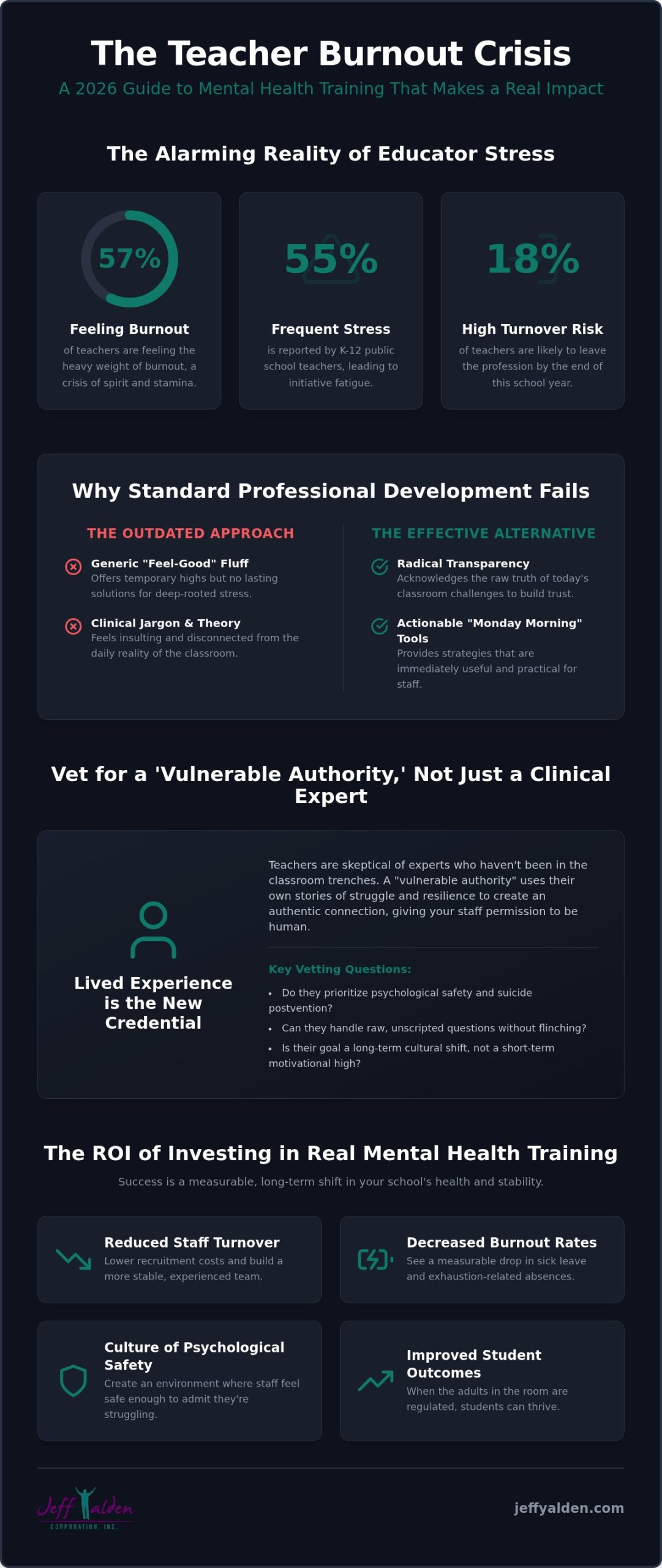
The numbers don’t lie. In 2026, 55% of K-12 public school teachers report frequent job-related stress. This isn’t just a bad week or a tough grading period; it is a crisis of spirit and stamina. Most educators are currently drowning in “initiative fatigue.” They have seen every new curriculum and every “revolutionary” teaching method come and go. When you are considering booking a mental health speaker for teacher training, you must realize that your staff doesn’t need another generic pep talk. They don’t need a speaker who tells them to “just breathe” while they’re managing student behavior issues and dealing with the exhaustion of working too many hours, a reality for 32% of educators. They need to feel seen.
A motivational speech is a temporary high. A cultural shift is a permanent change in how your school breathes. Teachers are the front line of student mental health; they are often the first to see a student in pain. But who is looking out for them? When you focus on booking a mental health speaker for teacher training, you’re choosing to validate their struggle. You’re acknowledging that the average base salary of $75,599 doesn’t reflect the emotional labor they pour into their classrooms every single day. This is about moving past the surface and getting real about what it takes to survive in education today.
Moving Beyond Clinical Jargon
Teachers are tired of being talked at by experts who haven’t stepped into a classroom in a decade. Academic theories and clinical jargon fail because they lack the weight of lived experience. When a room is full of educators who feel the crushing weight of teacher burnout, a PowerPoint slide on “self-regulation” feels like an insult. You need a “vulnerable authority” who brings radical transparency to the stage. Real, raw storytelling creates an immediate connection. It says, “I have been in the trenches, and I know why you’re tired.” This shared struggle is the only bridge to genuine transformation.
The ROI of Mental Health Training
Effective professional development isn’t a luxury; it’s a retention strategy. With 18% of teachers likely to leave the profession by the end of the school year, the return on investment for mental health training is measured in human lives and staff stability. Success isn’t a standing ovation at the end of the hour. It looks like:
- Reduced staff turnover and lower recruitment costs.
- A measurable drop in teacher sick leave and burnout rates.
- A campus culture where staff feel safe enough to admit they’re struggling.
- Improved student outcomes because the adults in the room are finally regulated.
This is about the long-term health of your school. It’s about moving from a state of constant crisis management to a proactive, resilient culture where everyone can thrive. When the adults are healthy, the students have a chance.
Vetting Your Speaker: Clinical Theory vs. Radical Transparency
When you are booking a mental health speaker for teacher training, you face a critical choice. You can hire a clinical expert who recites data from a teleprompter, or you can bring in a “vulnerable authority” who speaks from the scars of lived experience. Teachers are naturally skeptical. They have sat through countless hours of professional development led by people who haven’t set foot in a classroom since the turn of the century. They don’t need a lecture on the neurobiology of stress. They need a guide who has survived the same trenches they inhabit every day.
A true vulnerable authority leads by example. They share their own imperfections to give your staff permission to be human. This radical transparency is the only way to cut through the noise of a 7-period day. However, you must be careful. There is a dangerous trend of using “shock value” to grab attention. A speaker who triggers a room full of stressed educators without providing a clear safety plan is a liability, not an asset. You need someone who can handle the raw, unscripted questions that arise when the masks finally come off. Can they sit with a teacher’s pain without flinching? That is the real metric of success.
Lived Experience as a Credential
Staff trust is earned, not given. Educators are much more likely to listen to someone who has faced their own mental health battles and found a way forward. This isn’t about being a perfect expert; it’s about being a resilient guide. When a speaker is transparent about their struggles, it builds a bridge to even the most cynical staff members. It shifts the dynamic from “you should do this” to “we can do this together.” This connection is what makes the training stick long after the session ends.
The “Monday Morning” Test
The most important question to ask is: what happens on Monday? If your teachers walk back into their classrooms without a specific plan, the training has failed. Effective sessions provide practical guidance for educators on mental health that they can use immediately. This includes actionable strategies for student suicide prevention and self-care tools that actually fit into a busy schedule. Booking a mental health speaker for teacher training should result in a toolkit, not just a notebook full of theories. If you want to see this “real and raw” approach in action, Jeff Yalden offers the kind of transformative experience that passes the Monday morning test every single time.
The Logistics of Booking: A Step-by-Step Checklist for 2026
Booking a mental health speaker for teacher training is not just a calendar entry; it is a tactical rescue mission for your staff. You cannot afford to treat this like another box to check. To make a real impact in 2026, you must start with a clear objective. Are you fighting a specific wave of burnout, or are you responding to a recent crisis? Your goals will dictate the intensity and the tools your speaker needs to bring. Once you define the “why,” you can move with the urgency this crisis requires.
Securing approval often requires speaking the language of the board. With new mandates in states like New Jersey, California, and Texas requiring specific mental health training hours, you have the leverage you need. Use Title IV funds or mental health grants to cover the costs. When budgeting, remember that expert speakers in 2026 typically require an additional 20 to 30 percent for travel and lodging. Plan for this early so your mission doesn’t stall at the finish line. The “back-to-school” window remains the most critical time to book; it sets the emotional tone for the entire year before the weight of the semester takes hold.
Maximizing Your PD Budget
Don’t look at the fee; look at the long-term value of a stabilized staff. You can often get a better ROI by bundling teacher professional development with student assemblies. This creates a shared language across the entire campus. Additionally, consider adding a “community night” for parents. When the adults at home and the adults at school are on the same page, the student is the one who wins. This holistic approach turns a single day of training into a community-wide movement.
Preparing the Environment
The physical space dictates the emotional safety of the room. A cold, echoing gym makes vulnerability difficult; a theater or a more intimate setting encourages the “real and raw” conversations you need. Because this work is high-intensity, you must prioritize staff safety. Provide designated “safe spaces” or have counselors available during the session. If the speaker is doing their job, they will uncover some heavy emotions. You need a plan to hold that weight. Finally, establish a follow-up strategy. The momentum shouldn’t die when the speaker leaves the parking lot. Create a “Monday Morning” cohort to keep the strategies alive and the culture shifting forward.
Safety First: Prioritizing Suicide Postvention and Crisis Expertise
Safety isn’t just a physical checklist of locked doors and badges; it is a psychological contract you make with your staff. When you are booking a mental health speaker for teacher training, you are asking your educators to open up old wounds and face their deepest fears. If that speaker isn’t an expert in suicide postvention, you are playing with fire. You need someone who understands the ethics of “do no harm.” This means avoiding graphic details that can trigger contagion and instead focusing on hope, resilience, and recovery. It is about protecting the room while you are transforming it.
Secondary traumatic stress (STS) is the invisible weight your teachers carry every single day. They absorb the pain of their students like sponges, often without even realizing the toll it takes on their own spirits. If your speaker doesn’t address this reality, they are failing your team. You have to handle the aftermath of a high-impact presentation with extreme care. This isn’t just about the 60 minutes spent on stage; it is about the hours and days that follow. You need a plan for when the adrenaline fades and the heavy reality of the work sets back in. A true expert stays until the last question is answered and ensures the “safety net” is firmly in place.
The Critical Role of Postvention
If your campus has recently faced a tragedy, you cannot hire a generic motivational speaker. You need someone who understands the delicate balance of postvention. This involves following strict safe messaging guidelines to prevent further loss and stabilize the environment. You should look for Teen Suicide Prevention Programs that prioritize stabilization over sensation. The goal is to provide a path forward that honors the loss without glorifying the act, giving your staff the tools to lead their students through the dark.
Preventing Secondary Trauma
Teachers must learn how to recognize their own trauma triggers. When an educator is triggered, they cannot effectively support their students; they are simply surviving. This is where Trauma-Informed Teaching Professional Development becomes a lifeline. By using the “vulnerable authority” model, a speaker shows staff that healing is possible and necessary. It gives them permission to prioritize their own mental health so they can continue to be the anchor for their students. It turns their struggle into a source of strength.
Don’t leave your staff’s psychological safety to chance. If you are ready to bring a veteran guide who understands the weight of the trenches and the ethics of crisis, book a session with Jeff Yalden today and start the real work of healing your campus culture.
Booking Jeff Yalden: Transform Your Staff Culture Today
You have seen the numbers. You know the 57% burnout rate isn’t just a statistic; it’s the exhaustion in your teachers’ eyes every Friday afternoon. When you are booking a mental health speaker for teacher training, you aren’t just looking for someone to fill an auditorium. You’re looking for a catalyst. Jeff Yalden has spent over 30 years in the trenches with students and staff. He knows that a radical shift in culture requires more than a polite presentation. It requires a “vulnerable authority” who isn’t afraid to get real about the struggle. Since 1992, Jeff has been the voice that cuts through initiative fatigue and speaks directly to the heart of the educator.
The 2026 school year brings unprecedented pressure. Whether you are in New Jersey meeting the new 8-hour mental health first aid requirement or in Texas ensuring that 50% of your staff is trained by the start of the 2026-2027 school year, Jeff builds programs that do more than just check a legislative box. He delivers a “real and raw” experience that validates your staff’s pain while giving them the resilience to keep going. His specialized expertise in suicide prevention and campus postvention ensures that your school isn’t just prepared for a crisis; it is built to prevent one. This is customized professional development designed for the unique challenges of the 2026 classroom.
The Jeff Yalden Difference
Jeff is the choice for schools that need a radical shift, not a temporary band-aid. Administrators across the country have seen staff culture change overnight because Jeff doesn’t just speak; he connects. He provides a level of transparency that gives your most skeptical staff members permission to be human again. You get direct access to Jeff for pre-event planning to ensure the session hits your specific pain points. He also provides post-event follow-up to make sure the “Monday Morning” strategies are being implemented effectively. He stays in the fight with you.
Ready to Book?
The window for the 2026-2027 school year is closing fast. If you want to move your staff from a state of survival to a state of thriving, it’s time to start the conversation. Jeff is available for high school assemblies, middle school programs, and intensive staff workshops that pass the “Monday Morning” test. Don’t let another professional development day go to waste on clinical fluff that doesn’t move the needle. Your staff deserves to feel seen, and your students deserve a regulated, healthy adult in every classroom.
Book Jeff Yalden for Your Next Teacher Training and take the first step toward a measurable shift in your school culture today. Let’s get to work.
Step Into the Future of Your School Culture
The days of superficial professional development are over. You now have the roadmap to move past clinical fluff and bring radical transparency to your campus. Your staff doesn’t need another lecture; they need a guide who has survived the trenches and understands the weight of their daily labor. By prioritizing suicide postvention expertise and the vulnerable authority model, you are doing more than just meeting a state mandate. You are building a resilient community where both teachers and students can finally feel safe.
Taking the next step in booking a mental health speaker for teacher training is a commitment to the long-term health of your school. It is about ensuring every educator has actionable tools for Monday morning. With 30 years of experience as a suicide prevention expert, Jeff Yalden brings the “real and raw” approach your team has been waiting for. This is your moment to shift from survival to thriving.
Book Jeff Yalden for Your 2026 Teacher Professional Development and start the transformation today. You don’t have to carry this weight alone. There is hope, and your staff is worth the investment.
Frequently Asked Questions
How much does it cost to book a mental health speaker for teacher training?
Fees for speakers in 2026 vary based on experience and impact. Emerging speakers often fall between $0 and $500; however, experienced professionals typically range from $1,000 to $5,000. High-profile names can reach $10,000 to $25,000 or more. Beyond the base fee, you should budget an additional 20% to 30% for travel and lodging. This ensures you are hiring a professional who delivers lasting value rather than just a budget-friendly lecture.
What is the difference between a keynote and a professional development workshop?
A keynote is a high-energy session designed to shift the emotional tone of the entire staff. It’s the spark that ignites change. A professional development workshop is a deeper dive that focuses on the “how-to.” It provides specific tools for suicide prevention or classroom management. When booking a mental health speaker for teacher training, many schools bundle both to maximize the impact on their campus culture and staff retention.
How do I know if a mental health speaker is safe for my staff?
Look for a “vulnerable authority” who follows strict safe messaging guidelines. A safe speaker avoids graphic details of trauma and instead focuses on resilience and recovery. They should have a clear plan for handling triggers and be willing to stay after the session to support individuals. Ask for proof of experience in suicide postvention. If they only offer “shock value” without a safety net, they aren’t the right fit.
Can we book a speaker for both students and teachers on the same day?
Yes, bundling student assemblies with staff training is a highly effective way to create a shared language across your campus. You can start with a high-impact assembly for students in the morning and transition to a “real and raw” professional development session for teachers in the afternoon. This approach maximizes your budget and ensures the adults and the youth are moving toward the same goals of mental wellness and resilience.
What is suicide postvention, and why does my speaker need to know it?
Suicide postvention is the organized response following a suicide to facilitate healing and reduce the risk of contagion. Your speaker must understand these guidelines to ensure they don’t inadvertently cause more harm. In 2026, this expertise is non-negotiable for any school that has faced tragedy. A postvention expert knows how to honor a loss while stabilizing the environment, providing a safe path forward for staff who are often grieving themselves.
How far in advance should I book a speaker for a 2026 PD day?
You should aim to secure your date at least six to nine months in advance. The critical “back-to-school” window in August and September fills up quickly. Popular dates for booking a mental health speaker for teacher training are in high demand as districts rush to meet new state mandates in places like New Jersey and Texas. If you are targeting a specific day in early 2026, start the conversation now to ensure availability.
Do mental health speakers provide resources for teachers to use in the classroom?
The best speakers pass the “Monday Morning” test by providing actionable tools that teachers can use immediately. This includes:
- Crisis intervention scripts for tough conversations.
- Student check-in strategies to gauge emotional safety.
- Self-care routines that actually fit into a 7-period day.
These resources should move beyond clinical theory and focus on the practical reality of the classroom trenches. You want your staff to leave with a toolkit, not just a notebook.
What should I do if a teacher is triggered during the presentation?
You must have a predetermined safety plan that includes “safe spaces” and available counselors. If a teacher needs to step out, they should have a quiet place to go where support is waiting. A professional speaker will recognize the signs of a triggered audience and know how to de-escalate the room. It’s vital to validate their experience. Healing often starts with the realization that it’s okay not to be okay.
