
A high school mental health assembly should do more than name a problem. It can bring students together to talk openly about mental health, hear personal stories, and learn where support begins. The strongest conversations make room for difficult subjects, including self-harm concerns, while ensuring students aren’t left alone with them.
One assembly can’t solve every challenge a student faces. It can, however, make the conversation less intimidating and point to practical next steps. Learn what these assemblies can cover, from anxiety, depression, and other mental health conditions to coping strategies and ways to seek help.
Lived experience can help students feel seen, but sensitive topics need care, and support should continue after the assembly ends. The goal is honest information, human connection, and a clear path toward reaching out.
Key Takeaways
- Shape an assembly around students’ needs, using engaging formats that make difficult conversations easier to enter.
- See how a speaker’s lived experience can build connection while keeping the focus on hope and reaching out for support.
- Learn how to respond with care when a student may be struggling with self-harm concerns.
- Explore practical ways to talk about anxiety, depression, and coping, then carry the conversation beyond the assembly.
1. What is a Mental Health Assembly for Schools?
A school mental health assembly brings students together to discuss emotional well-being, mental health challenges, and ways to seek support. A high school mental health assembly can use a speaker, a short video, and an interactive question-and-answer session to make serious topics easier to approach. The goal is practical: help students recognize concerns and know a next step.
Age-appropriate topics can include stress, anxiety, depression, mood disorders, coping strategies, and how to ask for help. Half of all mental health conditions begin by age 14, so middle school students need clear, age-sensitive language too. For a high school audience, examples can address academic pressure, friendships, and how stigma can make reaching out feel difficult. Avoid graphic details; invite questions without pressuring anyone to share personal experiences.
Connection depends on psychological safety. Set expectations before the program: students may listen without speaking, and personal disclosures shouldn’t become public discussion. Anonymous written questions let students raise sensitive concerns without taking the microphone. A welcoming, nonjudgmental atmosphere can encourage participation. Explain the school counselor’s role and available support pathways, so the message leads somewhere concrete.
Alternatives to a one-time assembly include workshops, seminars, and student-led peer-support groups or wellness clubs. Schools can also incorporate mental health education into health or physical education courses, giving students repeated opportunities to learn and connect.
For U.S. school policies and privacy, align the session with district procedures for student safety, sensitive disclosures, and referrals. Before the assembly, administrators and counselors can agree on who responds when a student seeks help and how private information is handled under school policy.
Evaluate effectiveness through feedback, not attendance alone. Anonymous student and teacher surveys can show whether the content felt relevant, clear, and useful. Follow-up feedback can reveal what students retained and what they still need.
If a student becomes distressed during or after the assembly, a designated staff member or counselor can offer a quiet conversation and connect them with school support. Explain available help before the event, so students know where to go without sharing concerns publicly.
Schools can measure impact by collecting anonymous feedback on the content, delivery, and perceived usefulness. Reviewing responses with counselors can guide changes to future assemblies, workshops, or support activities.
2. A speaker’s personal experience with mental illness
A personal story can turn an abstract mental health condition into something students can understand. Presenter Nate Page has said he experienced his first panic attack at about 10 years old, then didn’t reach out for help until he was 22. That gap gives students a concrete opening to discuss what can make asking for help feel difficult. A speaker should share only what serves the audience, not every detail of a painful experience.
Effective presentations can combine a lived-experience story, a short video, and a moderated question-and-answer session. A story can build connection, while questions give students a chance to reflect and ask what they might otherwise keep to themselves. A psychologist, counselor, or guest speaker with lived experience can each offer a different perspective. A meaningful assembly makes room for both personal insight and practical guidance.
Schools can evaluate speakers by considering how they handle sensitive topics, explain mental health conditions, and direct students toward support. Ask for a clear presentation outline, including its key messages and approach to student questions. Look for language that avoids shame, sensational details, and promises of a quick fix. When a speaker discusses disorders or neurodiversity, clarity matters: personal experience can inform a story, but it shouldn’t be presented as everyone’s experience.
Make the event inclusive by using examples that reflect different backgrounds, family experiences, and ways of communicating. Offer anonymous questions and make listening a valid form of participation; no student should have to disclose personal information in front of peers. A school counselor can help shape the session and be available for follow-up. For schools planning a lived-experience presentation, explore this high school assembly speaker approach as one possible format.
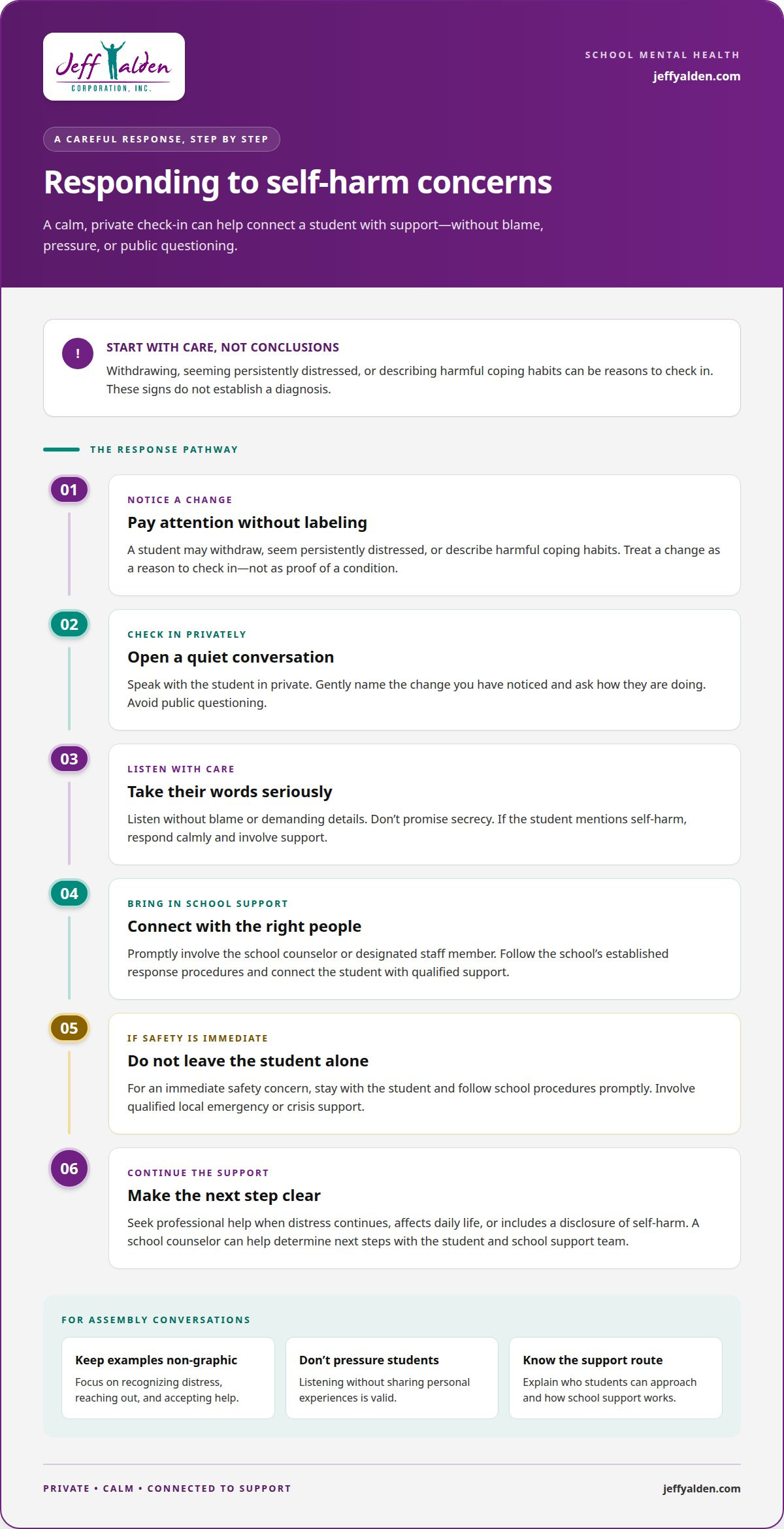
3. Recognizing and responding to self-harm concerns
Self-harm concerns call for a calm, private response, not blame or public questioning. Teachers may notice changes such as a student withdrawing, seeming persistently distressed, or describing harmful coping habits. These signs don’t establish a diagnosis, but they are a reason to check in gently and listen without demanding details or promising secrecy.
Start simply: speak privately, name the change you’ve noticed, and ask how the student is doing. If they mention self-harm, listen, take their words seriously, and promptly involve the school counselor or designated staff member. Don’t leave a student facing an immediate safety concern alone. Follow the school’s established response procedures and connect them with qualified support.
In health education, relatable stories can show how emotional pain and unhealthy habits may be hidden behind an ordinary routine. Keep examples non-graphic and focused on recognizing distress, reaching out, and accepting help. Keith Deltano advises students who feel depressed, anxious, or tempted to self-harm not to be alone. That message can encourage a student to tell a trusted adult instead of carrying the concern in silence.
Seek professional help when distress continues, affects daily life, or includes a disclosure of self-harm. A school counselor can help determine the next step with the student and school support team. For urgent safety concerns, follow school procedures immediately and involve qualified local emergency or crisis support.
Before the assembly, administrators can meet with school counselors to plan for disclosures, private student support, and local resources. Agree on who will respond and which local support groups or helplines to include on take-home materials. Explain those pathways during the program, too, so students know where to turn afterward. Keep resource information clear, current, and easy to find. For sensitive concerns, a discreet handout may feel more approachable than asking students to raise a hand.
4. Anxiety, mood disorders, depression, and coping strategies
According to the National Institute of Mental Health, 1 in 5 teens experiences a mental health condition. An assembly can explain anxiety, depression, and mood disorders in plain language, while making clear that one symptom alone doesn’t define a person. Use relatable examples: a student overwhelmed by academic pressure, or someone losing interest in activities they usually enjoy. These examples help students notice concerns without labeling classmates or diagnosing themselves.
Make coping strategies concrete. During a presentation, invite students to pause, name the emotion they’re feeling, and identify one trusted person they could talk to. Other examples include breaking a demanding assignment into smaller steps, taking a brief mindful breathing pause, or asking a teacher for support. These actions can help in a difficult moment, but they don’t replace professional care when concerns persist or disrupt daily life.
For middle school students, use familiar situations such as friendship conflict or worry before a class presentation. High school students may connect with examples involving exams, changing relationships, or pressure to plan their future. An engaging speaker can ask students to consider which response feels realistic, without requiring anyone to share personal experiences. This encourages participation while respecting different comfort levels.
Close with a clear bridge from learning to support. Name the school counselor or another trusted adult, explain how students can approach them, and remind the audience that asking for help is a practical step, not a failure. Follow-up activities, such as a wellness club or workshop, can give students more chances to practice coping skills. To bring these conversations to your school, explore a mental health-focused school assembly.
Jeff Yalden
Jeff Yalden helps schools bring honest, student-focused conversations about mental health and resilience into assemblies. His High School Assemblies and Teen Motivational Speaker presentations help educators address difficult topics, encourage students to speak up, and connect the conversation with support available at school. Turn to Jeff when your school wants an engaging speaker who uses lived experience and motivational messaging while keeping staff central to student support.
A thoughtful assembly can open the door, and counselors and school teams can help students take the next step. If you’re planning a program for your school community, contact Jeff Yalden to discuss an assembly.
Make the next conversation count
Decide what students should be able to do after the assembly. Make the path clear: know which trusted adult to approach, how to ask for support, and where to find school resources. Then give staff room to carry the conversation forward in everyday school life. That’s how a high school mental health assembly can become part of a wider culture of openness, rather than a moment that ends when students leave the room.
Jeff Yalden offers High School Assembly Programs, High School Assemblies, and Teen Motivational Speaker presentations for schools ready to make mental health and resilience part of that conversation. If you’re shaping an event for your students, contact Jeff Yalden to discuss the next step.
Start with an honest conversation and keep the door open. Students deserve to know that asking for support is a strength, and help can begin with one person willing to listen.
Frequently Asked Questions
What is a Mental Health Assembly for Schools?
A mental health assembly is a structured school gathering that helps students build a shared understanding of emotional well-being and support. Unlike therapy, it offers education and conversation, not individual assessment or treatment. For example, a facilitator might explain how to distinguish everyday stress from concerns that deserve adult attention, then clarify how students can approach school support staff. Its value lies in making the subject discussable across the school community.
What do you talk about?
Discuss how mental health can affect everyday school moments, such as concentrating in class, responding to conflict, or feeling connected to friends. Students can also explore how to support a peer without trying to act as their counselor. For instance, they can practice saying, “I’m glad you told me. Let’s find an adult you trust.” Keep the focus on listening, boundaries, and connection.
What topics should a high school mental health assembly cover?
A high school mental health assembly can explore emotional awareness, healthy relationships, resilience after setbacks, and ways to be a supportive friend. Connect each topic to familiar situations, such as handling a disagreement in a group chat or recovering after a disappointing grade. Students can consider which responses build connection and which may deepen isolation. This gives the audience useful language without asking anyone to share personal experiences.
What safety guidelines should schools follow when discussing suicide or self-harm at an assembly?
Keep discussion of suicide and self-harm careful and non-graphic, focused on support rather than methods or sensational details. Avoid presenting one event or condition as the explanation for someone’s crisis. Before the session, school leaders can agree on how presenters will handle unexpected disclosures and how students can access private follow-up. Close by naming the school’s support pathway, so the conversation points toward help.
What U.S. school policies or privacy rules apply to mental health assemblies?
Align the assembly with district procedures for student safety, sensitive disclosures, and referrals. Administrators and counselors should agree in advance on who responds to requests for help and how private information is handled under school policy.
What evidence shows mental health assemblies are effective for teenagers?
Schools can assess an assembly through anonymous student and teacher surveys about relevance, clarity, usefulness, and what students retained. Reviewing that feedback with counselors can guide improvements. Attendance alone isn’t evidence of impact.
