
If your attendance plan makes you feel more like a truancy officer than a school leader, it may be time to rethink the approach. Reducing chronic absenteeism in high schools isn’t just about tracking who’s missing. It’s also about understanding why school feels hard to face and creating a culture that gives students a reason to return.
You know the pressures: state metrics keep coming, staff are stretched thin, and students may be dealing with challenges that show up as missed days. Chasing numbers alone won’t bridge the gap. Students need to feel seen, supported, and connected to adults who will keep reaching out.
This article outlines a culture-first approach to helping students return and stay engaged. You’ll find practical ways to use attendance patterns, support staff, and connect students with more focused help when needed. Jeff Yalden’s work with schools centers on honest conversations about mental health, resilience, and connection, helping school communities turn attendance from a compliance issue into a shared commitment to belonging.
Key Takeaways
- Look beyond the absence count to notice when a student is withdrawing and what may be making school harder to face.
- Use attendance patterns to guide support, then pair the data with respectful conversations about individual barriers.
- Reducing chronic absenteeism in high schools can start with a stronger Tier 1 culture and personal check-ins for students who need additional support.
- Use practical strategies such as a Culture Reset assembly and staff development that helps educators reconnect with students.
- Communicate directly and transparently so students feel noticed and know how to reach out for help.
Redefining the Attendance Gap: It’s a Connection Crisis, Not a Truancy Problem
A student is missing again. The dashboard records the absence, a message goes home, and the number keeps climbing. But the number can’t tell you whether the student stayed home because school felt overwhelming, they lacked a trusted adult to turn to, or they were discouraged by falling behind.
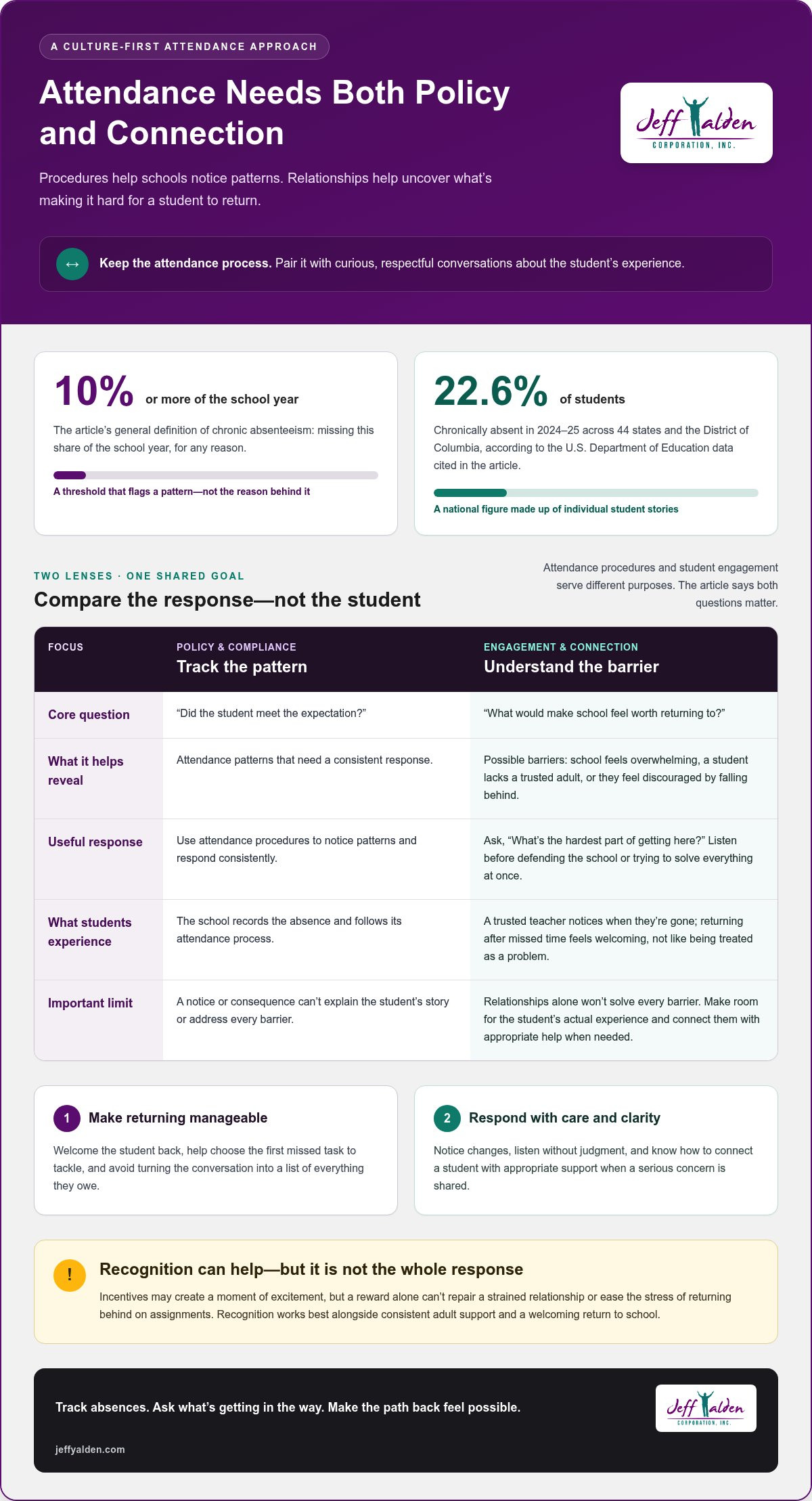
Chronic absenteeism is generally defined as missing 10% or more of the school year, for any reason. The threshold helps schools identify a serious pattern, but it doesn’t explain the story behind it. Reducing chronic absenteeism in high schools starts with looking beyond the attendance code and asking what a student experiences when they think about coming back.
The Reality of High School Absenteeism in 2026
The pandemic disrupted routines and relationships. For some students, time away from school became more than a temporary break. Returning to crowded hallways, social pressure, missed work, or a sense of being out of step can make re-entry difficult. What looks like skipping may be emotional withdrawal: a student pulls away before anyone realizes how disconnected they feel.
Chronic absenteeism can reflect a breakdown in a student’s sense of belonging. A young person may be less likely to show up when they don’t feel seen, valued, or connected at school. That’s a connection challenge, not a character flaw. Absences have different causes, and relationships alone won’t solve every barrier. The response needs to make room for the student’s actual experience.
Incentives can create a moment of excitement, but a pizza party or certificate can’t repair a strained relationship or ease the stress of returning to class behind on assignments. If the reward ends and the reason to stay home remains, attendance may not change for long. Recognition can help, but it works best alongside consistent adult support and a welcoming return to school.
Why Policy Without Pulse Fails
Attendance procedures help teams notice patterns and respond consistently. Compliance asks, “Did the student meet the expectation?” Engagement asks, “What would make school feel worth returning to?” Both questions matter. The second can reveal a barrier that a notice or consequence can’t address.
Students need reasons to show up that aren’t printed on a syllabus: a trusted teacher who notices when they’re gone, a place where they can contribute, or a conversation that begins with curiosity instead of accusation. Ask, “What’s the hardest part of getting here?” Then listen before defending the school or trying to solve everything in one conversation.
This is the shift from truancy officer to culture architect. Keep tracking absences and following school policy, while also paying attention to the daily signals students receive. Are they greeted? Can they return after missing time without being treated like a problem? A culture built on honest connection gives staff a more human starting point and students a stronger reason to walk back through the door.
The Mental Health Link: Why Your Students Aren’t Showing Up
A student can want to succeed and still dread walking into school. Anxiety about being judged, low mood, conflict with peers, or the pressure of catching up after an absence can turn one difficult morning into a pattern. These challenges aren’t always visible. A student may seem fine in class, then avoid the hallway, the crowded cafeteria, or an assignment they fear they can’t finish.
School can add to that pressure. A packed schedule, public discipline, social tension, or feeling constantly behind may make campus seem like another source of stress rather than a place to find support. That doesn’t mean schools should lower expectations or assume every absence has the same cause. It means asking what’s getting in the way before treating repeated absence as a motivation problem.
The national picture is serious: 22.6% of students across 44 states and the District of Columbia were chronically absent in 2024–25, according to the U.S. Department of Education’s chronic absenteeism data. Behind that figure are individual students with individual reasons for staying home. Reducing chronic absenteeism in high schools means taking those reasons seriously and making it easier to speak up early.
Breaking the Silence on Campus
Students need more than reminders to attend. They need to hear adults talk honestly about stress, setbacks, and asking for help. A teen mental health speaker can help open that conversation in a direct, relatable way. An assembly can challenge silence and help students feel less alone, but it can’t solve an individual student’s struggles on its own.
Staff can build on that opening by noticing changes, listening without judgment, and knowing how to respond when a student shares a serious concern. Crisis intervention skills can help adults recognize when a young person needs immediate support and connect them with appropriate help. Teachers don’t have to become counselors. They do need a clear, caring response that takes what a student shares seriously.
That’s vulnerable authority: being honest and steady without pretending to have every answer. “I’m glad you told me. Let’s work out who can help” can be more useful than a lecture.
Resilience as an Attendance Strategy
Resilience isn’t pretending a bad day doesn’t hurt. It’s finding a next step: name what feels hard, identify a trusted person, and make a manageable plan to return. A teacher might welcome a student back, help them choose the first missed task to tackle, and avoid turning the conversation into a list of everything they owe.
Schools can make resilience part of daily life through calm check-ins, respectful ways to ask for help, and examples of adults acknowledging mistakes and recovering from setbacks. Grit isn’t a trait students either have or lack. It develops through practice, encouragement, and seeing adults model persistence without shame.
That work takes energy from staff. Teacher professional development can help teams practice supportive language and consistent responses, rather than leaving one exhausted teacher to carry the burden alone. Jeff Yalden’s assemblies and teacher development bring conversations about mental health and resilience into school communities.
Comparing Intervention Models: Policy vs. Radical Engagement
A tiered attendance plan gives a school structure: universal support for everyone, targeted attention for students beginning to miss more school, and individualized help for students with persistent absences. That structure matters, but a tier label can’t build trust by itself. If Tier 1 support means only posters, announcements, and reminders, students may hear the message without feeling it applies to them.
The Policy Approach vs. The Human Approach
Data and relationships work best together. Use attendance patterns to notice when support may be needed, then speak with students respectfully to understand what the numbers can’t explain. Schoolwide conversations about honest connection can support Tier 1 engagement and make it easier to identify students who need more personal follow-up.
| Data-driven strategy | Relationship-driven strategy |
|---|---|
| Tracks absence patterns and identifies students who may need follow-up. | Opens a private, curious conversation about what is making attendance difficult. |
| Sets shared expectations and helps teams review whether responses are consistent. | Builds belonging through adult presence, a warm welcome, and a respectful return to class. |
| Shows where a school’s attention is needed. | Helps students experience that attention as care, not surveillance. |
Pair the two approaches. A team might notice that a student’s absences cluster around a particular day, then ask what that day is like instead of jumping to conclusions. Track what support is offered and whether the student reconnects. This makes the numbers useful without reducing a teenager to a data point.
A high-energy assembly can give a whole school a shared moment to talk honestly about connection, resilience, and asking for help. It can create a spark, but it isn’t a stand-alone attendance fix. Its value is in giving staff and students language they can carry into everyday interactions. A message from the stage matters more when students hear the same care in the classroom.
Empowering the Front Lines
Teachers often see students regularly, but they can’t be expected to solve chronic absence alone. Professional development can help staff respond with steadiness and empathy instead of reflexive judgment. The goal isn’t to make every teacher an expert in every struggle. It’s to give them practical ways to notice, listen, and connect a student with appropriate support.
Permission to be real matters. A teacher can say, “I can see coming back feels hard. Let’s figure out one next step,” without lowering expectations or pretending to have all the answers. Shared language and clear ways to pass concerns to the wider team help prevent one educator from carrying the whole load.
Leaders set the tone, staff reinforce it, and students experience support throughout the school day. Jeff Yalden’s school assemblies and teacher development focus on honest engagement and school culture. For a closer look at that approach, explore Jeff Yalden’s school culture work.
4 Radical Strategies to Reduce Absenteeism Today
Culture doesn’t shift because a school sends one more reminder. It shifts when students experience a different kind of welcome and adults know how to make that welcome real every day. These four strategies offer a practical starting point. They won’t remove every barrier, but they can help students reconnect before absence becomes a deeper pattern.
- Launch a Culture Reset with a high-impact assembly. Set a schoolwide tone of honesty, resilience, and belonging. A powerful assembly can give students and staff shared language for discussing what makes school feel hard and what helps people feel connected. Carry the message into classroom conversations and daily interactions. High school assemblies can open the door, but the culture reset depends on what happens after the room clears.
- Make check-ins personal for students beginning to pull away. Have a trusted adult reach out privately and consistently. Keep it human: “I’ve noticed you haven’t been here. What’s making it hard to come in?” Listen before offering solutions. Agree on one manageable next step, such as meeting a staff member at arrival or getting help prioritizing missed work. Follow up without turning every conversation into an attendance warning.
- Turn teacher development into practice, not another demand. Use staff learning time to rehearse welcoming language, supportive responses, and ways to reconnect with students after an absence. Include resilience and adult well-being. Teachers need shared approaches and clear ways to bring concerns to the wider team, not the expectation that one educator will carry every student’s needs alone.
- Use vulnerable storytelling to build trust. Adults who speak honestly about setbacks, mistakes, and asking for help can make those experiences less taboo. Keep stories appropriate and focused on what students can take from them. The point isn’t to make the adult the center of attention. It’s to show students that struggle can be named and reaching out is a strength.
Step-by-Step: The First 30 Days
Start by reviewing attendance patterns and noticing students whose absences are beginning to cluster or who seem increasingly disconnected. Invite a small staff team to conduct a belonging audit: Where do students feel welcomed? Where might they feel invisible, judged, or unsure how to ask for help? Gather student perspectives, choose one clear change, and explain how you’ll follow through.
Long-Term Cultural Sustainability
A speaker or assembly can spark momentum. Daily routines keep it alive. Ask student leaders to identify practices that strengthen connection, and give them a constructive role in shaping school culture rather than policing peers. Keep the work visible through staff check-ins, student feedback, and regular reviews of attendance patterns alongside the support offered.
Reducing chronic absenteeism in high schools takes a shared effort, not a single event or one exhausted teacher. Jeff Yalden’s assemblies and teacher professional development help schools bring honest conversations about resilience and connection into campus life. Explore Jeff Yalden’s school engagement programs as you plan your next culture-building step.
The Jeff Yalden Difference: Turning Attendance Around Through Heart
The students sitting in the back row aren’t unreachable. But they may tune out language that feels distant from their lives, especially if they’ve learned that adults talk about students without listening to them. Clinical support can be essential when a student needs it. A school assembly has a different role: open a human conversation, make it easier to speak honestly, and remind young people that their lives matter. One day can create a turning point, but it can’t promise an attendance turnaround on its own.
Jeff Yalden brings a high-energy, real-and-raw approach to conversations about mental health, suicide prevention, and resilience. His style centers on radical transparency: connecting with students through honest language rather than a polished lecture that leaves them feeling talked at. For school leaders focused on reducing chronic absenteeism in high schools, that kind of connection can help make a wider culture shift feel possible.
More Than a Motivational Speech
A motivational message matters most when it speaks to what students are carrying and gives adults a way to keep the conversation going. Jeff’s work connects mental health, suicide prevention, and resilience without suggesting that one assembly can replace ongoing school support. His lived-experience approach is vulnerable authority in action: speak honestly, stay grounded, and make room for young people to respond without shame.
After a crisis, schools need care, thoughtful communication, and support that continues beyond a single gathering. Jeff’s background in suicide prevention and crisis intervention informs conversations about how a school community can respond and reconnect. A speaker can help set a tone, but school leaders and staff remain central to follow-through. Students need to know which trusted adults they can turn to and what the next step is if they’re struggling.
Booking Your Culture Reset
A meaningful culture reset starts with listening to your school’s needs. What are students saying about belonging? Where do staff see young people pulling away? What conversations feel overdue? These questions can help shape an assembly and teacher professional development around the challenges your community is facing, rather than relying on a one-size-fits-all message.
Keep the work connected across the community. Teachers can carry shared language into classrooms, while school leaders can invite families into clear, supportive conversations about how students are doing and how the school can help them reconnect. Parent and teacher engagement should reinforce the same message students hear: you matter here, and coming back is a step we’ll help you take.
A powerful assembly can spark a school-year reset, but daily actions sustain it: a warm welcome after an absence, an adult who follows up, and a plan that doesn’t reduce a student to missed days. Jeff Yalden’s school assemblies and teacher development help schools begin that work with honesty, energy, and heart.
Bring Jeff Yalden to your school to begin resetting your attendance culture.
Make the Next Step a More Connected School
You don’t have to transform every policy before students feel a difference. Start with one visible commitment: make sure every student can name an adult at school who would notice if they were gone. Then give staff the time and support to make that commitment real, day after day. That’s how reducing chronic absenteeism in high schools becomes more than an initiative. It becomes part of how your school shows students they matter.
Jeff Yalden brings a direct, human approach to school culture, with a focus on teen suicide prevention, resilience, and connection. A speaker or event can’t fix attendance by itself. It can create a shared moment that starts conversations your school continues to carry forward.
Ready to take that step? Book Jeff Yalden to help your school build a more connected culture. Start with one meaningful conversation, then keep showing students they have a place at school.
Frequently Asked Questions
What is considered chronic absenteeism in high school in 2026?
Chronic absenteeism generally means missing 10% or more of enrolled school days for any reason, including excused and unexcused absences. The threshold is based on the student’s share of the school year, not a fixed number of days that applies to every calendar. Schools can use it as an early warning signal, then review attendance patterns and talk with the student to understand what support may help.
How does mental health directly impact school attendance rates?
Mental health challenges can make ordinary parts of the school day feel difficult to manage. A student dealing with anxiety may avoid presentations or crowded spaces; low mood may make getting out of bed and keeping up with routines feel overwhelming. Staff can look for changes in attendance alongside changes in participation or peer connection, then approach the student privately and follow school procedures for connecting them with appropriate support.
What are the most effective strategies for reducing chronic absenteeism?
Reducing chronic absenteeism in high schools works best as a coordinated effort, not a single reward or warning. Use attendance records to spot emerging patterns, communicate with families early, and match support to the student’s needs. For example, a mentor might help a student plan how to catch up after illness, while school staff address a recurring barrier such as transportation or a difficult class transition. Review progress regularly and adjust the plan together.
Can a school assembly really help with attendance numbers?
An assembly can contribute to stronger attendance by giving students and staff a shared starting point for talking about connection, resilience, and support. It can’t guarantee a change in attendance on its own. To understand its value, set a clear follow-up plan: reinforce the message in advisory or classroom discussions, invite student feedback, and review attendance patterns over time alongside other supports. The lasting work happens in everyday interactions after the event.
How do we support teachers who are overwhelmed by absent students?
Give teachers a clear, manageable way to flag concerns without making them responsible for solving every attendance barrier. A shared process might include recording a pattern, passing it to a designated team, and agreeing who will follow up with the student or family. Protect time for staff to coordinate missed-work plans, too. When teachers know what they own and where to hand off the next step, support becomes more consistent and less isolating.
What is the difference between truancy and chronic absenteeism?
Chronic absenteeism counts missed school days whether they’re excused or unexcused, while truancy commonly refers to unauthorized or unexcused absence under applicable school or local rules. The terms aren’t interchangeable, and definitions or procedures can vary by location. For school improvement, looking only at unexcused days can miss students whose absences are excused but frequent. Track the full attendance picture while following your district’s policies for truancy.
How do we engage parents in the attendance conversation without being accusatory?
Open with partnership and a specific observation, not blame: “We’ve noticed Jordan has missed several mornings, and we want to understand what would make getting here easier.” Ask what the family is seeing, listen for practical obstacles, and agree on one next step together. Use the family’s preferred communication method when possible, and share a positive update when the student returns. A supportive conversation can reveal barriers a notice alone won’t uncover.
What role does student resilience play in daily attendance?
Resilience can help students recover from setbacks that might otherwise turn into extended disengagement. A student who has missed a test, fallen behind, or had a conflict with a peer may need help choosing a manageable way back, rather than feeling they must fix everything at once. Schools can reinforce this skill by recognizing effort, helping students set a realistic first step, and treating a difficult day as a challenge to work through, not a reason to give up.
