
What if a student’s silence, avoidance, or sudden disruption is a sign they’re struggling, not simply choosing to disengage? In the classroom, that distinction can be hard to spot, and knowing what to say next can feel even harder. Teacher professional development on student anxiety can help turn uncertainty into thoughtful, steady support without asking educators to diagnose or treat students.
You already care about your students. But caring doesn’t always make the next step clear, especially when a student is distressed and classmates are watching. Practical guidance can help you respond with compassion while staying within your role.
In this article, you’ll learn how focused professional development can help you notice possible signs of distress without labeling students, use calm and consistent classroom responses, and make appropriate referrals. Jeff Yalden’s teacher professional development connects open conversations about student well-being with strategies educators can practice, reflect on, and carry into the school day.
Key Takeaways
- Notice patterns in what happens, when it happens, and what support follows, without assuming you know what a student feels.
- Separate preventive routines, calm in-the-moment responses, and follow-up so you can choose a supportive next step.
- Use teacher professional development on student anxiety to move from awareness to practical strategies you can rehearse and reflect on.
- Practice realistic classroom scenarios and non-stigmatizing language to make compassionate responses easier to use under pressure.
- Connect shared classroom expectations with existing school support pathways while adapting your approach to each student.
Teacher Professional Development on Student Anxiety: Why Classroom Responses Matter
A student who avoids a task, goes quiet, asks the same question repeatedly, or disrupts a lesson may be communicating distress. The same behavior can have different causes, though, and one moment rarely tells the whole story. Notice what is happening, stay curious, and respond without rushing to a label.
Teacher professional development on student anxiety helps educators respond to possible distress with care and consistency. The purpose is practical: build shared approaches to classroom support, not train teachers to act as clinicians. Noticing distress means observing a change or pattern and offering appropriate support. Diagnosing means determining whether a student has a mental health condition, which is outside a teacher’s role.
These responses matter because school is where students learn, connect, and face daily challenges. A broad overview of mental health in education describes how well-being can shape students’ academic and social experiences. Predictable, respectful responses from adults can make it easier for students to ask for support. A classroom response alone cannot be assumed to resolve the underlying issue.
How student anxiety may show up at school
Possible signs include avoiding a particular activity, repeatedly seeking reassurance, or struggling to start a task even after instructions are clear. Some students may become quiet; others may seem restless or disruptive. These behaviors are signals to observe, not proof of anxiety or its cause. Note what changed, when it happens, and what seems to help. A calm question such as, “What part feels hard to start?” invites the student to share without telling them how they feel.
What professional development can help teachers do
Useful training gives staff a chance to practice steady, nonjudgmental responses and use shared language across classrooms and other school settings. When adults agree on basic approaches, students are less likely to face sharply different reactions to similar situations. Consistency doesn’t mean treating every student the same. It means offering respect, clear expectations, and a thoughtful next step while adapting to individual needs.
A student-centered, trauma-informed lens can strengthen that practice. It encourages educators to consider context, prioritize emotional safety, and avoid interpreting behavior as defiance before understanding more. Explore trauma-informed teaching professional development for another perspective on building supportive school environments. Focused teacher professional development helps staff move from good intentions to responses they’ve discussed, practiced, and can reflect on together.
Recognize Student Anxiety Without Diagnosing or Making Assumptions
Good observation starts with curiosity, not a conclusion. A student’s reluctance to participate might relate to a particular task, a transition, a recent change, or something you can’t see from the classroom. Your role is to notice what’s happening and respond respectfully, not decide what a student is feeling or assign a diagnosis.
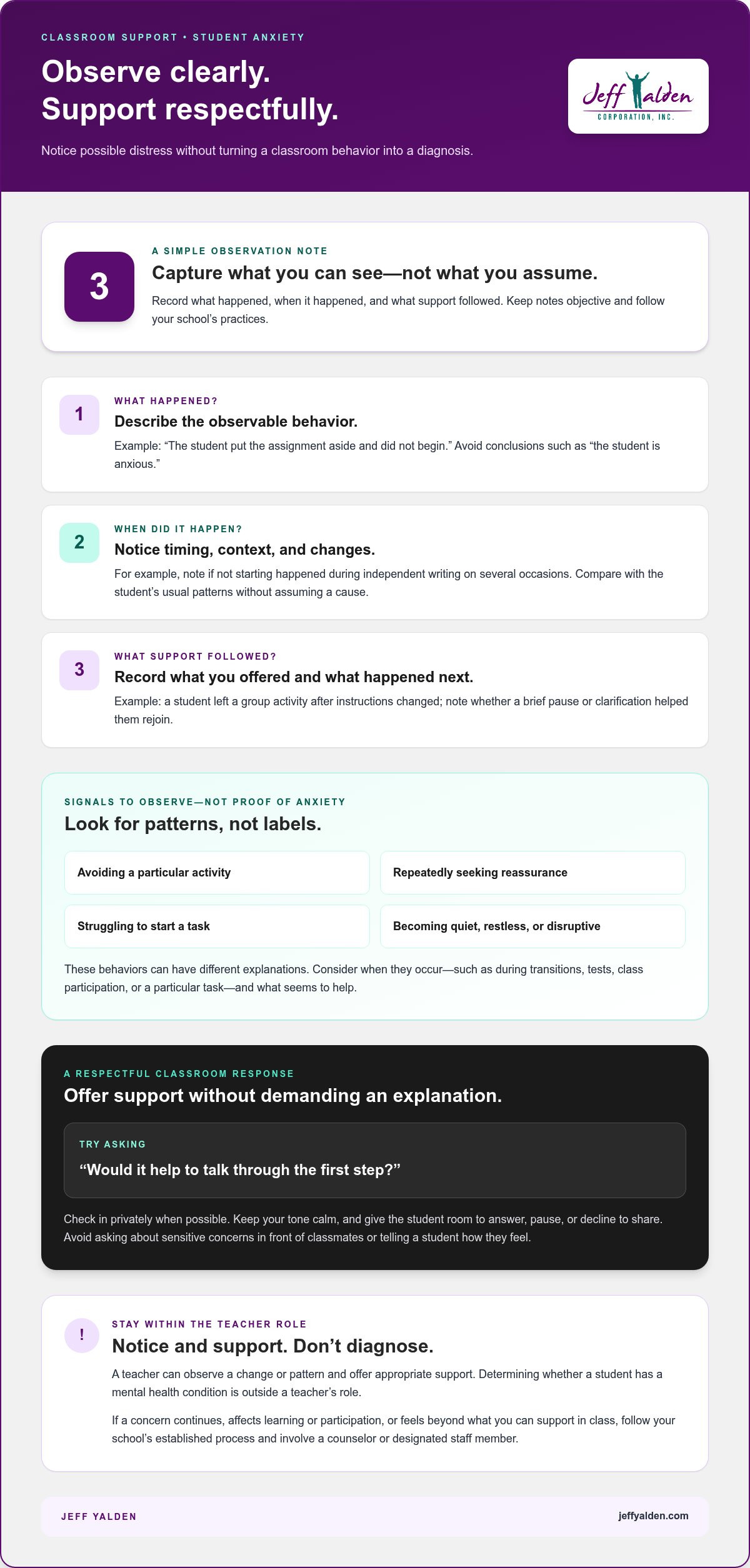
Try a simple three-part note: what happened, when it happened, and what support followed. For example, record that a student left a group activity after the instructions changed, then note whether a brief pause or clarification helped them rejoin. Keep notes objective and follow your school’s practices. Avoid interpretations such as “the student is anxious” when what you observed was “the student asked to leave during group work.”
Repeated observations reveal more than one isolated behavior because they show patterns, changes, and context without turning a guess into a label.
Notice patterns, context, and changes
Look at when a behavior occurs, not just what it looks like. Does a student seem unsettled during transitions, tests, class participation, or a particular kind of task? Compare observations with the student’s usual patterns, while remembering that quietness, restlessness, or reluctance can have many explanations. The goal isn’t to build a case for anxiety. It’s to gather clear, respectful observations that can guide a supportive next step.
A concise record might include:
- What: The student put the assignment aside and did not begin.
- When: This happened during independent writing on several occasions.
- Support: Note what you offered and what happened next, without assuming why.
Use supportive language that protects student dignity
Check in privately when possible. Keep your tone calm, and give the student room to answer, pause, or decline to share. “Would it help to talk through the first step?” offers support without demanding personal details. Avoid asking a student to explain a sensitive concern in front of classmates or telling them, “You’re anxious.” Even well-intended words can feel exposing.
If a concern continues, affects learning or participation, or feels beyond what you can support in class, follow your school’s established process and involve a counselor or designated staff member. SchoolSafety.gov’s guidance on supporting student mental health offers a broader school-based context for connecting student needs with appropriate support. Focused teacher professional development on student anxiety helps staff practice these careful distinctions and build shared, respectful habits. Jeff Yalden provides educator-focused professional development that connects staff learning with open conversations about student well-being.
Which Anxiety-Support Strategies Belong in Teacher Professional Development?
Strong anxiety-support training doesn’t hand teachers one script and call it done. It helps staff choose among three response layers: make the classroom more predictable, support a student through a difficult moment, and follow up or involve designated staff when classroom support isn’t enough. The right action depends on the student, situation, and school’s established processes. No single classroom technique can promise to prevent or resolve anxiety.
Teacher professional development on student anxiety should address all three layers. The American Psychological Association’s practical strategies for supporting anxious students can help educators consider supportive classroom actions while respecting the limits of their role.
Preventive practices that make classrooms feel more predictable
Clear instructions, familiar routines, and advance notice of a transition can reduce unnecessary uncertainty. Where practical, tell students what is changing and what will happen next. Offer a manageable choice, such as starting with one of two questions, rather than a long menu that adds another decision. These practices reflect a trauma-informed focus on safety and predictability, while leaving room to adapt to individual students.
These are supports, not guarantees. A routine that helps one student may not work for another, and a student’s response can change from day to day.
Responsive support during a difficult moment
Keep your language calm, brief, and low-pressure. Acknowledge what you can observe without declaring what the student feels: “This seems like a tough moment. Would you like a pause or help with the first step?” A reasonable pause or simple choice can offer a way forward without making the interaction a public event. If concerns persist or go beyond classroom support, follow school protocols and involve designated support staff.
| Classroom situation | Supportive teacher action | Role boundary |
|---|---|---|
| A transition is coming | Give clear advance notice and explain the next step. | Don’t assume the student’s reaction reveals a diagnosis. |
| A student is stuck starting work | Offer to clarify the first step or a manageable choice. | Don’t pressure the student to explain personal concerns. |
| Distress continues or classroom support isn’t enough | Follow school processes and connect with designated staff. | Don’t try to assess or treat a mental health condition. |
Professional learning becomes useful when teachers practice matching a response to the moment, then reflect on what happened. Shared approaches can help adults respond more steadily, but consistency isn’t rigidity. The goal is a thoughtful next step, not a perfect response or a promise that one strategy will fix everything.
How to Turn Anxiety Training into Practice Teachers Can Use
A training session matters most when educators can carry a strategy into the next school day. Build the learning around a repeatable cycle, then revisit it. This turns teacher professional development on student anxiety from a one-time conversation into a shared process for learning, practicing, and adjusting within each school’s routines.
- Identify needs. Invite staff to name situations where they feel unsure, such as a student withdrawing during participation or becoming distressed before a test. Keep the focus on adult learning needs, not labeling students.
- Teach one strategy. Introduce a practical response, such as offering a calm, private check-in or breaking a task into a clear first step.
- Rehearse. Practice the words and actions in a brief scenario before using them in class.
- Reflect. Discuss what felt respectful, what could be adjusted, and whether the response followed school procedures.
- Revisit. Make space for staff to share what they learned and refine the approach together.
Practice realistic classroom scenarios
Keep scenarios short and familiar: a student hesitates to speak during class, struggles with a transition, freezes before a test, or asks to leave the room. In pairs, take turns practicing what to say, what to observe, and which next step fits the teacher’s role. Use non-stigmatizing language and avoid scripts that claim to know what a student feels.
Then debrief. Did the adult’s tone lower pressure or add to it? Was the conversation private? Did the student have a reasonable choice? Were expectations and boundaries still clear? These questions help staff see how small differences in delivery can change the feel of an interaction. Adapt examples and strategies to students’ ages, classroom contexts, and school procedures. One approach won’t fit every situation.
Create follow-through after the training session
Practice shouldn’t end when the session does. After trying a strategy, educators can take a few minutes to reflect individually or discuss the experience with a colleague: What did I notice? What did I try? What might I adjust? When a concern needs more than classroom support, use the school’s established pathways and consult the appropriate counselor or designated student-support staff.
Measure progress through learning and process: educators can describe the strategy, use respectful language, and know how to follow school procedures. Don’t promise that a training or technique will prevent or resolve anxiety. Keep follow-up focused on what staff noticed, how they responded, and what they can refine in line with school practices.
Ready to help staff move from awareness to practice? Explore teacher professional development focused on student mental health and well-being.
Build a Schoolwide Response with Student-Anxiety Professional Development
Students move through classrooms, hallways, activities, and conversations with different adults. When each adult responds in a completely different way, support can feel unpredictable. Schoolwide professional development helps staff connect classroom observations and responses with existing support pathways, so educators know how to coordinate rather than carry concerns alone.
Professional development can help school staff respond to possible student distress with greater consistency, compassion, and respect for each student’s needs. Shared expectations give educators common ground: listen without judgment, follow established procedures, and know whom to involve when a concern needs more support. Consistency isn’t a rigid script, though. A response that works for one student may not suit another, and teachers need room to adapt while honoring individual needs and school guidance.
Align training with the school’s existing support systems
Make time for counselors and relevant student-support team members to clarify how classroom concerns connect to school processes. Training should help teachers understand whom to consult and how to share observations through established channels. Referral, safeguarding, and crisis procedures must follow current local school policy, not a generic training example. Anxiety support can also sit within broader well-being efforts, including teen suicide prevention programs when that connection fits the school’s priorities and appropriate support framework.
Make professional development feel human, relevant, and actionable
Policies matter. So does the way adults speak and listen. Effective teacher professional development on student anxiety creates space for candid conversations about student mental health and well-being, then helps educators reflect on what compassionate support looks like in their own school community. Use familiar situations, invite staff to consider different student perspectives, and leave room to discuss what feels realistic in each role. The aim is stronger awareness and more thoughtful action, not clinical treatment or a promise of specific outcomes.
Jeff Yalden’s educator and community programs focus on student mental health, well-being, resilience, and open conversations. This human focus helps school communities move from good intentions toward shared reflection and practical support. The goal isn’t for every adult to say the same words. It’s for students to encounter adults who take their concerns seriously, stay within their roles, and know how to work together.
If your school is ready to strengthen that shared approach, take a low-pressure next step: Explore teacher professional development with Jeff Yalden.
Turn Awareness into Steady, Compassionate Support
Students won’t always tell you what’s wrong. A change in participation, a difficult transition, or hesitation to begin can be a reason to pause and notice, not a reason to label. Observe patterns and context, offer calm support, and involve the right school staff when a student needs more than classroom help.
That’s the heart of effective teacher professional development on student anxiety: helping educators move from concern to thoughtful action. Practice realistic scenarios, reflect together, and build shared expectations that still leave room for each student’s needs. The goal isn’t to have every answer. It’s to help students meet adults who respond with care and know how to work together.
Jeff Yalden provides teacher professional development focused on student mental health and well-being. His school and community programs also create space for open conversations about mental health and resilience. If you’re ready to strengthen support across your school community, explore teacher professional development with Jeff Yalden. Small, steady steps can help create a more supportive path forward.
Frequently Asked Questions
What should teacher professional development on student anxiety include?
Teacher professional development on student anxiety should help educators notice possible distress, respond calmly, and understand when to use school support pathways. Include practical classroom strategies, neutral language, realistic scenario practice, and time to reflect. Training should also clarify role boundaries: teachers can observe and support students, but they shouldn’t diagnose or treat anxiety. Staff should adapt strategies to students’ needs, grade levels, classroom contexts, and school procedures.
How can teachers recognize anxiety in students without diagnosing them?
Look for patterns and changes, not a single behavior. A student may avoid participation, seek repeated reassurance, or struggle to begin a task, but those actions can have many causes. Notice what happened, when it happened, and what support followed. Keep records objective and consistent with school practices. Instead of saying, “The student is anxious,” describe what you observed and share concerns through appropriate school channels.
What can a teacher say to a student who seems anxious?
Use calm, private, nonjudgmental language that offers support without telling the student what they feel. You might say, “Would it help to talk through the first step?” or “Would you like a short pause or help getting started?” Give the student room to answer, take time, or decline to share. Avoid pressing for personal details in front of classmates, and keep expectations clear and respectful.
Can classroom routines help students who experience anxiety?
Predictable routines may make classroom expectations and transitions clearer for students. Give instructions in manageable steps, explain what happens next, and offer advance notice of changes when practical. A limited choice can also give a student some control without adding too many decisions. These practices can support a steadier classroom, but they won’t work the same way for every student or guarantee that anxiety will ease.
When should a teacher involve a school counselor about student anxiety?
Consult a school counselor or designated support staff when concerns persist, interfere with a student’s participation, or seem to need support beyond what you can provide in class. Share objective observations and follow your school’s referral, safeguarding, and crisis procedures. If a student’s safety may be at immediate risk, use the school’s established urgent-response process. Don’t try to assess or treat a mental health condition yourself.
How can schools make anxiety-focused teacher training practical?
Start with situations educators recognize, then teach a response, rehearse it, reflect, and revisit the learning. Staff can practice brief scenarios involving a transition, participation, or difficulty starting an assignment. Debrief the language, tone, privacy, and next steps, then adapt strategies to grade levels and school procedures. Follow-up conversations with colleagues or relevant student-support staff help connect training to everyday practice without promising specific outcomes.
What is the difference between supporting an anxious student and providing therapy?
Teachers support students through respectful classroom interactions, clear expectations, practical adjustments, observation, and appropriate referrals. Therapy involves mental health assessment or treatment, which is outside a teacher’s role. You don’t need to identify a condition to respond with care. If a student needs support beyond the classroom, follow school procedures and coordinate with designated staff, leaving clinical decisions to qualified mental health professionals.
