
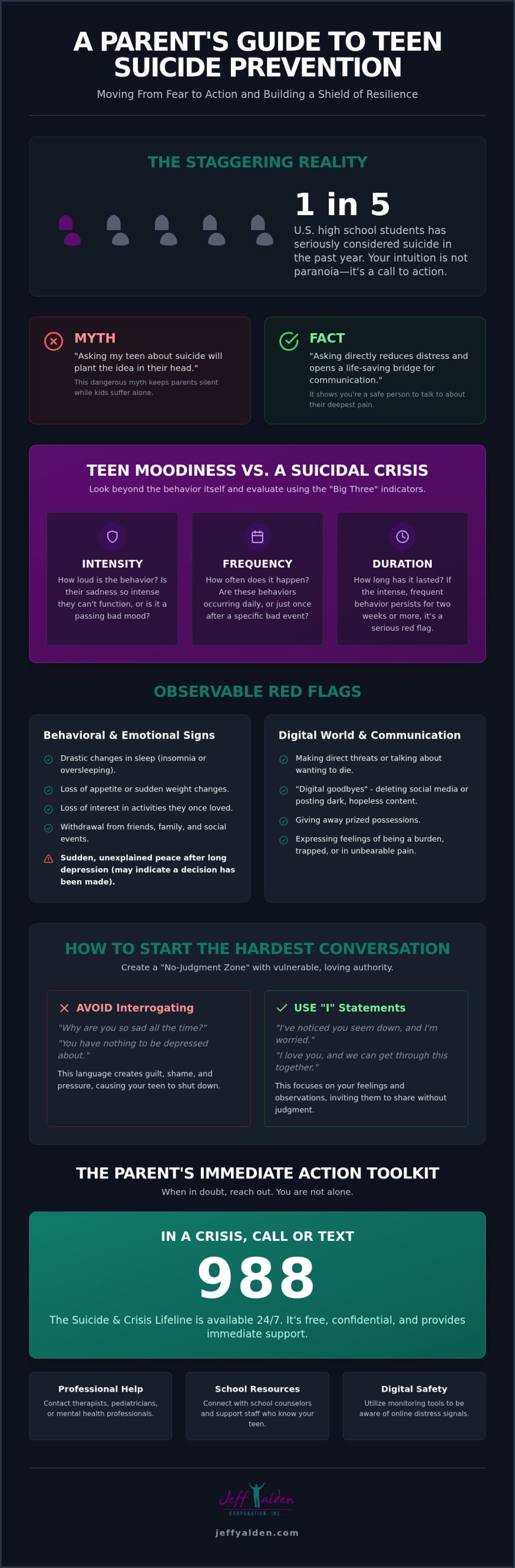
Right now, 20% of U.S. high school students have seriously considered ending their lives in the past year. That’s one in five kids sitting in classrooms, scrolling on phones, and living under your roof. It’s a staggering, gut-wrenching reality that makes typical clinical advice feel hollow and dangerously slow. You’re likely exhausted by medical jargon and terrified that saying the wrong thing will push your teen further into the darkness. I get it. I’ve been in those trenches. I know that the guilt and isolation can feel just as heavy as the fear itself. Finding the right suicide prevention resources for parents of teens shouldn’t feel like a second job when you’re already in a crisis.
You deserve more than just a list of phone numbers; you need a strategy. This guide provides the raw, real-world tools you need to identify subtle warning signs and start life-saving conversations. We’re moving past the polite talk and getting into the grit of building lasting resilience. We’ll explore vetted resources that actually resonate with modern teens and walk through a clear plan of action. From understanding 2026 legislative shifts to mastering the 988 system, you’ll gain the confidence to lead your child back to hope. Let’s bridge the gap together.
Key Takeaways
- Learn why asking your teen direct questions about suicide won’t “plant the seed” but actually provides a life-saving bridge.
- Identify the “Big Three” indicators of intensity, frequency, and duration to distinguish between typical teen moodiness and serious red flags.
- Access the most effective suicide prevention resources for parents of teens, including the 988 lifeline and modern digital safety tools.
- Master the art of the “No-Judgment Zone” by using “I” statements to start tough conversations without making your teen feel like you’re interrogating them.
- Shift from “crisis mode” to “growth mode” by building a protective shield of resilience through mentorship and proactive coaching strategies.
Facing the Fear: Why Your Teen Needs You to Start the Conversation
That cold knot in your stomach isn’t paranoia. It’s your intuition screaming that something is wrong. Don’t ignore it. In 2026, the digital world has made isolation feel like a crowded room, and your teen is likely drowning in the noise. According to Understanding Youth Suicide, the factors contributing to this crisis are incredibly complex, but the solution almost always starts with a single, courageous intervention. You might be paralyzed by the fear that asking about suicide will “plant the seed.” It won’t. That’s a dangerous myth that keeps parents silent while their kids suffer in secret. Research consistently shows that asking directly actually reduces distress. It opens a pressure valve that has been building for months.
Stop trying to be a clinical expert. Your teen doesn’t need a doctor in the kitchen; they need a parent who is a vulnerable authority. This means being the person who loves them most while admitting that life is hard for you, too. Finding the right suicide prevention resources for parents of teens is about taking proactive ownership of the emotional climate in your home. You’re the first responder. You’re the bridge. Don’t wait for a slow-moving medical system to give you permission to save your child’s life. The urgency of this moment requires you to step into the gap right now.
Normalizing Mental Health in Your Home
Your teen won’t open up if they think they have to be perfect for you. They see your “I’m fine” mask and they copy it. Break that cycle today. Lead with your own imperfections. Tell them when you’ve had a rough day or when you feel overwhelmed by the pressures of 2026. This radical transparency creates a safe harbor where they can finally drop their own guard. If you want to dive deeper into how to bridge this gap, a teen mental health speaker can help you break the silence and start building real resilience. It’s about making mental health a daily conversation, not a crisis-only event.
The Parent’s Emotional Anchor
You have to manage your own anxiety before you walk into their room. If you’re radiating panic, your teen will shut down to protect you. They don’t want to be the cause of your breakdown. Find your “why” before you turn the doorknob. Your “why” is their heartbeat, their future, and the love that exists even in the middle of this mess. You don’t need a perfect script. There’s no such thing. Your presence and your willingness to sit in the dark with them matter more than any clinical phrase you could memorize. When looking for suicide prevention resources for parents of teens, remember that you’re the most powerful resource in the room. Stay grounded. Stay present. Stay with them.
Warning Signs vs. Teen Moodiness: Decoding the Radical Truth
Every teen has bad days. They slam doors. They mope. They claim the world is ending because of a failed test or a breakup. But there is a massive difference between typical adolescent angst and a life-threatening crisis. To tell the difference, you must look at the Big Three: Intensity, Frequency, and Duration. It isn’t just about what they are doing; it’s about how loud the behavior is, how often it happens, and how long it lasts. If your teen’s sadness is so intense they can’t function, occurs daily, and has lasted for weeks, you aren’t looking at a phase. You are looking at a red flag.
Don’t ignore their digital world either. In 2026, a teen’s online presence is often a truer reflection of their soul than the face they show at the dinner table. Look for “digital goodbyes” like sudden account deletions or posts featuring dark, hopeless imagery. There’s a fine line between a teen wanting privacy and a teen withdrawing into isolation. Privacy is about boundaries; withdrawal is about disconnection. One of the most chilling signs is a sudden, unexplained sense of peace after a long period of depression. This often indicates they have made a decision and feel a sense of relief because they believe the pain is finally ending. This is the moment to use every Youth Motivational Speaker insight you can find to intervene immediately.
Physical and Behavioral Red Flags
Watch the body. Changes in sleep patterns, whether it’s insomnia or sleeping eighteen hours a day, are often the first indicators of a shifting mental state. You might notice a sudden loss of appetite or a complete lack of interest in things they once loved, like sports, art, or gaming. A behavioral baseline is the “normal” range of your teen’s unique personality, including their typical sleep, social, and emotional patterns. When they deviate from this baseline consistently, it’s time to lean in. Finding reliable suicide prevention resources for parents of teens starts with knowing your child’s specific patterns better than anyone else.
Verbal Cues You Can’t Ignore
Teens rarely say “I am going to kill myself” as their first cry for help. Instead, they use language soaked in hopelessness. Listen for phrases like “I just want to sleep forever,” “You’d be better off without me,” or “Nothing is ever going to change.” These aren’t just dramatic statements; they are windows into a mind that sees no exit. If you’re unsure if what you’re hearing is a crisis, check out the teen suicide warning signs checklist for a deeper dive into these life-saving distinctions. Using the right suicide prevention resources for parents of teens means being brave enough to hear the words they aren’t quite saying yet.
How to Have the ‘Hardest’ Conversation Without Pushing Them Away
You’re standing outside their bedroom door. Your heart is hammering against your ribs. You’re terrified that if you say the word “suicide,” you’ll break something that can’t be fixed. Let me tell you right now: the silence is what breaks them. The conversation is what saves them. To do this right, you have to create a No-Judgment Zone. This isn’t a courtroom. It’s a sanctuary. Forget the clinical scripts you’ve read online. They feel fake to a teen who is already feeling disconnected. Instead of an interrogation, try a side-by-side approach. Talk while you’re driving or walking. It removes the pressure of constant eye contact and makes the heavy stuff easier to carry.
Use “I” statements to stay on their level. Instead of saying “You’re acting weird,” try “I feel worried because I’ve noticed you’re quieter than usual.” This keeps them from getting defensive. Finding the most effective suicide prevention resources for parents of teens is a journey that begins at the kitchen table, long before you ever reach for a professional directory. Use the power of the pause. After you ask a hard question, shut up. Let the silence hang there. Your teen needs to see that you’re strong enough to sit in the quiet with their pain. If you rush to fill the gap, you’re just managing your own anxiety, not helping theirs.
If they say “Yes, I’ve thought about it,” don’t panic. Don’t scream. Don’t start a lecture about how much they have to live for. Take a breath and say, “Thank you for telling me. I am so glad you shared that. We are going through this together.” Validation is the first step toward safety. It’s the moment they realize they don’t have to carry the weight alone anymore.
The Radical Transparency Script
Start with raw honesty. Say something like, “I’ve noticed you haven’t been yourself lately, and it scares me because I love you.” Then, ask the direct question. “Are you thinking about killing yourself?” Use the word. Don’t dance around it. Using clear language tells them you’re a safe person who can handle the truth. Your job in this moment isn’t to fix the problem; it’s to validate the pain. Let them know that while you might not have all the answers, you are committed to finding the right suicide prevention resources for parents of teens together.
Handling Resistance and Anger
They might get angry. They might yell or tell you to get out. Remember that anger is often just a mask for deep, terrifying pain. Stay calm. Don’t let them push your buttons. Your stability is their anchor. Make the “I’m not leaving” promise. Tell them, “I know you’re mad, and that’s okay. But I’m not going anywhere. I’m in this with you.” This is how you build the emotional bridge that leads them back to hope. You’re showing them that your love is bigger than their darkest thoughts.
The Parent’s Immediate Action Toolkit: Essential Resources for 2026
When you’re in the middle of a storm, you don’t need a lecture. You need a map. You need to know exactly where to turn when the silence in your house feels heavy and dangerous. This isn’t about being a perfect parent. It’s about being a prepared one. Having a toolkit ready means you don’t have to think when the panic sets in. You just act. The landscape of 2026 has brought new challenges, but it has also brought faster, more accessible suicide prevention resources for parents of teens that can bridge the gap between a dark thought and a life-saving intervention.
Start with the 988 Suicide & Crisis Lifeline. It is the nationwide gold standard for a reason. You can call it, text it, or chat online at 988lifeline.org 24/7. It’s free and confidential. If your teen prefers texting, the Crisis Text Line at 741741 is a vital resource where they can connect with a crisis counselor immediately. These aren’t just numbers; they are lifelines that exist to catch your child when they feel like they’re falling. Beyond the hotlines, you need a Mental Health Go-Bag. This is a physical or digital folder containing your teen’s medical history, current medications, emergency contacts, and a list of their “safe” people. Having this ready saves precious minutes during a crisis.
Digital safety is the next layer of your shield. In 2026, several apps allow teens to create their own safety plans, listing triggers and coping strategies they can access with one tap. Schools are also your allies. Reach out to school counselors and School Resource Officers (SROs). They see your teen in a different environment and can provide a layer of supervision and support that you can’t offer alone. They are trained to handle these moments with care and urgency.
Professional and Community Support
Finding a trauma-informed therapist or a youth life coach is a critical step in moving from crisis to growth. While therapists handle the clinical side, a coach focuses on mindset and daily resilience. Community dialogue is just as important. I’ve seen how high school assemblies can transform a campus culture overnight by normalizing the conversation around mental health. You also need a support group for yourself. You cannot carry this weight alone without eventually breaking. Surround yourself with other parents who understand the “real and raw” reality of this journey.
Immediate Steps for Home Safety
- 1. Secure all medications and firearms immediately. Lethal means safety is the most effective way to prevent an impulsive act. Lock them in a high-quality safe or remove them from the home entirely.
- 2. Remove sharp objects and potential ligatures. Walk through your home with fresh eyes. Remove anything that could be used for self-harm in a moment of high distress.
- 3. Increase supervision without “policing.” Stay present. Keep bedroom doors open. Spend time in shared spaces. It’s about being there, not watching their every move like a hawk.
If you want to bring this message of hope and resilience to your entire community, consider booking a Teen Motivational Speaker who can speak directly to the heart of the struggle.
Resilience is the Goal: Building a Protective Shield Around Your Teen
Safety is the baseline, but resilience is the victory. Once you’ve stabilized the immediate crisis, you can’t stay in emergency mode forever. It’s exhausting for you and suffocating for them. Moving into “Growth Mode” means teaching your teen how to process pain without letting it break them. It’s about building mental muscle. In 2026, the best suicide prevention resources for parents of teens aren’t just about stopping a tragedy; they are about starting a transformation. We want to turn this period of struggle into a story of victory. This is where we stop playing defense and start building a protective shield that lasts a lifetime.
The vision for 2026 is clear. We are moving past the “I’m fine” culture and into a world of radical transparency. Your teen needs to know that their current struggle is a chapter, not the whole book. By focusing on daily habits that build grit, you help them see that they have the power to change their own narrative. This isn’t about avoiding the hard stuff. It’s about being strong enough to walk through it and come out the other side as a victor.
Mentorship and Coaching
Teens are wired to push back against their parents. It’s biological. They often need a “vulnerable authority” who isn’t mom or dad to speak truth into their lives. They listen to people who have been in the trenches and aren’t afraid to show their scars. This is why an academic life coach for high school students often breaks through when everyone else is shut out. A coach builds self-efficacy by shifting the focus from “what’s wrong with me” to “what’s next for me.” It’s about giving them the tools to navigate their own lives with confidence and grit. They need a mentor who validates their pain while demanding their potential.
Long-Term Resilience Strategies
Resilience isn’t something you’re born with; it’s something you build. Start by creating a “Resilience Toolbox” together. This should include tangible habits like movement, journaling, and a list of “safe people” they can text when the world gets loud. We have to move them from “Victim” thinking to “Victor” thinking. A victim asks “Why is this happening to me?” A victor asks “What can I learn from this?” This shift in perspective is the ultimate protective shield. For a complete roadmap on this process, check out our guide on building resilience in teens. Remember, you aren’t just looking for suicide prevention resources for parents of teens to get through the night. You’re looking for a way to give your child their future back. Let’s make that vision a reality.
Step into the Gap: Your Teen’s Future Starts Today
You’ve taken the first step. You’ve stopped ignoring that gut feeling and started looking for the truth. Identifying the “Big Three” warning signs and mastering the “No-Judgment Zone” are your most powerful tools. You don’t have to be a clinical expert to be a life-saver. You just have to be a present, vulnerable authority. Accessing the right suicide prevention resources for parents of teens is the foundation, but building long-term resilience is the ultimate goal.
This journey is heavy. You shouldn’t carry it alone. I’ve spent over 30 years in the trenches of high schools worldwide, using my lived experience to bridge the gap between parents and their kids. As a veteran youth life coach trusted by thousands of schools, I know how to turn a period of struggle into a story of victory. It’s time to move from crisis to growth. Your teen’s story isn’t over yet. It’s just getting started.
Bring Jeff Yalden to your community or school to start the conversation and give your students the “real and raw” tools they need to thrive. Stay bold. Stay resilient.
Frequently Asked Questions
Will asking my teen about suicide put the idea in their head?
No, asking your teen about suicide will not plant the seed or give them the idea. In fact, research shows that being direct reduces distress and provides an emotional pressure valve. You’re showing them that you are a safe person who can handle their darkest thoughts. Silence is far more dangerous than the word itself. By asking, you’re opening a life-saving bridge that lets them know they don’t have to carry the weight alone anymore.
How do I tell the difference between normal teen moodiness and a crisis?
You have to look at the “Big Three” indicators: Intensity, Frequency, and Duration. Normal moodiness is fleeting; a crisis is constant. If their sadness is so intense it prevents them from functioning, occurs daily, and lasts for weeks, it’s a red flag. Watch for a departure from their behavioral baseline, which is their unique pattern of sleep, appetite, and social interaction. When they stop being “them” for an extended period, it’s time to lean in and intervene.
What is the first thing I should do if my teen admits to having suicidal thoughts?
Stay calm and thank them for their radical honesty. Your immediate reaction sets the tone for their safety. Don’t panic or start lecturing them on why they should want to live. Instead, say “I’m so glad you told me, and we’re going to get through this together.” Once they feel heard, your next step is to secure the environment by removing lethal means like firearms and medications. This immediate action creates a physical barrier while you find professional help.
Are there free suicide prevention resources for parents available 24/7?
Yes, the 988 Suicide & Crisis Lifeline is a free, confidential resource available 24/7 via call, text, or chat. It is one of the most reliable suicide prevention resources for parents of teens facing an immediate crisis. Additionally, the Crisis Text Line at 741741 provides instant connection to trained counselors. These services are nationwide and designed to provide immediate stabilization when you feel overwhelmed or don’t know where to turn for professional guidance or support.
How can I help my teen if they refuse to go to therapy?
If your teen resists clinical therapy, try a different approach like a youth life coach or mentor. Teens often push back against clinical settings but might open up to a “vulnerable authority” who speaks their language. Focus on building resilience and “what’s next” rather than just “what’s wrong.” You can also normalize mental health by sharing your own struggles. Sometimes, bringing in an outside voice through school assemblies can help break the stigma and make them more open.
What role does social media play in teen suicide risk in 2026?
In 2026, social media often acts as a double-edged sword that can amplify feelings of isolation and comparison. It creates a “highlight reel” culture that makes teens feel like they’re failing at life. Watch for “digital red flags” such as sudden account deletions or posts with hopeless imagery. Your job is to monitor their online world without being a “police officer.” Encourage digital detoxes and focus on real-world connections to build a protective shield of resilience around them.
How do I talk to my teen’s school about their mental health struggles?
Be direct and transparent with school counselors and administrators. They are your allies in creating a safe environment for your child. Share the specific warning signs you’ve noticed at home and ask about the school’s crisis protocols. You can also advocate for high school assembly programs that focus on mental health to help normalize the conversation for the entire student body. Collaborative communication ensures that your teen is supported both at home and in the classroom environment.
Is a teen life coach the same as a therapist for suicide prevention?
No, they are different but complementary. A therapist provides clinical treatment for mental health disorders and past trauma. A teen life coach, like Jeff Yalden, focuses on mindset, daily habits, and building resilience for the future. While a coach is not a replacement for clinical inpatient treatment, they act as a mentor who helps teens develop the “mental muscle” to stay victors. Using both can provide a comprehensive support system that includes clinical safety and long-term growth.
