
What if the reason your students are vaping in the bathroom has nothing to do with the flavor of the pod and everything to do with the weight of the world on their shoulders? You’ve seen the “scared straight” tactics fail. You’ve felt the collective eye-roll during traditional drug education that feels hopelessly out of touch. It’s exhausting to play cat and mouse with sensors and suspensions while the root cause goes unaddressed. You know deep down that punishment isn’t a strategy; it’s a Band-Aid on a wound that’s much deeper. Finding the right speaker on vaping and substance abuse means looking for someone who doesn’t just talk at kids, but someone who has walked through the fire and knows how to lead them out.
I agree that the current landscape feels like a losing battle, but it doesn’t have to stay that way. This article will show you how a radical, mental health first approach can transform your campus culture from one of evasion to one of empowerment. We’ll explore how to move past the “cringe” to reach the heart of student anxiety. You’ll discover practical tools for your staff to handle the emotional side of addiction while giving your students the resilience they need to choose a different path for 2026 and beyond.
Key Takeaways
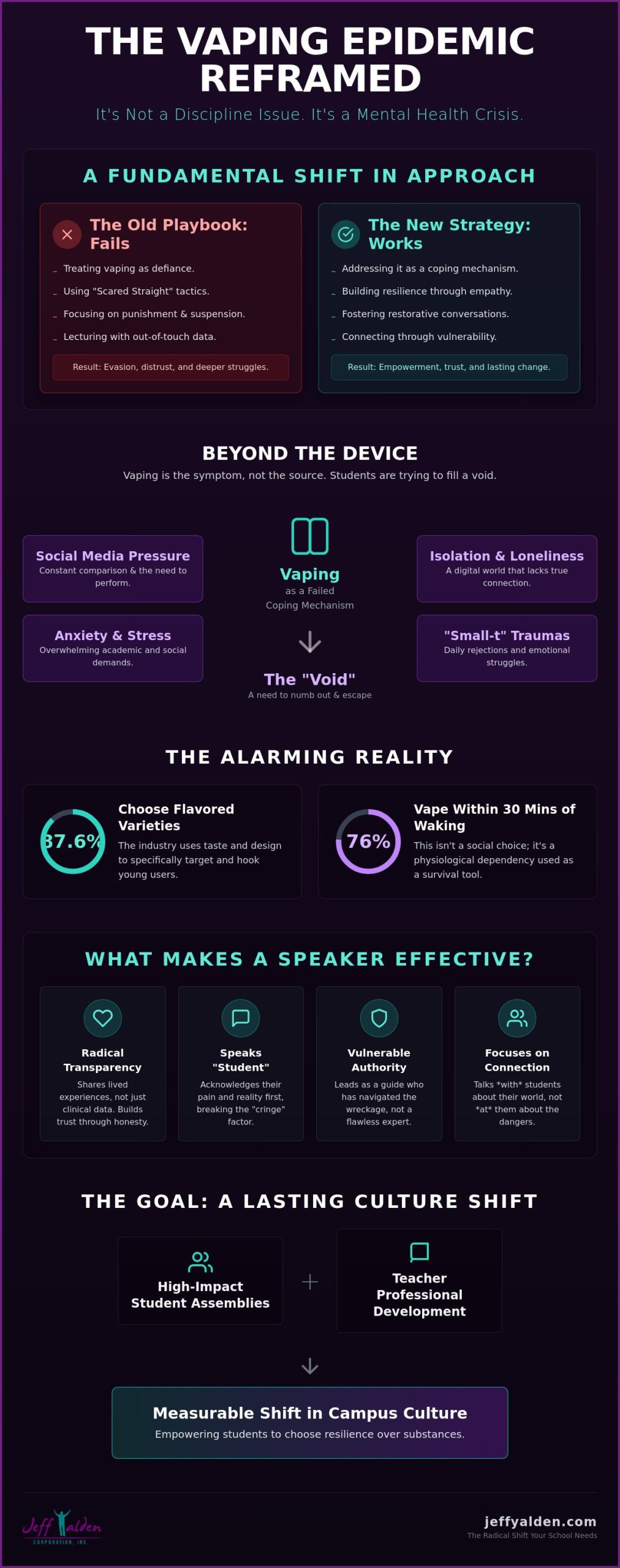
- Stop treating vaping as a discipline issue and start addressing it as a mental health coping mechanism for Gen Alpha.
- Learn how to identify a speaker on vaping and substance abuse who uses radical transparency to break through the “cringe” factor and reach students on a visceral level.
- Discover why “scared straight” tactics are dead on arrival and how restorative models build lasting resilience instead of temporary fear.
- Understand the power of combining high-impact student assemblies with teacher professional development to create a measurable shift in campus culture.
- Move beyond the device to the “void” students are trying to fill, empowering them to choose resilience over substances in the high-pressure landscape of 2026.
The Vaping Epidemic in 2026: Why Traditional Tactics Are Failing Our Kids
The Juul era is ancient history. By 2026, the landscape has shifted into something far more discreet and deeply entrenched. We aren’t just dealing with a “cool” trend anymore. We’re dealing with a generation that uses nicotine to self-medicate a level of anxiety we never had to face at their age. If you’re looking for a speaker on vaping and substance abuse, you have to find someone who realizes that “Just Say No” was dead on arrival for Gen Alpha. They don’t want a lecture. They want the truth. They’ve grown up with the world’s information in their pockets; they can smell a fake from a mile away. Scared straight tactics don’t work. In fact, research suggests these methods can actually increase curiosity in some demographics rather than building resilience. Vaping in 2026 is a mental health crisis disguised as a disciplinary problem.
The Evolution of the Device: From Nicotine to Coping
Today’s devices are designed to be invisible. They look like pens, highlighters, or USB drives. This isn’t about looking tough in the parking lot. It’s about the student who can’t make it through second period without a hit because their heart is racing from social media pressure. Consider these realities:
- 87.6% of teen e-cigarette users chose flavored varieties in 2024; the industry knows exactly how to hook them through taste and design.
- Social media has rebranded substance use as a form of “aesthetic self-care,” making it harder for students to see the danger.
- Discreet devices make bathroom breaks a standard ritual for students trying to “numb out” for five minutes to escape the classroom.
Students view this as “less harmful” than cigarettes, even though 76% of those who vape report using their device within 30 minutes of waking. That isn’t a social choice; it’s a physiological dependency used as a survival tool.
The Disconnect Between Data and Behavior
You can show a teenager a picture of “popcorn lung” until you’re blue in the face. It won’t change a thing. Why? Because a teen with high anxiety cares more about surviving the next hour than a health complication ten years down the road. They are well aware of the health risks of vaping, but the immediate relief of nicotine outweighs a future threat. Their brains are wired for the “now.” When you hire a speaker on vaping and substance abuse, you need someone who speaks “student,” not “administrator.” You need someone who acknowledges their pain first. If you don’t address the “why” behind the hit, the “what” will never change. We have to stop talking at them and start talking with them about the void they’re trying to fill.
The Invisible Link: Vaping, Substance Abuse, and the Mental Health Crisis
Vaping isn’t the problem. It’s the smoke screen. When we look at a student holding a device, we’re seeing a visible solution to an invisible pain. They aren’t just chasing a buzz; they’re trying to fill a void that feels bottomless. This is where most programs fall short. They focus on the hardware while ignoring the heart. To make a real impact, a speaker on vaping and substance abuse must be willing to go into the basement of a student’s soul. We have to talk about the “small-t” traumas, the daily rejections, and the suffocating pressure of a digital world that never sleeps. Students aren’t “bad kids” making “bad choices.” They are hurting kids looking for a way to breathe.
The intersection of substance use and teen mental health is where the battle is won or lost. If we don’t address the anxiety, the depression, and the sense of isolation, any “awareness” we provide is just noise. Research on Teen Vaping and Mental Health highlights that nicotine use is often a precursor or a partner to deeper emotional struggles. I lead as a “vulnerable authority” because I’ve been in those dark places. I don’t stand on a stage as a clinical expert; I stand there as a guide who has navigated the wreckage. When students see that raw transparency, they stop looking at their phones and start looking at their own lives.
Vaping as a Failed Coping Mechanism
The number one driver of teen substance use is the desperate need to “turn off” the noise. In a world that feels chaotic and out of control, nicotine offers a deceptive sense of mastery. It’s a quick hit of dopamine that whispers, “You’ve got this,” even as it tightens the chains of addiction. It’s a vicious cycle: anxiety leads to the vape, and the vape eventually leads to more anxiety. We have to break that loop by giving them real resilience tools. We need to show them that they can handle the noise without the device. If you want to see this change in your hallways, it might be time to bring in a youth motivational speaker who understands the weight these kids are carrying.
Substance Abuse and Suicide Prevention: The Dark Connection
We can’t talk about vaping without talking about the ultimate crisis. Substance use increases impulsivity. It lowers the floor and raises the ceiling of what a student might do when they hit a breaking point. This is why a comprehensive teen suicide prevention program must be woven into every conversation about drugs. Every vaping assembly is, at its core, a mental health assembly. We are fighting for their lives, not just their lungs. When we connect the dots between the pipe and the pain, we give students a reason to quit that is bigger than a school rule. We give them permission to choose life.
Beyond the Device: What to Look for in a Vaping and Substance Abuse Speaker
Stop looking for a lecture. Start looking for a legacy. Most schools make the mistake of booking a one-and-done presentation that students forget by the time they hit the cafeteria. You need a speaker on vaping and substance abuse who doesn’t just deliver a speech but ignites a movement. This means vetting for radical transparency. Can the person on your stage handle the raw, unfiltered questions from a teenager who is currently struggling? If they can’t be real about their own imperfections, they won’t reach the kids who are hiding theirs. You know the feeling of a guest speaker who stays on the surface; the students tune out in seconds.
A powerful message must be integrated with your broader high school assemblies to ensure the theme of resilience isn’t isolated. It has to be part of the campus DNA. Lived experience is your hook, but professional mental health insight is your anchor. Without both, you’re just telling stories. With both, you’re saving lives. You aren’t just looking for someone who “used to do drugs.” You’re looking for an expert who understands the psychological “why” and can give your staff the tools to keep the conversation going long after the microphone is turned off.
The ‘Vulnerable Authority’ Factor
Students have a built-in radar for anything fake. They trust someone who admits their flaws over a perfect expert every single time. This is what I call the vulnerable authority. It’s about creating a safe space where a student feels empowered to step forward and say, “I need help,” without fear of immediate judgment. High-energy engagement beats death by PowerPoint every day of the week. You want someone who moves, someone who feels, and someone who makes the students lean in because they finally feel seen. When a speaker is willing to be raw, the students are willing to be real.
Evaluating Long-Term Impact vs. Short-Term Hype
The real work starts the day after the assembly. Does your speaker on vaping and substance abuse provide resources for your counseling staff? Do they offer teacher professional development to ensure your team knows how to handle the mental health fallout of addiction? Success isn’t measured by whether “the kids liked it.” It’s measured by a decrease in bathroom incidents and an increase in students seeking support. It’s about a measurable shift in how your campus handles the pain behind the vape. Don’t settle for a temporary hype when your students deserve a permanent change.
Turning Awareness into Action: Building a Culture of Resilience
Suspending a student for vaping doesn’t cure an addiction. It just creates a better hider. If we want to see real change on our campuses, we have to move from punishment-based models to restoration-based models. Punishment isolates; restoration integrates. When a student is caught, the goal shouldn’t be to push them away, but to pull them into a conversation about what’s actually going on in their life. This is where the work begins. A speaker on vaping and substance abuse serves as the spark, but your school’s daily culture is the fuel that keeps the fire of change burning. We’re talking about a total shift in how we see our kids.
I use my assemblies as a catalyst for building resilience in teens. We don’t just talk about what to avoid; we talk about what to build. We empower student leaders to become the “positive peer pressure” on campus. When the influencers in your school start choosing resilience over the vape, the rest of the student body follows. It’s about creating a momentum of health that makes substance use look like the outdated coping mechanism it actually is. To sustain this, I follow a 5-step framework that moves from the initial high-energy event into long-term classroom integration and peer-led support groups.
Step 1: Normalize the Conversation
Radical transparency isn’t just for the stage. It has to live in your hallways. We need to create “no-shame” zones where students feel safe seeking help for addiction without the immediate fear of being expelled. If they can’t talk to you, they’ll keep talking to the device. Keeping the dialogue open in the classroom means being real about the pressures of 2026. It means admitting that life is hard and that we all need better ways to cope. When teachers lead with vulnerability, students respond with honesty. It’s that simple, and it’s that hard.
Step 2: Equip the Gatekeepers (Teachers and Staff)
Teachers are on the front lines of this crisis, but they can’t fight what they don’t understand. This is why trauma-informed teaching professional development is non-negotiable. Your staff needs to recognize the emotional triggers that lead a student to reach for a vape in the first place. We have to support the whole child. This means maintaining boundaries while also acknowledging the “small-t” traumas that drive substance use. When your staff is equipped to handle the mental health side of the equation, the addiction side starts to lose its grip. If you’re ready to bring this radical shift to your district, book a high school assembly program that actually sticks.
Booking Jeff Yalden: The Radical Shift Your School Needs
You’re here because the old way isn’t working. You’ve seen the same presentations year after year, yet the bathroom sensors are still going off. If you’re ready to be done with the status quo, you need a speaker on vaping and substance abuse who doesn’t play it safe. Jeff Yalden doesn’t do “safe.” He does real. He does raw. The “Jeff Yalden Experience” is a high-energy, visceral event that sticks to the ribs of every student in that gym. It’s not a lecture they’ll forget by lunch. It’s a life-changing shift in perspective that starts with radical transparency and ends with a student body that feels empowered to lead. We aren’t just talking about devices; we’re talking about the human beings holding them.
This isn’t just about one hour on a stage. To change a culture, you have to reach the whole community. Jeff integrates student assemblies with high-impact parent seminars and teacher workshops. You aren’t just getting a speaker; you’re bringing a world-class academic life coach to your campus to help students navigate the crushing weight of 2026. This holistic approach ensures the message doesn’t die when the assembly ends. It lives in the classroom, in the living room, and in the choices students make when no one is watching. It’s about building a foundation of resilience that can withstand any pressure.
A 30-Year Legacy of Saving Lives
Since 1992, Jeff has been on the front lines of teen mental health. Over thirty years later, in 2026, the digital noise is louder and the stakes are higher than ever. His “Real Talk” philosophy is the only thing that breaks through the static. Schools that have brought Jeff in report a radical shift in student behavior because he speaks to the person, not the problem. He’s been there. He’s lived the struggle. That lived experience, paired with over three decades of crisis intervention, makes him the definitive speaker on vaping and substance abuse for schools that actually want to save lives. He doesn’t just talk about the “what.” He addresses the “why.”
Your Next Steps: Booking and Preparation
Securing Jeff for your next assembly or district-wide event is a commitment to your students’ future. We customize the message to fit your specific campus challenges. Whether you’re dealing with a sudden spike in bathroom incidents or a deeper mental health crisis, the approach is always the same: truth, heart, and hope. It’s time to stop managing the symptoms and start healing the cause. Reach out today to see how we can transform your campus culture together.
Bring the Radical Truth to Your School – Book Jeff Yalden Today
Lead the Charge for a Resilient Future
The bathroom sensors and the disciplinary referrals are just noise if we don’t look at the heart of the matter. We’ve explored how vaping in 2026 is often a desperate cry for emotional relief. It’s time to stop chasing devices and start reaching the students holding them. You need a speaker on vaping and substance abuse who understands that resilience isn’t taught through a clinical lecture. It’s built through raw, visceral connection. By choosing a path of radical transparency, you can turn your campus from a place of evasion into a community of restoration.
With 30+ years of high school assembly expertise, I’ve seen the landscape shift, but the need for truth remains the same. As a specialist in crisis intervention and postvention who has been voted the #1 Youth Motivational Speaker multiple times, I’m ready to help you spark that change. Don’t settle for the status quo when lives are on the line. Let’s build a culture where students choose resilience over substances every single day.
Book Jeff Yalden for Your Next High School Assembly
The road ahead is challenging, but you don’t have to walk it alone. Your students are waiting for someone to be real with them. Let’s give them the tools to bounce back stronger than ever.
Frequently Asked Questions
How do I choose the right speaker on vaping and substance abuse for my high school?
Look for radical transparency and lived experience. A speaker who leads as a “vulnerable authority” will reach students where clinical experts fail. You need someone who can handle raw questions and won’t just deliver a one-off lecture. Ensure they integrate mental health and resilience into their core message. The right choice is someone who speaks “student” and understands the weight these kids carry in 2026.
Do ‘scared straight’ tactics actually work for stopping teen vaping?
No, “scared straight” tactics are dead on arrival for Gen Alpha. Research suggests these methods can actually increase curiosity or cause students to tune out entirely. Modern teens have a built-in radar for anything fake. Instead, you need a speaker on vaping and substance abuse who addresses the “why” behind the hit. Resilience-based models that treat vaping as a symptom of anxiety or trauma are far more effective.
What is the average cost of a motivational speaker for a high school assembly?
Speaker fees vary widely based on experience, travel, and the scope of the program. While you might find local speakers for a lower cost, a world-class expert with decades of experience is an investment in your campus culture. It’s best to contact the speaker directly to discuss your specific needs. Remember that a comprehensive program often includes teacher training and parent seminars, providing much more value than a simple speech.
How can we address substance abuse as part of a larger mental health program?
Stop treating substance use as a standalone disciplinary issue. You have to integrate it into your mental health curriculum by focusing on coping mechanisms and emotional regulation. When you bring in a speaker on vaping and substance abuse, ensure they connect the dots between the device and the “void” students are trying to fill. This makes the conversation about healing and resilience, not just following school rules.
What should schools do the day after a substance abuse assembly to keep the momentum?
The real work begins when the microphone is turned off. Schools should normalize the conversation in classrooms and provide “no-shame” zones for students seeking help. Equipping teachers with trauma-informed training ensures the message of the assembly lives on in the hallways. Peer-led support groups and follow-up resources for counselors are essential to turning that initial spark into a lasting shift in your school culture.
For individuals seeking more personalized 1:1 guidance or a dedicated sobriety circle, you can visit Courtney Recovered to find additional support and resources.
Can a motivational speaker help with vaping if the problem is already widespread?
Yes, especially if they use a high-energy, raw approach that captures the attention of the “unreachable” students. A powerful assembly acts as a catalyst to break the normalization of substance use. By empowering student leaders to be the “positive peer pressure,” a speaker helps flip the script on campus culture. They provide the “why” that makes students want to choose health over the device, even when it’s everywhere.
Is there a difference between a substance abuse speaker and a mental health speaker?
In 2026, there shouldn’t be. A substance abuse speaker who doesn’t address mental health is only looking at the surface. True transformation happens when you address the anxiety and trauma driving the behavior. I position myself as a guide who has navigated both paths, because you can’t fix the addiction without healing the heart. Every vaping assembly must be a mental health assembly at its core to be effective.
How do I convince my school board to invest in a premium youth speaker?
Present the data on bathroom incidents and the rising tide of student anxiety. Show them that traditional, low-cost methods aren’t moving the needle on student behavior. A premium speaker provides a measurable shift in campus culture and offers long-term value through teacher professional development. It’s an investment in student safety and academic success that pays off in lives saved. Focus on the cost of doing nothing versus the value of change.
