
What if the “leadership” we’ve been teaching is actually making our students more anxious? You see it every day. Students are checked out, eyes glued to screens, or buried under the weight of a 2025 Gallup poll showing a massive dip in engagement. Traditional SEL often feels like a chore. You’re exhausted, and they’re bored. It’s time to stop checking boxes and start building humans. This guide reveals radical leadership activities for high school students that prioritize mental health and “vulnerable authority” over generic icebreakers. We’re talking about the real stuff.
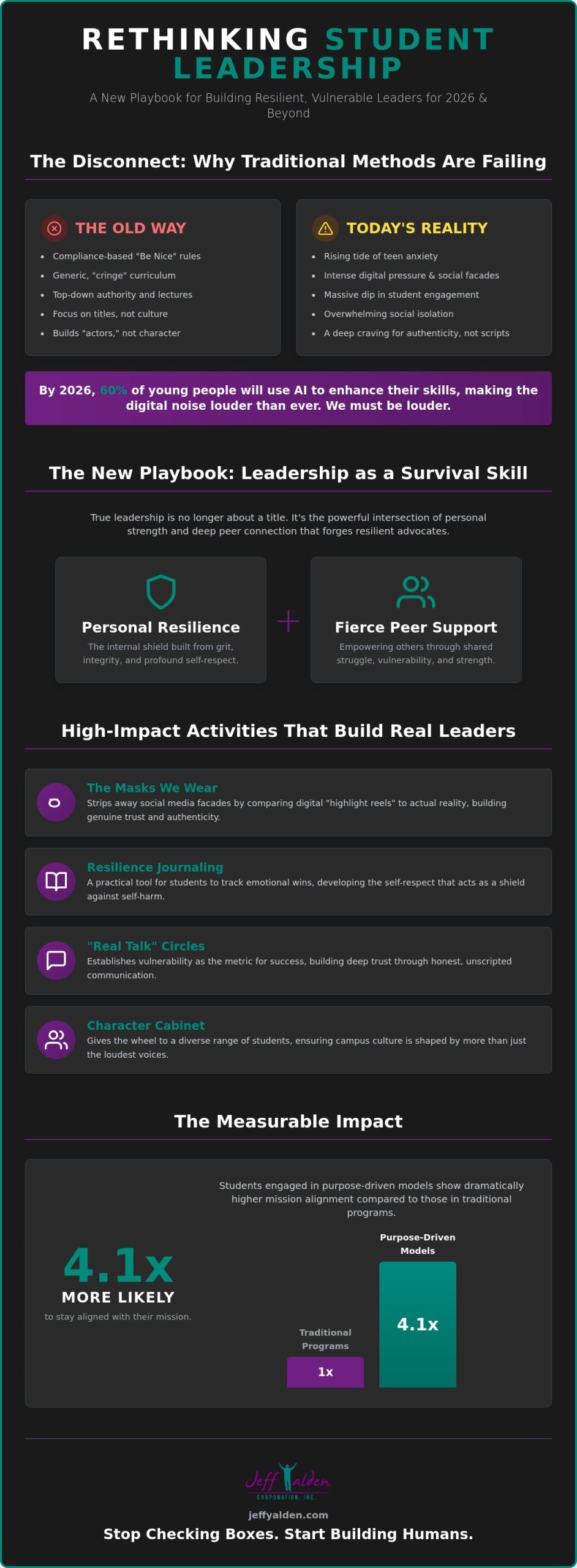
I know you want a campus where students lead with empathy, but the rising tide of teen anxiety makes that feel impossible. You need more than a team-building game. You need a transformation. With 60% of young people already using AI to enhance their skills by 2026, the digital noise is louder than ever. We have to be louder. You’ll learn exactly how to integrate mental health into your curriculum, using purpose-driven models that make students 4.1 times more likely to stay aligned with their mission. We are diving into the most effective methods for turning student leaders into resilient advocates who are both vulnerable and unstoppable.
Key Takeaways
- Redefine leadership as the intersection of personal resilience and deep peer support, moving far beyond compliance-based “be nice” narratives.
- Discover high-impact leadership activities for high school students, like the “Masks We Wear,” designed to strip away social media facades and build genuine trust.
- Learn to use “Resilience Journaling” as a practical tool for students to track their emotional wins and develop the self-respect that acts as a shield against self-harm.
- Build a “Character Cabinet” that gives the wheel to a diverse range of students, ensuring your campus culture is shaped by more than just the loudest voices.
- Shift from one-off events to a sustainable movement by using authentic, high-energy catalysts that turn leadership theory into a lived campus reality.
What is Leadership in 2026? Beyond the ‘Be Nice’ Narrative
The old playbook for student council and “being nice” is dead. It’s 2026. The world is louder, faster, and more complex than ever. We’ve spent decades telling kids to be polite and follow the rules, but that compliance-based model is failing. It’s failing because it doesn’t address the raw, visceral anxiety our students carry every single day. True Youth leadership isn’t about holding a title or running a meeting. It’s the intersection where personal resilience meets fierce peer support. We need to stop teaching them how to lead a group and start teaching them how to lead a culture of connection. In 2026, student leadership is the proactive management of one’s own mental health and influence.
When we look at leadership activities for high school students, we have to look past the surface. Compliance doesn’t build character; it builds actors. We’ve seen a massive shift in how students interact with authority post-pandemic. They don’t want to be told what to do. They want to know why it matters. They want to know how it helps them survive the pressure cooker of high school. We’re moving from a top-down approach to a horizontal movement where students empower each other through shared struggle and shared strength.
The Resilience Factor: Leadership as a Survival Skill
Character isn’t just a poster on the wall. It’s a survival skill. When a student hits a personal crisis, they don’t need a list of abstract values. They need an internal GPS. We’re talking about grit, integrity, and the kind of resilience that acts as a shield against the world’s noise. Effective leadership activities for high school students must connect character to real-world stress management. It’s about being the right person for yourself before you ever try to be the right person for anyone else. If you can’t lead yourself through a dark night, you can’t lead a campus through a difficult year. This is about building a foundation of self-respect that can’t be shaken by a bad grade or a social media comment.
Why High Schoolers Reject Generic Leadership Lessons
Let’s be honest. Most leadership curriculum is “cringe.” Students can smell a scripted, worksheet-based lesson from a mile away. They reject it because it doesn’t touch their reality. They’re dealing with digital pressure, social isolation, and a future that feels uncertain. They don’t want a lecture. They want “real talk.” They want to know that the adults in the room have been in the trenches and survived. To bridge the gap, we have to move past adult expectations and meet them exactly where they are. If our activities don’t feel raw and authentic, we’ve already lost the room. We have to trade the scripts for stories and the worksheets for real-world impact.
Radical Transparency Activities: Building Trust Through Vulnerability
Stop playing games. The “Human Knot” doesn’t save lives. If you want real change on your campus, you need radical transparency. It starts with the “Masks We Wear” activity. Ask your students to describe their digital “highlight reel” on one side of a paper and their actual reality on the other. It’s a gut check. It exposes the massive gap between who they pretend to be online and who they are when the screen goes dark. This is one of those leadership activities for high school students that actually sticks because it hits them where they live. It forces them to confront the performance and embrace the person.
Once the masks are off, move into “Real Talk” circles. In these circles, vulnerability is the only metric of success. We aren’t looking for polished, scripted answers. We’re looking for the truth. This process builds key leadership behaviors like honest communication and constructive feedback. When a student leader admits they’re struggling, they give everyone else permission to do the same. This is where trust is forged. It’s not about being perfect. It’s about being present. It’s about showing up when things are messy.
Next, use “Impact Mapping.” Have students map out a single choice, like a joke made at someone else’s expense, and trace its ripples through the entire campus. It’s eye-opening. But here’s the catch. You have to go first. Whether you’re a teacher or a student leader, you must model “Vulnerable Authority.” Share a time you failed. Show them your scars, not just your trophies. If you need a teen motivational speaker to spark this kind of raw honesty, make sure they aren’t just bringing a canned speech. They need to be in the trenches with you.
The ‘Take a Stand’ Exercise for High Schoolers
Courage isn’t the absence of fear. It’s “Courageous Authenticity.” In this exercise, students stand on a physical line in the room based on their honest opinions on tough topics. It creates a safe space for unpopular voices to be heard without judgment. We move from campus conflict to mutual understanding by forcing students to look each other in the eye while they disagree. It’s intense. It’s real. It’s how leaders are made. You don’t build character by avoiding conflict; you build it by navigating through it with integrity.
Digital Leadership: Navigating the 2026 Social Landscape
In 2026, leadership is digital. You can’t lead a campus if your digital footprint is a disaster. Audit their feeds. Does their online presence match their personal values? We use the “Post-Pause-Reflect” challenge to combat the toxic impulse of the algorithm. In an era of AI and digital misinformation, integrity is your only currency. These leadership activities for high school students teach them to be the signal in the noise. Don’t just post for likes. Lead for impact. Be the person who brings truth to the timeline.
Integrating Mental Health Resilience into Leadership Training
Stop separating mental health from leadership. They are the same thing. When we engage in leadership activities for high school students, we aren’t just building resumes; we are building a line of defense. Leadership is a massive protective factor. When a student develops genuine self-respect through leadership, that respect becomes a shield. It’s the foundation that prevents self-harm because a student who values their influence and their future starts to value their life. True student leaders are the first line of defense in campus mental health.
We use the “Resilience Journaling” method to make this tangible. It isn’t a “dear diary” moment. It’s a tactical log where students track specific wins in the face of adversity. Did they stay calm during a conflict? Did they choose integrity when it was hard? Tracking these moments builds a “victor” mentality. It moves them from being victims of their circumstances to being masters of their responses. We have to link the trait of “Caring” directly to active teen suicide prevention programs. If you care about your peers, you learn the signs. You learn to speak up. You learn that leadership means never leaving a teammate behind in the dark.
Self-Compassion: The Forgotten Leadership Trait
Responsibility is a heavy word. We usually use it to mean doing chores or meeting deadlines. But the highest form of responsibility is the responsibility to your own mental health. You can’t pour from an empty cup. One of our most impactful leadership activities for high school students is the “Letter to My Future Self.” Students write to themselves during a high point, providing encouragement and reminders of their strength for when the low points inevitably hit. It breaks the stigma. It teaches them that asking for help isn’t a weakness; it’s a strategic leadership move.
Leadership in Crisis: Postvention Strategies
A student body’s character is revealed in how it responds to tragedy. Whether it’s a loss in the community or a campus-wide crisis, leadership is the glue that holds things together. Postvention is about rebuilding. We facilitate activities that focus on collective healing, using empathy as the primary tool. It’s about creating space for grief while maintaining a vision for the future. Empathy isn’t just a soft skill. In a crisis, it’s the only skill that matters for long-term campus recovery. We don’t just “get over” things; we lead each other through them.
Student-Led Initiatives: Giving Teens the Wheel
Stop leading from the front of the classroom. If you want a culture shift, you have to hand over the keys. Students are exhausted by adult-led lectures. They tune out the minute they see a PowerPoint. But when a peer speaks, they listen. We’re creating a “Character Cabinet.” This isn’t your typical student council. It’s a group of diverse leaders, including the quiet kids in the back and the ones who have struggled the most. These are the students who actually influence the campus vibe. They are the ones who can look a peer in the eye and call out toxic behavior using leadership language that actually makes sense to a teenager.
One of the most effective leadership activities for high school students is the “Pay It Forward” challenge. It’s student-designed and student-led. They identify a real need on campus and they fix it. This isn’t about volunteer hours for a resume. It’s about “Purposeful Contribution.” When students take ownership of their environment, they stop being spectators. They start building resilience in teens across the entire school. They become the mentors. They become the protectors of the culture you’re trying to build. Handing over the wheel means trusting them to drive.
Ready to spark this kind of student ownership on your campus? Bring in a high school motivational speaker who knows how to empower students to take the lead.
The ‘Unlikely Hero’ Recognition Program
We’ve spent too long rewarding only the loudest voices. The athletes. The 4.0 students. We need to move past the trophy case. Leadership isn’t always loud. The “Unlikely Hero” program celebrates “Quiet Leadership.” It’s the kid who sits with the lonely student at lunch or the one who stops a rumor in its tracks. We use a “Gratitude Wall” where anyone can post a note about these unsung contributions. It transforms the school from a place of competition to a place of deep connection. It shows every student that their character matters more than their stats.
Student-Produced Resilience Content
Let them use their phones for something that actually builds them up. Have your student leaders produce TikToks or podcasts about overcoming struggle. This normalizes mental health conversations in a way an adult never could. It gives them a platform for “Purposeful Contribution.” When a student shares their story of bouncing back from a failure, it carries massive weight. It creates a digital footprint of integrity and hope. This is how you use leadership activities for high school students to reach the kids who are scrolling through the dark. You meet them where they are with a message of strength.
The Jeff Yalden Approach: Turning Activities into a Movement
A single afternoon of leadership activities for high school students is a great start. But let’s be real. If that’s all you do, the momentum dies by Monday morning. You don’t need a one-off event. You need a radical shift in culture. We’ve talked about vulnerability and student-led cabinets, but those tools only work if the foundation is solid. You have to move from “knowing” leadership as a concept to “living” it as a daily practice. This happens through deep emotional connection. It’s about moving students from their heads to their hearts. It’s about making them feel seen before you ask them to lead.
I call this the Jeff Yalden Challenge. It’s a 30-day commitment to radical transparency. For one month, your student leaders and staff commit to being “real” above being “right.” They use the language of resilience we’ve built. They check in on each other. They call out the toxic noise. It’s about turning those leadership activities for high school students into a lived campus identity. When students see that you aren’t just checking a box, they’ll stop checking out. They’ll start showing up for themselves and for each other with a level of grit you haven’t seen before.
The Power of the Assembly as a Reset Button
Sometimes a campus needs a complete reset. High School Assemblies are the most effective way to launch this kind of movement. You have to capture the heart before you can ever hope to capture the mind. An assembly isn’t just a speech. It’s a collective experience that breaks down walls. It sets the tone for everything that follows in the classroom. When you get the whole school in one room and speak the raw truth, the energy changes. The transition back to the daily routine becomes easier because everyone is finally on the same page. You’ve created a shared language of hope and resilience.
Sustainable Leadership: PD for the Educators
You can’t lead where you haven’t been. Teachers need their own resilience training to lead students effectively. If the staff is burnt out and disconnected, the students will be too. We provide Teacher Professional Development that gives you the tools to integrate leadership language into every subject. It doesn’t matter if you’re teaching math or history. Character is the curriculum. It’s time to stop talking about change and start being the change. If you’re ready to ignite your school’s movement and build a culture of “vulnerable authority,” it’s time to Book Jeff Yalden today. Let’s get to work. Your students are waiting for someone to lead the way.
Ignite the Culture Your Students Deserve
I’ve spent over 30 years in high school assemblies, specializing in teen suicide prevention and crisis intervention. I don’t give canned speeches. I give radical honesty from lived experience. I’m a specialist in redefining youth motivation through the lens of what actually works in the trenches. It’s time to stop checking boxes and start building humans who lead with heart and grit. Let’s transform your campus culture together.
Bring Radical Transparency to Your School: Book Jeff Yalden Today
You have the tools. You have the vision. Now, take the wheel and lead the way. I am with you every step of the journey. Let’s make it happen.
Frequently Asked Questions
How do you make leadership activities engaging for cynical high school students?
You make them engaging by being more real than the students are. Cynicism is just a shield kids use when they’re afraid of being judged or bored. If you show up with a script and a worksheet, you’ve already lost them. Use activities that mirror their actual lives, like auditing their digital footprints or having “Real Talk” circles where the only goal is honesty. When they see you’re willing to be vulnerable first, the cynicism starts to melt away.
Can leadership activities actually help prevent teen suicide?
Yes, because true leadership is a massive protective factor that builds a sense of purpose and belonging. When we engage in leadership activities for high school students, we’re giving them a reason to show up for each other. It moves them from being victims of their circumstances to being the “victors” of their own stories. By fostering deep peer connections and self-respect, we create a campus culture where students look out for the signs of struggle before it’s too late.
How often should we implement leadership activities in high school?
Leadership isn’t a one-off workshop; it’s a daily rhythm. While you might hold high-energy assemblies or intensive retreats once a quarter, the language of resilience needs to be part of the weekly routine. Small, consistent acts of student-led recognition and “Character Cabinet” check-ins keep the momentum alive. If you only talk about leadership once a year, it’s just an event. If you talk about it every week, it becomes a movement.
What are the best leadership traits to focus on for high schoolers in 2026?
Vulnerable authority and digital integrity are the absolute essentials for the modern world. In 2026, students are navigating a digital landscape filled with noise and AI-driven misinformation. They need the courage to be transparent about their struggles while maintaining a footprint of character online. These are the core leadership activities for high school students that translate directly into real-world success and mental health stability.
Is leadership development different from Social-Emotional Learning (SEL)?
Leadership is the active application of SEL skills. Think of SEL as the internal toolkit and leadership as the building project. SEL gives students the vocabulary to understand their emotions, but leadership gives them the platform to use those emotions to influence and support their peers. It takes the focus off the “self” and puts it on the “we,” which is where real campus transformation happens.
How do we measure the success of student leadership programs?
You measure success by the “vibe” of the hallways and the way students treat each other when adults aren’t looking. Forget the standard metrics of GPA or attendance for a moment. Instead, look for a decrease in toxic digital behavior and an increase in students stepping up to support peers in crisis. When you see “unlikely heroes” being recognized by their own classmates, you know the program is working.
What role do parents play in high school leadership education?
Parents are the primary models of the resilience we’re trying to teach. They need to be partners in this mission by modeling radical transparency and honest communication at the dinner table. When the home and the school speak the same language of character and grit, the student has a solid foundation. It’s about creating a unified front that prioritizes the human being over the achievement.
How can a motivational speaker help with long-term leadership goals?
A speaker acts as the high-energy catalyst that hits the “reset button” for your entire campus. They break through the noise and capture the heart in a way that daily routines sometimes can’t. This experience provides a shared language and a peak emotional moment that launches your long-term goals. It’s the spark that turns a simple set of activities into a sustainable movement of hope and resilience.
