
What if the moments that help an LGBTQ student feel safer at school are smaller than you think? A name used with care. A calm, respectful response when a student opens up. A trusted adult who listens without rushing to share what they’ve heard. These moments matter, especially when you’re unsure what to say or how to protect a student’s privacy while getting them support. Learning how to support LGBTQ students’ mental health begins with these everyday choices.
You don’t need perfect words to make a difference. You do need to take students seriously, respect who they are, and make sure they aren’t left to face distress alone. Everyday affirmation works best alongside clear school practices and safe paths to qualified help.
In this guide, you’ll find practical ways to build belonging in the classroom, respond when a student shares their identity or concerns, and handle privacy thoughtfully. You’ll also see how schools can strengthen support across the community through staff learning and schoolwide conversations about student well-being. Small actions can send a powerful message: you matter here, and you don’t have to figure everything out by yourself.
Key Takeaways
- Learn how to support LGBTQ students’ mental health by building belonging and offering respectful, consistent support.
- Use inclusive language and routines while letting students decide when and with whom to share personal information.
- Recognize why treating everyone the same may miss barriers an individual student is facing.
- When a student needs more help, listen, assess immediate safety, and follow your school’s support and referral procedures.
- Strengthen school culture through staff learning, student feedback, and clear responses to harassment, without asking LGBTQ students to speak for everyone.
Why LGBTQ students’ mental health support starts with belonging at school
A student’s identity isn’t a problem to solve. The school environment around them can offer connection and respect, or add stress through exclusion, stigma, and rejection. That distinction matters when considering how to support LGBTQ students’ mental health: affirming support means treating students with respect, helping them feel they belong, and connecting them with appropriate support when they need it.
LGBTQ students aren’t a single, uniform group. Their identities, personalities, strengths, and circumstances differ, and being LGBTQ doesn’t determine any individual student’s mental health. A student may feel confident and supported, be struggling for reasons unrelated to identity, or face pressure connected to how others respond to who they are. The Mental health of LGBTQ people overview describes a range of concerns, but no general account can tell you what one student is experiencing.
“LGBTQ identity isn’t the cause of distress; exclusion, stigma, and a lack of support can add to the weight a student is carrying.”
What does affirming support for LGBTQ students look like?
It starts with how you show up. Listen without judgment. Use the name and pronouns a student asks you to use, and correct yourself briefly if you make a mistake. Instead of guessing what would help, ask, “What would feel supportive right now?” Then listen to the answer. The student might want help addressing a hurtful comment, a chance to speak privately, or simply a trusted adult who will check in.
A welcoming school makes respect visible in everyday interactions. But welcome is not pressure. Don’t ask a student to disclose their identity, explain it to classmates, or publicly join a group to prove they feel included. Let them choose when, how, and with whom to share personal information. Belonging should be available without disclosure.
Why can school belonging matter to student well-being?
School is shaped by ordinary moments: whether peers include someone in a group, whether an adult responds when a student is mocked, and whether a young person knows where to turn. Respectful relationships can help a student feel connected and safer asking for support. Silence or dismissal can deepen isolation. You don’t need to know a student’s full story to make your classroom more respectful.
Belonging also looks different from student to student. Race, culture, disability, faith, and family circumstances can shape whether a student feels accepted and what support feels safe. Avoid assumptions about home life, beliefs, or the words someone uses for themselves. Make room for each student’s experience, and build schoolwide conversations and staff learning that help adults respond with care. Affirmation isn’t a grand gesture. It’s the steady message that every student deserves respect and support.
Everyday ways to affirm LGBTQ students and build trusted relationships
Trust is built in ordinary moments, and it can be shaken by a careless disclosure. A student may be ready to tell one adult something they aren’t ready to share with classmates, family, or other staff. Respect means taking that seriously. Don’t assume who already knows, and don’t repeat personal information as casual conversation.
What should an adult say when a student shares their identity?
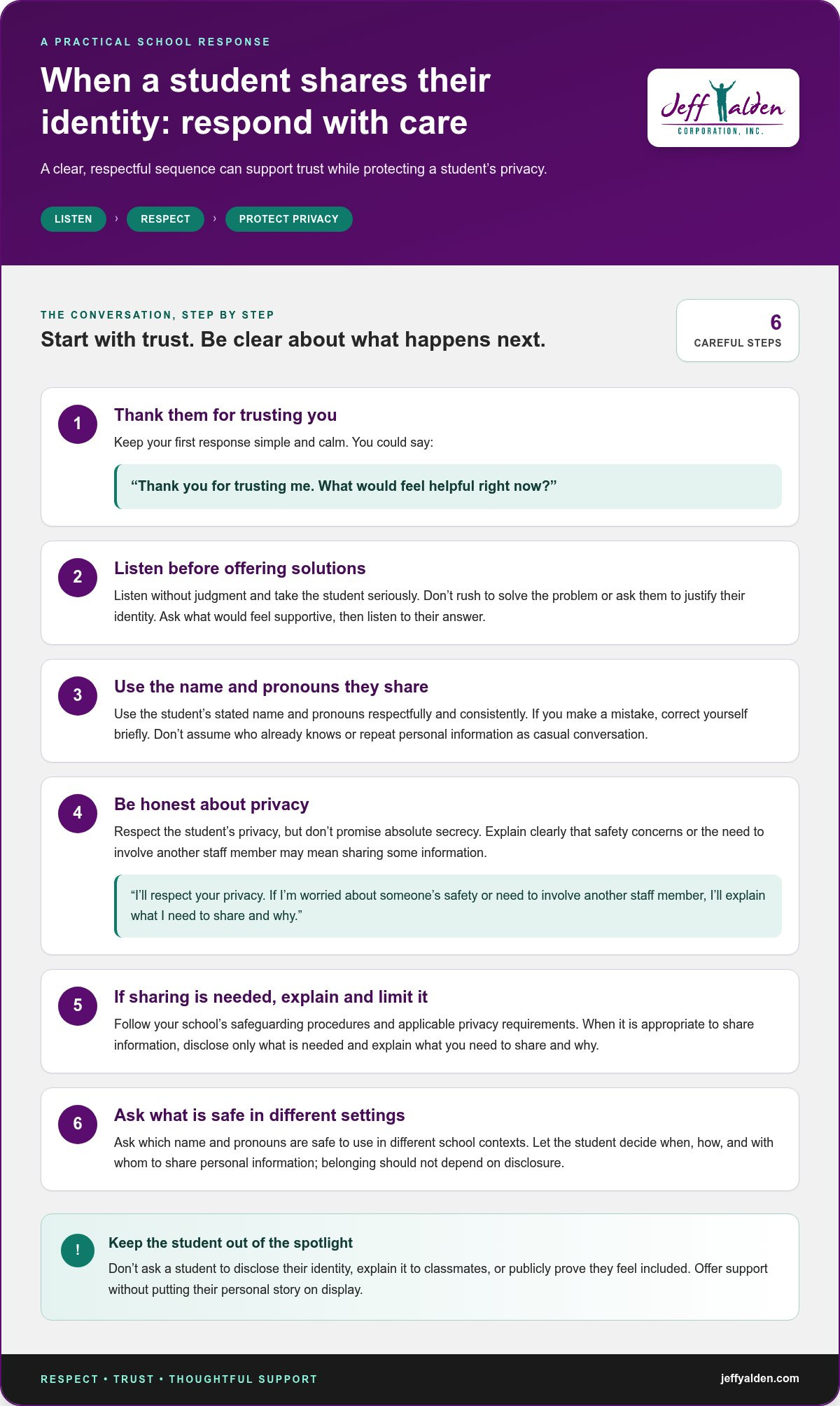
Keep your first response simple: “Thank you for trusting me. What would feel helpful right now?” Listen before offering solutions. Use the name and pronouns the student gives you without asking them to justify or explain their identity. The Trevor Project’s guide to being an ally offers practical ideas for showing respect in everyday interactions.
Be honest about privacy. Don’t promise absolute secrecy. You might say, “I’ll respect your privacy. If I’m worried about someone’s safety or need to involve another staff member, I’ll explain what I need to share and why.” Follow your school’s safeguarding procedures and applicable privacy requirements. When sharing is appropriate, disclose only what is needed. Ask what name and pronouns are safe to use in different school contexts, and explain any limits clearly.
How can classrooms feel more welcoming without singling students out?
Make inclusion part of the routine, not a spotlight on one student. Use examples that include different kinds of families, and choose classroom language that doesn’t assume every student has the same experience. Offer a private way to ask for support, such as a quiet check-in after class, rather than asking students to raise personal concerns in front of peers.
Set clear expectations for respectful speech. If a student makes a disrespectful comment, respond calmly and consistently: name the behavior, restate the expectation, and follow school policy. Don’t turn the targeted student into a public lesson or expect them to explain why the remark hurt. Using a student’s stated name and pronouns consistently is one everyday way any educator can signal respect.
These habits take practice across a whole school. Staff learning and schoolwide conversations can help adults build shared language around student well-being and respond with greater confidence. Jeff Yalden’s school programs supporting student well-being complement the everyday affirming work happening in classrooms.
Common mistakes and misconceptions about supporting LGBTQ students’ mental health
Good intentions matter, but they aren’t the whole job. “I treat everyone the same” can sound fair while overlooking the different barriers students may face. A student dealing with slurs, exclusion, or pressure to hide an important part of their life may need an adult to notice what’s happening and respond. Equal respect is essential; identical responses aren’t always enough.
Supporting a student doesn’t mean guessing their identity, asking intrusive questions, or having every answer. It means listening, taking concerns seriously, and following appropriate school procedures. Affirming support also isn’t clinical assessment, diagnosis, or treatment. Educators can offer care and connection while involving qualified school support staff when a student needs more help.
Is being neutral enough to make a student feel supported?
Silence in the face of disrespect can be experienced as a lack of support. You don’t need to become an expert before you act: calmly interrupt harassment, make clear that disrespectful behavior isn’t acceptable, and follow school policy. Consistency matters. When students see adults respond instead of looking away, care becomes visible. If you’re unsure what to do next, listen and seek guidance through established school channels.
How can adults protect privacy while responding to concerns?
Being trusted with personal information isn’t permission to share it. Outing a student can damage trust and may create safety concerns, especially if you don’t know how people at home or in the student’s wider community will respond. Don’t assume family circumstances are supportive or unsafe. Ask the student what they’re comfortable sharing, and with whom, before discussing their identity with peers, family, or staff whenever circumstances and school procedures allow.
Privacy decisions can involve safety concerns and rules that vary by location and school. Don’t present one approach as universal. Follow your school’s safeguarding procedures and verify applicable local requirements with the appropriate school lead. If information must be shared to respond to a concern, explain what you need to share and why, and limit disclosure to what’s necessary under the relevant procedures.
These distinctions are central to how to support LGBTQ students’ mental health: show care without prying, protect trust without making promises you can’t keep, and recognize when a concern calls for qualified support. You don’t have to solve everything alone. You do have a role in making sure a student is heard and connected to the right next step.
A practical school response when an LGBTQ student needs more support
When a student seems distressed, you don’t have to solve everything in one conversation. You do need a clear next step. A steady response can help the student feel heard while connecting them with support beyond an educator’s role.
- Listen. Find a calm, private moment. Describe what you’ve noticed without judgment, then give the student time to respond.
- Check immediate safety. Ask directly, “Do you feel safe right now?” If you’re concerned about immediate danger, follow your school’s emergency procedures at once.
- Connect. Follow established school safeguarding, counseling, and referral procedures. Involve the designated school counselor or safeguarding lead, and connect the student with qualified school or community professionals as appropriate.
- Follow up. Agree on a respectful check-in and share relevant information with appropriate staff according to school procedures. Avoid making the student repeat their story unnecessarily.
How should an educator respond when a student seems distressed?
Start with what you’ve observed, not a guess about why the student feels this way. You might say, “I’ve noticed you seem quieter than usual, and I wanted to check in. What support would help?” Listen without rushing to reassure or investigate. Ask whether they feel safe right now, then explain the next step before bringing in the designated school support person. Follow your school’s procedures for documenting or sharing concerns.
When should school staff connect a student with additional help?
Connect the student with qualified support when their needs go beyond what you can appropriately provide as an educator, or when distress continues or intensifies. You can stay present and supportive without taking on the role of a clinician. For urgent danger, act immediately through local emergency protocols and use crisis guidance verified for your location. Don’t wait for a routine follow-up when immediate safety may be at risk.
Protect the student’s dignity throughout the handoff. Where circumstances allow, tell them who you plan to involve and why. Coordinate with the appropriate staff so the student doesn’t have to retell sensitive details to each person. A simple follow-up, such as asking whether they connected with the agreed support, can show that the conversation didn’t end when they left your office.
For more school-focused guidance, explore teen suicide prevention programs. Jeff Yalden also provides staff learning and schoolwide programs to help adults build shared language around student well-being and prepare to respond. Learn about school programs focused on teen mental health.
How schools can make LGBTQ student support part of the culture
Belonging can’t depend on one caring teacher. It grows when students encounter respect across classrooms, offices, activities, and school support systems. That takes more than good intentions: leaders need clear expectations, practical response pathways, and regular opportunities to learn what students experience, while protecting individual privacy.
What can school leaders do to strengthen affirming support?
Start by reviewing the everyday systems students rely on. Are expectations for respectful communication clear? Do staff know how to respond to harassment consistently and in line with school policy? Can students easily find out how to speak with a counselor or report a concern, including through a private option?
Invite student feedback on how welcoming and accessible these systems feel, but don’t ask LGBTQ students to educate staff or represent an entire community. Provide ways for students to contribute without disclosing personal information. Review feedback and practices with qualified staff, and check that policies and response pathways reflect current local requirements. Privacy matters here, too: discuss patterns and needed improvements without exposing a student’s identity or personal story.
How can staff learning lead to lasting change?
Professional development works best when it connects awareness to action. Give staff opportunities to practise listening without judgment, responding to disrespect, protecting privacy, and making appropriate referrals. Revisit the learning over time. A single session can start a conversation, but schoolwide consistency comes from reinforcing expectations and supporting staff as real situations arise.
Teacher professional development can be one part of that ongoing effort. Jeff Yalden provides professional development for educators to build adult readiness and shared language around student well-being. Assemblies and community programs can also help normalize conversations, but they work best when connected to everyday school practices and established support pathways. A school assembly can introduce a broader conversation about resilience and mental health as part of that work.
Making how to support LGBTQ students’ mental health part of school culture means turning values into routines students can count on. Keep reviewing the language adults use, the way concerns are handled, and whether students can find help without being put on display. To explore a schoolwide conversation about student well-being, explore Jeff Yalden’s school mental health programs.
Make belonging part of every school day
Learning how to support LGBTQ students’ mental health starts with everyday respect, but it can’t stop there. Students need adults who listen without judgment, protect their privacy, respond to harassment, and know how to connect them with appropriate help. A clear, caring response can make it easier for a young person to feel seen and ask for support.
Lasting change takes a whole-school effort. Review how students can raise concerns, make support pathways easy to find, and give staff opportunities to build confidence around student well-being. Teacher professional development, school assemblies, and community programs can help normalize mental health conversations and strengthen shared understanding across middle school and high school communities. These efforts complement the affirming relationships students experience every day.
Every respectful interaction helps set the tone. Keep listening, keep learning, and keep building a school where students know they don’t have to face challenges alone. Explore Jeff Yalden’s school mental health programs to see how staff learning and schoolwide conversations can support that work.
Frequently Asked Questions
How can teachers support LGBTQ students’ mental health?
Teachers can support LGBTQ students’ mental health by treating students with respect, responding to harassment, and making it clear how to ask for help. Use a student’s stated name and pronouns, listen without judgment, and avoid assumptions about their identity or circumstances. If a student seems distressed, check in privately, ask what support they need, and follow school procedures to connect them with appropriate staff.
What should I say when a student comes out to me?
Start with warmth: “Thank you for trusting me. What would feel supportive right now?” Use the name and pronouns the student shares, and don’t press for details or ask them to explain their identity. Respect their privacy, including who they’re comfortable having this information shared with. Don’t promise absolute secrecy; explain clearly that safety concerns or school procedures may require involving appropriate staff.
How can a school support LGBTQ students without outing them?
Build inclusive routines and clear support pathways that don’t require students to disclose their identity. Offer private ways to speak with a trusted adult, and ask students what information they’re comfortable sharing and with whom. Don’t share a student’s identity with peers, family, or staff without considering their wishes, safety, and applicable school procedures. Privacy requirements can vary, so staff should follow local policy and guidance.
Is treating every student the same enough to support LGBTQ students?
Not always. Respect should be consistent, but identical responses can overlook barriers an individual student faces, such as harassment, exclusion, or pressure to hide who they are. You don’t need to guess a student’s identity or single them out. Set clear expectations for respectful behavior, address concerns consistently, and ask each student what support would help. Focus on the person in front of you, not assumptions.
What should a school do if an LGBTQ student may be in crisis?
Listen, ask whether the student feels safe right now, and follow your school’s safeguarding and counseling procedures. Connect them with the designated school counselor or other qualified support staff, and agree on a respectful follow-up. If there’s immediate danger, act at once through local emergency procedures and use crisis guidance verified for your location. Educators should support the student without trying to provide clinical assessment or treatment.
How can schools make LGBTQ students feel safer and more included?
Make inclusion part of everyday school life. Review classroom language, responses to harassment, and how students find counseling or report concerns. Invite student feedback without asking LGBTQ students to educate staff or represent an entire community. Staff development and schoolwide conversations can help adults respond with care and consistency. Keep reviewing policies and practices with qualified staff, while protecting students’ privacy and following applicable local requirements.
