
You aren’t just a teacher anymore. In 2026, you’re a frontline responder in a mental health crisis that feels heavier every single day. With the Supreme Court’s recent shift to a “deliberate indifference” standard for Section 504 claims, the pressure to get classroom accommodations for students with anxiety right isn’t just about pedagogy. It’s about survival. You’re exhausted. You’ve got 30 different needs to manage in a 50-minute period, and watching a student spiral despite having an IEP in place is gut-wrenching. It makes you feel more like a therapist than an educator. That’s a heavy weight to carry alone.
I’ve been there, and I know that clinical checkboxes don’t save kids. Connection does. This guide is your radical roadmap to bridging the gap between legal requirements and the heart-centered work you actually signed up for. We’re going to dive into practical, high-impact strategies that create a calm environment where students feel safe enough to participate. You’ll discover how to move from “managing” symptoms to fostering genuine resilience without losing your own peace of mind in the process.
Key Takeaways
- Rethink student anxiety by looking beyond clinical labels to understand how digital culture impacts cortisol levels in the modern classroom.
- Master practical classroom accommodations for students with anxiety that prioritize heart-centered connection over rigid, bureaucratic checkboxes.
- Shift your focus from fostering dependency to building grit by using 504 plans as a foundation for radical trust and student resilience.
- Combat teacher burnout with trauma-informed strategies that allow you to support your students without sacrificing your own mental well-being.
- Discover how to scale these individual strategies into a school-wide movement that transforms campus culture from the ground up.
Understanding the Realities of Student Anxiety in 2026
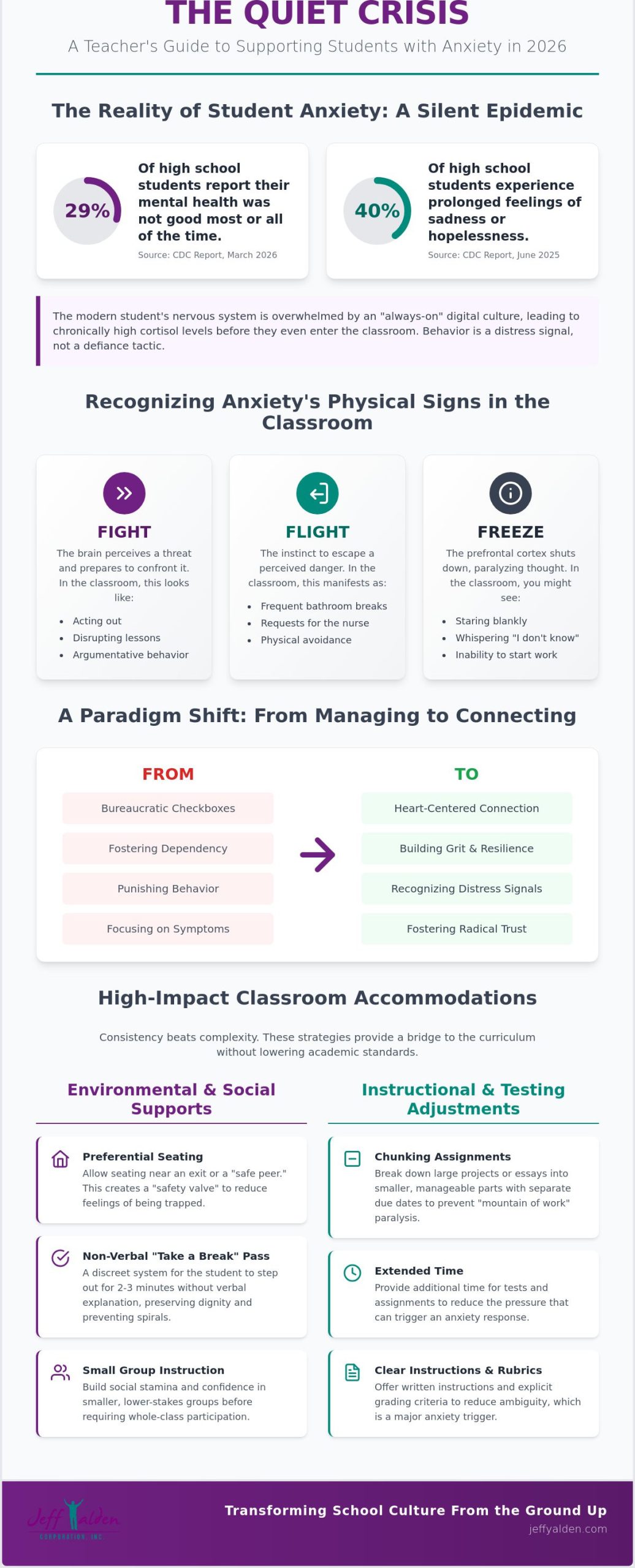
Anxiety in your classroom isn’t just a clinical term in a textbook. It’s a vibrating, electric tension that hums beneath the surface of your third-period class. In 2026, we’re seeing a generation of students whose cortisol levels are pinned to the red line. They live in an “always-on” digital culture that demands constant social performance and instant responses. By the time they sit in your desk, their nervous systems are already fried. While Understanding Generalized Anxiety Disorder provides the medical framework for these struggles, the raw reality is much more visceral. A March 2026 CDC report found that 29% of high school students reported their mental health was not good most or all of the time. That’s nearly one in three kids sitting in front of you right now.
We’re facing a “Quiet Crisis.” It’s easy to spot the student who acts out or disrupts the lesson, but the students who internalize their dread are often invisible. They’re the ones who are present in body but absent in spirit, slowly spiraling while you focus on the louder voices. Traditional discipline fails these students every single time. You cannot punish a nervous system into compliance. You cannot give a detention to a panic attack. Effective classroom accommodations for students with anxiety start with recognizing that their behavior is a distress signal, not a defiance tactic. When 40% of high school students experience prolonged feelings of sadness or hopelessness, as reported by the CDC in June 2025, we have to stop looking for character flaws and start looking for physiological barriers.
The Fight, Flight, or Freeze Response in the Classroom
When anxiety hits, the amygdala hijacks the brain. The prefrontal cortex, the part responsible for logic and learning, essentially goes dark. You’re trying to teach algebra to a brain that thinks it’s being hunted by a predator. This is why you see the “bathroom break” escape or the endless flyers for the nurse’s office. When you call on a student and they whisper “I don’t know” while staring at their shoes, it’s often a freeze response. They aren’t being lazy. They’re paralyzed. Their brain has literally locked them out of the answer. Recognizing these physical signs is the first step toward implementing meaningful classroom accommodations for students with anxiety, and for some, external support like Achieve Hypnotherapy can help address these subconscious triggers at their source.
Why Radical Transparency Matters Now
We have to stop pretending the “elephant in the room” doesn’t exist. Radical transparency means acknowledging the weight these students are carrying. When you model vulnerability and admit your own stress, you lower the collective emotional temperature of the room. It creates a bridge of trust that a 504 plan alone can’t build. We must accept this truth: classroom anxiety is a physiological barrier to entry, not a character flaw. By being real about the struggle, you give them permission to be real too. This shift in perspective transforms the classroom from a place of high-stakes pressure into a sanctuary of shared resilience.
Essential Classroom Accommodations for Students with Anxiety
You’re juggling 30 souls in a 50-minute pressure cooker. You don’t need a twenty-page manual. You need tools that work right now. When we talk about classroom accommodations for students with anxiety, consistency beats complexity every single time. It’s about creating a sustainable system where the student feels supported and you don’t feel like you’re drowning. In 2026, the standard is clear: accommodations change how a student accesses the curriculum without lowering the academic bar. Unlike modifications, which alter the content itself, these strategies provide a bridge to the same high expectations you have for every other kid in the room.
Environmental and Social Supports
The physical layout of your room is a silent teacher. For a student with a racing heart, a desk in the middle of the room can feel like a cage. Preferential seating near the exit allows for a “safety valve” if they need to step out. Better yet, seat them near a “safe peer” who models calm behavior. Implement a non-verbal “Take a Break” pass. This allows the student to step into the hallway for two minutes without having to explain their panic in front of peers. It preserves their dignity and prevents a full-blown spiral. If whole-class participation feels like a death sentence, start with small group instruction to build their social stamina before asking them to speak in front of everyone.
Instructional and Testing Adjustments
Anxiety loves to turn a three-page essay into an insurmountable mountain. To stop the “mountain of work” paralysis before it starts, you must remove the barriers that trigger the freeze response. You can find a comprehensive list of classroom accommodations that dive deeper into these shifts, but start with these three power moves:
- Chunking: Break large projects into bite-sized pieces with separate mini-deadlines.
- Extended Time: Remove the artificial pressure of the ticking clock on assessments.
- Alternative Formats: Allow pre-recorded video submissions instead of live speeches.
These aren’t “easy outs.” They are legitimate pathways for a student to demonstrate mastery without their nervous system getting in the way.
Predictability and Routine as an Anxiolytic
Surprises are the enemy. A sudden fire drill or a last-minute change in the schedule can trigger an immediate “freeze” response. Use visual schedules and give advance notice for transitions. If an assembly is coming up, tell them yesterday. Provide clear, detailed rubrics for every project. When a student knows exactly what “success” looks like, their performance anxiety drops significantly. This level of intentionality is exactly what I cover in my Teacher Professional Development sessions. We focus on these “low-friction” wins that protect your energy while saving your students. Predictability isn’t boring; it’s a lifeline for a nervous system in distress.
Beyond the 504 Plan: Building a Culture of Resilience
A piece of paper won’t save a kid. Let’s be real. A 504 plan or an IEP is a legal floor, not a ceiling. In 2026, we have to realize that a document is completely useless without a foundation of radical trust. If that kid doesn’t feel in their bones that you’re in their corner, the paperwork is just noise. They’ll still feel like they’re being managed by a system rather than supported by a human. We need to stop trying to “fix” the student and start adjusting the environment to meet them where they are. Effective classroom accommodations for students with anxiety only work when the student feels safe enough to use them.
The goal isn’t to make life easy. It’s to make life possible so they can eventually do the hard things. We have to be careful not to foster dependency. Instead, we use these tools to build resilience in teens by showing them they can navigate a high-pressure world without breaking. You can find excellent classroom accommodations for anxious students that focus on lowering the immediate threat level so the learning brain can stay online. This is where “vulnerable authority” comes in. When you’re transparent about your own stress or your own bad days, you give them permission to be human too. You aren’t some distant, clinical expert; you’re a guide who’s been in the trenches and isn’t afraid to show the scars.
Radical Transparency in Goal Setting
Get the student in the driver’s seat. Ask them what they actually need instead of telling them what the law says they get. This buy-in is everything. When a student helps design their own plan, they’re more likely to use it when the panic hits. Set micro-goals for academic risk-taking. Maybe today the goal isn’t “present to the whole class,” it’s “present to me during lunch.” Use the first two minutes of your period for a quick emotional pulse check. A simple “How’s your heart today?” can change the entire trajectory of their day. It shows them that their well-being matters more than the worksheet on their desk.
Postvention and Crisis Support
We have to be prepared for the dark moments when anxiety escalates into a full-blown crisis. Integrating these individual supports into broader teen suicide prevention programs ensures that every adult in the building knows the signs of a student in trouble. When a student spirals, the plan needs to be automatic and compassionate, not punitive. We aren’t looking for compliance; we’re looking for connection. The goal of an accommodation is to eventually bridge the student back to full participation. We aren’t building a permanent exit from the challenges of life; we’re building a sturdier entrance so they can walk through the door with confidence.
Protecting the Protector: Teacher Self-Care and PD
Let’s be brutally honest. You are exhausted. You’re managing 30 different lives while trying to deliver a curriculum, and the weight of it is crushing. When we talk about implementing classroom accommodations for students with anxiety, the number one objection I hear is: “I am already doing too much.” You’re right. You are. You weren’t trained to be a clinical psychologist, yet here you are, de-escalating panic attacks between bell rings. This isn’t just about the kids anymore. This is about you. If you burn out, the whole system fails. Protecting your peace isn’t selfish; it’s a prerequisite for the job.
This is why trauma-informed teaching professional development is no longer optional. It’s the radical shift we need to move from reactive survival to proactive support. You need strategies to manage your own “emotional temperature” when a student starts to spiral. If their heart is racing, your nervous system will naturally want to match that intensity. You have to be the anchor. You have to set boundaries that protect your spirit while still holding space for their struggle. You don’t have to be a martyr to be a great educator. You can’t lead a classroom from a place of depletion.
The “Compassion Fatigue” Reality Check
Secondary traumatic stress is a real, documented occupational hazard in 2026. You are absorbing the collective trauma of your students every single day. Recognizing the signs of compassion fatigue is the first step toward reclaiming your joy. Real self-care isn’t about a weekend retreat; it’s about systemic support and peer-to-peer connection. You need a tribe. You need other educators who understand the “Quiet Crisis” we discussed earlier. We have to build a culture where teachers can say “I’m struggling” without fear of judgment. If you’re ready to bring this level of radical support to your campus, let’s talk about Teacher Professional Development that actually changes the game for your staff.
Streamlining the Accommodation Process
We have to stop the “paperwork tax.” Implementing classroom accommodations for students with anxiety shouldn’t feel like a second full-time job. Use digital templates. Automate the non-verbal cues. Collaborate heavily with your school counselors and special education staff so the burden isn’t entirely on your shoulders. You are an advocate, but you are also a human being with limits. Use your voice to demand more teen mental health resources from your administration. When the system is properly resourced, your job becomes about connection again, not just crisis management.
Transforming Your School Culture with Jeff Yalden
You can’t fix a systemic crisis with a few seating charts. While classroom accommodations for students with anxiety are the vital seeds of change, your school culture is the soil. If that soil is toxic or depleted, those seeds will never take root. We have to move beyond just surviving the 50-minute period. We have to stop playing “whack-a-mole” with student crises and start building a campus where mental health is part of the air everyone breathes. It’s about moving from a reactive “crisis management” school to a proactive “culture of connection” school.
I’ve stood on stages in front of millions of students. I’ve seen the look in their eyes when they finally feel heard. Radical change starts with high school assemblies that refuse to pull punches. One hour of raw, unfiltered transparency can do more to shatter stigma than a year’s worth of motivational posters in the hallway. It gives your students permission to breathe. It gives your teachers permission to be human. When we bring these conversations into the light, classroom accommodations for students with anxiety stop being seen as “special treatment” and start being recognized as a shared language of resilience.
Booking a Mental Health Speaker for Your Campus
Stigma thrives in silence. When students hear from a “vulnerable authority” who has walked through the fire and come out the other side, the walls of isolation crumble. This isn’t just about a speech; it’s about a catalyst. My “Real Talk” approach to Teacher Professional Development isn’t about adding more to your plate. It’s about changing how you carry the load. We customize every session to address your specific staff burnout and your unique student population. This becomes the heartbeat of your long-term mental health strategy, ensuring that every adult in the building is equipped to be the anchor their students need.
Next Steps: From Reading to Action
Information without action is just noise. You’ve read the strategies. You know the high stakes of the 2026 legal landscape. Now, it’s time to move. Start tomorrow with a simple “First 5 Minutes” emotional pulse check in your classroom. But if you want to see a radical shift that transforms your entire district, you have to go bigger. You have to be the advocate for a culture that chooses connection over compliance. Don’t let another student spiral in silence while you wait for the “perfect” time to act. The time is right now. Bring Jeff Yalden to your school to transform your culture today.
Take the Lead in Your School’s Mental Health Revolution
You’ve got the tools. You’ve seen the data. Now it’s time to choose connection over compliance. Implementing classroom accommodations for students with anxiety is the first step, but it shouldn’t be your last. We’ve explored how to bridge the gap between clinical requirements and heart-centered teaching. You know that protecting your own emotional temperature is just as vital as chunking a student’s assignment. Real change doesn’t happen in a vacuum; it happens when an entire campus decides that mental health matters more than a test score.
Jeff Yalden has spent over 30 years redefining school culture for thousands of campuses worldwide. As an expert in trauma-informed teaching and crisis postvention, he brings the radical transparency needed to move your staff from burnout to breakthrough. It’s time to stop managing crises and start building resilience. Book Jeff Yalden for a Teacher PD or High School Assembly and let’s transform your school culture together. You have the power to be the anchor your students need. Let’s get to work.
Frequently Asked Questions
What is the difference between an accommodation and a modification for anxiety?
An accommodation levels the playing field without changing the game. It’s about access; you’re changing how a student learns, not what they learn. A modification actually alters the curriculum or the grade-level expectations. For 2026 standards, we focus on accommodations because they preserve academic integrity while acknowledging the student’s physiological barriers. Modifications are rarer and usually reserved for significant cognitive differences, not just anxiety.
How do I know if a student actually needs an accommodation or is just avoiding work?
Avoidance is almost always a symptom of anxiety, not a separate choice. If a student is “avoiding” work, their nervous system is likely in a “freeze” state where they physically cannot access their logic. Look for patterns like shaking, sweating, or frequent trips to the nurse during high-pressure moments. Don’t punish the avoidance; address the fear driving it to get their brain back online and ready to work.
Can I provide accommodations for anxiety if a student doesn’t have an official 504 plan?
You don’t need a legal document to be a compassionate human being. While a 504 plan provides vital legal protection, you can implement classroom accommodations for students with anxiety immediately based on your professional judgment. Proactive support often prevents the need for more formal, bureaucratic interventions later. Just document what works and keep parents in the loop to build that essential bridge of trust and transparency.
What are the best low-cost environmental changes I can make to reduce classroom anxiety?
Start with “safety valve” seating near the exit to lower the feeling of being trapped. Dim the overhead fluorescent lights or use lamp lighting to reduce sensory overload that can trigger a spiral. Create a “calm corner” or a designated desk where any student can go for two minutes of regulated breathing. These changes cost almost nothing but can lower the collective emotional temperature of your entire room instantly.
How do I explain accommodations to other students who might think it is “unfair”?
Tell them that fair doesn’t mean everyone gets the same thing; it means everyone gets what they need to succeed. Use the band-aid analogy: if one student has a cut on their knee and another has a headache, you don’t give them both a band-aid. You give each what they need to heal. This builds a classroom culture of empathy rather than a culture of comparison and competition.
What should I do if a student refuses to use their provided accommodations?
If they refuse, it’s usually because they don’t want to look “different” or “weak” in front of their peers. Stop pushing the accommodation and start building the relationship. Ask them privately what part of the plan makes them feel exposed. Sometimes a simple tweak, like a more discreet non-verbal cue, is all it takes to get them to accept the support they desperately need.
How can I support a student with separation anxiety in a high school setting?
In teens, this often manifests as a desperate need to check their phone for a parent’s text to ensure everyone is safe. Allow a scheduled, one-minute “tech check” at the midpoint of class to settle their nervous system. Use consistent routines that make your classroom feel like a predictable sanctuary. The goal is to build their independence by proving they are safe in your space without constant external validation.
Where can I find professional development focused on student mental health and teacher burnout?
You need real-world strategies from someone who has actually been in the trenches with students and staff. I offer specialized Teacher Professional Development that focuses on trauma-informed practices and stopping the cycle of compassion fatigue. It’s about giving you the tools to protect your own peace while effectively implementing classroom accommodations for students with anxiety. We focus on radical transparency and building a culture where everyone feels safe to lead.
