
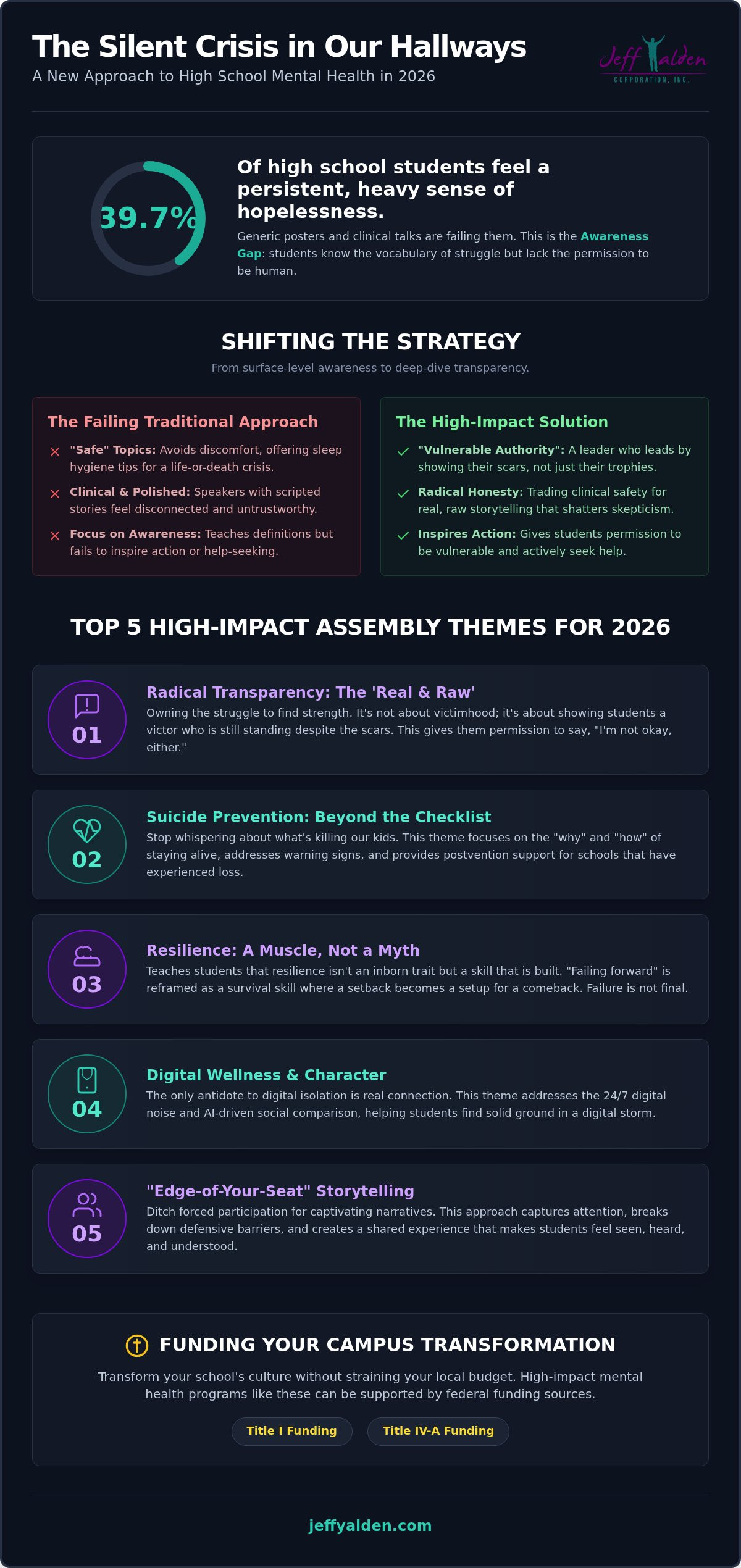
Exactly 39.7% of high school students are walking your hallways right now feeling a persistent, heavy sense of hopelessness. That isn’t just a data point from a 2026 survey; it’s a quiet crisis that generic posters and “just talk to someone” slogans can’t fix. You’ve likely noticed that traditional school assembly themes for mental health often fall flat because they feel clinical, safe, and totally disconnected from the raw reality your students face every day. They’re tired of being talked at by experts who’ve never sat in their seats. You’re right to worry that the wrong message might do more harm than good or, even worse, be ignored entirely.
It’s time to stop playing it safe and start being real. You deserve a strategy that actually works, and your students deserve a speaker who isn’t afraid to be vulnerable. In this guide, you’ll discover high-impact mental health themes that move beyond generic awareness to create a culture of resilience and radical transparency on your campus. We’ll explore how to address digital trauma and identify the specific, life-changing themes that empower students to finally seek the help they need. This is how you shift the conversation from silent struggle to a campus-wide movement of strength and genuine support.
Key Takeaways
- Stop playing it safe with clinical talks. Use radical transparency to bridge the gap between student struggle and real campus support.
- Explore impactful school assembly themes for mental health that treat resilience as a muscle rather than a generic, polished slogan.
- Ditch forced participation for “edge-of-your-seat” storytelling that captures attention and shatters student skepticism instantly.
- Uncover how to leverage Title I and Title IV-A federal funding to transform your campus culture without straining your local budget.
- Learn why a “vulnerable authority” approach is the only way to move students from silent suffering to actively seeking help.
Why Traditional Mental Health Awareness is Failing Our Students
Awareness isn’t the same as action. We’ve spent years flooding hallways with posters and hosting assemblies that feel like reading a medical textbook. Your students can define “anxiety” for a grade, but they won’t admit they’re drowning. This is the Awareness Gap. We’ve taught them the vocabulary of struggle without giving them the permission to be human. Most school assembly themes for mental health are far too safe. They’re too polished. When a speaker stands on stage in a perfect suit with a scripted story, students don’t see a guide. They see a stranger. They tune out the “cheesy” advice because it feels like a lie.
To break these defensive barriers, you need a “vulnerable authority.” This is a leader who leads by showing their scars, not just their trophies. It’s about being real. It’s about being raw. By 2026, the digital world has made students more isolated than ever. They’re comparing their messy reality to an AI-generated lie. We can’t use old logic for a new crisis. We have to bridge the gap between knowing about mental health and actually seeking support.
The Problem with “Safe” Topics
We often hide behind “safe” themes like kindness or sleep hygiene. These are great for general wellness, but they aren’t life-saving interventions. A student in the middle of a breakdown doesn’t need a lecture on bedtime routines. They need to know they aren’t alone in the dark. General mental health in education often stays on the surface to avoid discomfort. We don’t have that luxury anymore. We need to move from surface-level awareness to deep-dive transparency. If we don’t talk about the hard things, students will keep suffering in silence. True impact happens when we trade clinical safety for radical honesty.
The 2026 Mental Health Crisis: A New Reality
High schoolers today face AI-driven social comparison that never stops. Digital isolation has become the standard. Traditional resilience strategies are failing because they don’t address this 24/7 digital noise. Students are struggling to find a sense of self in a world of algorithms. The 2026 mental health landscape is a crisis of connection. We must update our school assembly themes for mental health to reflect this reality. We need to meet them where they are: in a world that is loud, fast, and often incredibly lonely. Resilience isn’t just about “bouncing back” anymore; it’s about finding solid ground in a digital storm.
Top 5 School Assembly Themes for Mental Health in 2026
Ditch the posters. Forget the generic slogans. If you want to change your campus culture in 2026, your school assembly themes for mental health must go where most speakers are afraid to walk. You need themes that hit home, break hearts, and ultimately build them back up. It’s about trading clinical safety for radical honesty. Here are the five themes that are actually moving the needle this year.
Radical Transparency: The Power of the ‘Real and Raw’
Students are experts at spotting a fake. When you bring in high school assemblies built on radical transparency, you aren’t just giving a talk. You’re opening a door. This theme is about owning the struggle to find the strength. It works because students don’t need another “victim” story; they need to see a “victor” who is still standing despite the scars. Sharing personal imperfections isn’t a sign of weakness. It’s the ultimate authority. It gives your students permission to finally say, “I’m not okay either.”
Suicide Prevention: Moving Beyond the Checklist
We have to stop whispering about the things that are killing our kids. Effective teen suicide prevention programs speak the unspoken. This theme covers the warning signs, but it focuses on the “why” and the “how” of staying alive. It also addresses “Postvention” for schools that have already walked through the fire of loss. When supporting student mental health, you must address the heavy stuff safely. It isn’t about being dark; it’s about bringing light into the darkest corners of their minds.
Resilience: The Radical Truth About Bouncing Back
Resilience isn’t a personality trait you’re born with. It’s a muscle you build. In a high-pressure academic world, “failing forward” is a survival skill. This theme teaches students that a setback is just a setup for a comeback. It’s a proactive choice to keep moving. Check out the building resilience in teens guide for more on this. We have to show them that failure isn’t final.
Digital Wellness and Character Education
In 2026, real connection is the only antidote to digital isolation. When choosing school assembly themes for mental health, you have to address how students navigate a landscape of social comparison and AI-driven pressure. This starts with Character Education. Building the “Heart of Character” provides the mental health foundation they need to stand firm when the world gets loud. If you’re ready to see this transformation in person, consider bringing a mental health speaker who has lived the journey and knows how to lead others through it.
Delivery Strategies: How to Make a Theme Stick
Forced participation is a relic of the past. In 2026, students don’t want to be told to clap or stand up; they want to be moved to action. High-impact delivery relies on a fast-paced, direct rhythm that captures attention quickly and holds it through a compelling narrative flow. It moves methodically through an emotional journey, starting with a warm and personal connection and building into a passionate peak of expertise and encouragement. This is how you make a theme stick.
Students don’t trust titles; they trust scars. A clinical expert can explain the “how” of depression, but a lived-experience guide can explain the “how it feels.” This is the difference between a lecture and a life-changing event. When you hire a teen mental health speaker, you’re looking for someone who can handle the raw, messy, and unscripted questions that surface when the masks come off. This level of transparency is what transforms a campus culture. It shows students that their struggle isn’t a life sentence; it’s a chapter in a story that they are still writing.
Interactive Engagement for 2026
Engagement is earned through vulnerability, not requested through a microphone. In 2026, we have the tools to make school mental health programming more dynamic than ever. Real-time polls and anonymous Q&A sessions can give a voice to the quietest kid in the back row. But tech is just a tool. The real magic happens during the “Post-Speech Huddle.” This is when the speaker stays on the floor, looks students in the eye, and creates a safe space for immediate outreach. You aren’t just delivering a theme. You’re facilitating a moment of connection that could save a life. This is how you ensure your school assembly themes for mental health don’t just stay in the auditorium, but follow the students back into the classrooms.
Planning and Logistics: From Theme to Transformation
An assembly isn’t a box you check on a Tuesday morning. It’s a catalyst. If you treat it as a one-off event, you’re wasting your time and your students’ attention. To turn school assembly themes for mental health into a lasting campus shift, you need a tactical plan that starts long before the microphone turns on and continues long after the auditorium empties. It’s about moving from a moment of inspiration to a culture of resilience.
First, assess your climate. Are you currently in the middle of a crisis, or are you building a foundation for prevention? This honesty dictates your theme. Second, secure your funding. In 2026, federal resources like the Title I budget of 18.427 billion dollars and Title IV-A funds are specifically designated for safe and healthy students. Don’t let a perceived lack of funds stop you. Reach out to local community partners or use Professional Development budgets to bring in a speaker who can train your staff while they’re on campus. This “whole-school” approach ensures the investment pays off in every classroom, not just the gym.
Preparing your team is critical. Radical transparency can be intense. Your staff needs to be ready for the raw questions and the emotional breakthroughs that follow. During the event, have a clear “immediate help” protocol. If a student is moved to speak up, they need to know exactly who is waiting in the wings to listen. This isn’t just a speech; it’s an intervention.
Securing Budget for High-Impact Speakers
High-impact speakers are an investment in your school’s future. When you justify the cost to your board, focus on the long-term ROI: fewer crises, better attendance, and a more resilient student body. You can often bridge the gap by utilizing PD funds. By having your speaker lead a session for teachers, you’re maximizing the impact and the budget simultaneously. Partnering with local mental health organizations can also help share the cost while building community ties that support students year-round.
The “Post-Assembly” Culture Shift
The real work begins when the speaker leaves. You must integrate the assembly themes into your daily SEL lessons so the message doesn’t fade. This is where teacher professional development becomes the backbone of your strategy. Your educators are the ones in the trenches every day. They need the tools to support students who are finally ready to be transparent about their struggles. For students who need more intensive, one-on-one guidance, providing access to youth life coaching can be the bridge to real success. Transformation is a process, not just a presentation.
Ready to move beyond the pep talk? Book a high school motivational speaker who understands that real change requires a plan, not just a podium.
Bring Jeff Yalden’s Radical Transparency to Your School
Jeff Yalden doesn’t do “pep talks.” He does transformation. When choosing school assembly themes for mental health, you need a leader who leads by example. Jeff is a “vulnerable authority” who has lived through the fire and come out stronger. His “real and raw” approach to suicide prevention isn’t a theory; it’s a lifeline. He doesn’t just speak at your students. He speaks with them. He breaks down the walls of silence that keep them isolated. In a year where nearly 40% of students feel a sense of hopelessness, a generic speech is an insult. They need the truth.
We know that no two schools are the same. Your school assembly themes for mental health should reflect your specific challenges. Jeff works directly with your administration to ensure the message hits home. Whether your campus is healing from a recent tragedy or you’re looking to proactively build resilience, the content is adapted to fit your culture. This is how you move from a one-day event to a year-long shift in how your students treat themselves and each other. It’s about trading the “cheesy” factor for genuine connection.
A Legacy of Impact Since 1992
Since 1992, Jeff has been a magnetic force in the world of high school assemblies. He’s spent over 30 years perfecting the art of connection across the globe. His personal journey isn’t just a story. It’s a blueprint. He shows students that their imperfections are the keys to their strength. He isn’t interested in creating “victims.” He is dedicated to building “victors.” Every session is a commitment to saving lives and fostering a growth-oriented future for every teen in the room. He brings a level of expertise that only comes from decades of being in the trenches with young people.
Booking Your 2026 Assembly
The time to act is now. Your 2026 calendar is the perfect opportunity to bring this level of transparency to your district. Jeff’s impact extends far beyond the auditorium. He offers comprehensive teacher PD and parent community programs to ensure the entire support system is on the same page. This “whole-school” approach is what creates lasting change. You can’t fix a culture in an hour, but you can start the fire that burns down the old ways of thinking. Book Jeff Yalden for Your Next High School Assembly and start the process of transforming your campus into a place where mental health is a priority, not an afterthought.
Lead the Shift Toward Radical Transparency
The days of playing it safe with student wellness are over. To truly reach your campus, you must trade clinical distance for radical transparency. We’ve explored how high-impact school assembly themes for mental health can bridge the gap between silence and support; turning a simple event into a campus-wide movement. You now have the tactical blueprint to assess your climate, secure funding, and implement delivery strategies that actually stick with students who are tired of the “cheesy” advice. It’s about meeting them in their reality, not yours.
Your students don’t need another distant expert; they need a guide who has been in the trenches. With over 30 years of global experience, Jeff Yalden specializes in the crisis intervention and postvention work that modern schools require. His raw, vulnerable authority is exactly what resonates with Gen Z and Alpha today. It’s time to stop the silence and start building victors. Book Jeff Yalden for Your Next High School Assembly and take the first step toward a more resilient future. You have the power to change the narrative on your campus. Let’s get to work.
Frequently Asked Questions
How do I choose the right mental health theme for my specific school culture?
Start with an honest assessment of your current campus climate. If you’ve had recent losses, you need postvention and crisis themes. If you’re building a foundation, focus on resilience as a muscle. Look at your discipline data and counselor referrals. Choosing effective school assembly themes for mental health requires matching the message to the student body’s immediate pain points. Don’t pick a safe topic if your kids are in deep water.
Is it safe to talk about suicide in a large high school assembly?
It’s only safe if you have an expert who knows how to handle the unspoken. Talking about suicide doesn’t plant the seed; it provides a way out for students already thinking about it. You must have a clear protocol for immediate help and counselors standing by. Jeff Yalden uses radical transparency to normalize the conversation without glorifying the act. Safety is found in honesty, not in silence or whispering about the truth.
How can we fund a high-impact mental health speaker on a tight budget?
Look beyond your general fund to federal resources. In 2026, Title I and Title IV-A “Safe and Healthy Students” funds are primary sources for school assembly themes for mental health and wellness programs. You can also partner with local community foundations or use professional development budgets by having the speaker train your staff. Don’t let a thin wallet stop you from saving lives. Impact is always worth the investment.
What should we do immediately after a mental health assembly ends?
Open the doors for immediate conversation. Have a post-assembly huddle where students can meet the speaker in a safe, informal space. Ensure every teacher knows the referral process for students who might be triggered or finally ready to ask for help. The assembly is the spark, but the follow-up is the fuel. You need a visible presence of support in the hallways for the rest of the day.
How do we involve parents in our mental health assembly themes?
Host a community night where parents hear the same raw message their kids did. This creates a shared language at the dinner table. Give them practical tools to spot warning signs and how to listen without judging. When parents are on board with the theme of radical transparency, the impact of the assembly doubles. It’s about building a bridge between the school building and the family home.
What is the difference between a motivational speaker and a mental health speaker?
A motivational speaker gives a pep talk; a mental health speaker provides a life-saving intervention. Motivation is often about trying harder, but mental health is about healing deeper. Jeff Yalden positions himself as a vulnerable authority who shares his own scars to build trust. It’s the difference between a temporary high and a permanent shift in perspective. You don’t need a cheerleader; you need a guide who has been there.
How does Jeff Yalden handle the “real and raw” topics with younger students?
He adjusts the intensity but never the honesty. For middle schoolers, the focus shifts toward building the heart of character and navigating digital trauma. He uses age-appropriate storytelling to make complex emotions feel manageable. The goal is to normalize the struggle before it becomes a crisis. Younger students still crave transparency; they just need it delivered in a way that feels safe and grounded in their daily lives.
Can a school assembly really prevent teen suicide or self-harm?
An assembly alone isn’t a cure, but it’s often the catalyst for the first ask for help. By shattering the stigma and speaking the unspoken, you give a student the permission they’ve been waiting for to speak up. It’s the moment the mask comes off. When combined with ongoing support and teacher training, a high-impact assembly is a critical piece of a comprehensive prevention strategy.
