
In the United States, 1 in 12 high school students experienced physical dating violence and/or sexual dating violence in 2019. A speaker on healthy relationships for high school students can help bring this difficult subject into the open, making space to talk about boundaries, respect, communication, and emotional well-being.
Schools know these conversations matter, but knowing how to begin can feel harder. Students need more than warnings. They need clear, relatable language to recognize healthy connections, spot harmful behavior, and reach out for support when something feels wrong. This article explains what a speaker on healthy relationships for high school students can cover, how a presentation can connect relationship education with mental health, and how schools can shape the experience around their students and community. The goal is practical and human: help teens leave with ideas they can use and make the next honest conversation easier to start.
Key Takeaways
- Learn how to distinguish mutual respect, honest communication, and support from warning signs such as control or pressure.
- See how clear boundaries and conversations about emotional well-being can help students express needs and seek support.
- Explore ways schools can make relationship education part of ongoing learning, not just a one-time conversation.
- Find out how interactive school and community speaker programs can turn important ideas into relatable, practical discussions.
Recognizing healthy and harmful teen relationships
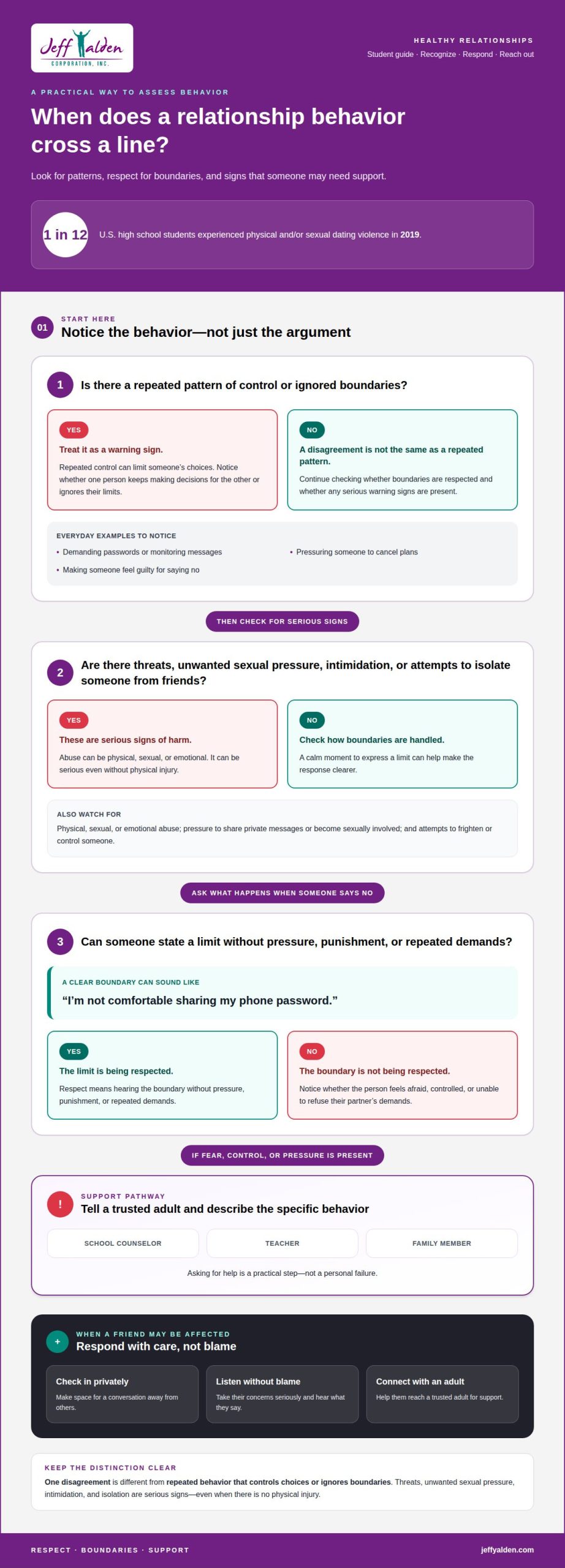
In the United States, 1 in 12 high school students experienced physical and/or sexual dating violence in 2019. A speaker should help students recognize respect, identify unhealthy behavior, and understand when to seek help.
Unhealthy Relationship Warning Signs
Warning signs can appear in everyday moments, not only during obvious conflicts. A partner might demand passwords, monitor messages, pressure someone to cancel plans, or make them feel guilty for saying no. Look for a pattern: does one person repeatedly control decisions or ignore the other’s boundaries? A single disagreement is different from repeated behavior that limits someone’s choices.
Recognizing Abuse and Seeking Help
Abuse can be physical, sexual, or emotional. Threats, unwanted sexual pressure, intimidation, and attempts to isolate someone from friends are serious signs, even without physical injury. Students can seek help if they feel afraid, controlled, or unable to refuse a partner’s demands. A practical first step is to tell a trusted adult, such as a school counselor, teacher, or family member, and describe the specific behavior.
Speaker Topics for Students
What topics should a healthy relationships speaker cover for high school students? They should address mutual respect, clear boundaries, honest communication, warning signs, and ways to seek support. The Centers for Disease Control and Prevention describes interactive youth lessons on understanding feelings, healthy communication, and unhealthy or unsafe relationships. Students can practice responding to scenarios, such as a partner pressuring them to share private messages or become sexually involved.
Strong relationship education also explains how peers can respond when they notice controlling behavior. Students might check in privately, listen without blame, and help connect a friend with a trusted adult. These concrete steps make it easier to recognize harm and respond with care.
Boundaries and mental health
A boundary gives students language for expressing personal limits, needs, and choices. For example, a teen can say, “I’m not comfortable sharing my phone password.” A partner’s response matters: respect means hearing that limit without pressure, punishment, or repeated demands. Practicing direct phrases helps students decide what they want to communicate before a tense moment arrives.
Sensitive relationship topics need clear safeguards in a school presentation. Explain the subject matter in advance, set expectations for respectful discussion, and never require students to disclose personal experiences publicly. Give students a way to step away and identify a trusted school adult who can offer support afterward. These steps keep the conversation focused on learning, not putting anyone on the spot.
Mental health belongs in this discussion because relationship stress can affect how a student feels and functions. A student who feels anxious after repeated messages might mute notifications, talk with a trusted adult, or ask for space. These examples offer options without suggesting that one response fits every situation. Students should hear that asking for help is a practical step, not a personal failure.
Lessons should distinguish everyday disagreement from patterns of control, intimidation, or violence. A partner who repeatedly threatens someone, demands constant access, or uses sexual pressure is crossing serious boundaries. Education can explain that harmful behavior can happen in teen relationships, too, without asking students to share private details. Schools can prepare by discussing sensitive material with relevant staff and setting out a clear support pathway. Training helps adults respond calmly, listen without blame, and connect a student with appropriate school support.
For a school assembly, a mental health speaker can help make these conversations direct, age-aware, and grounded in practical examples.
Healthy relationship education in schools
Relationship education can become part of school culture rather than remain a single assembly. In two West Philadelphia high schools, the STAR program involved teen advocates who shared relationship knowledge with peers. Its model connected student leadership with structured learning, giving teens a role beyond listening. Schools can use this approach to make prevention conversations relevant to students’ daily lives.
The STAR program recruited six teen advocates, who completed a six-week training with teen dating violence specialists from Lutheran Settlement House. After completing the Summer STAR curriculum, advocates became community leaders and shared what they learned. The example shows how schools can pair adult guidance with peer voices. Students may find it easier to discuss a scenario when a trained peer helps lead the conversation.
Evidence also supports choosing programs with clear goals and defined skills. Safe Dates was found effective in preventing and reducing dating violence perpetration among teens already using violence against their dates. That finding raises a useful planning question: does a lesson address prevention alone, or also help students recognize and change harmful behavior? Schools can review a program’s stated audience, activities, and intended outcomes before incorporating it into instruction.
A practical school plan can start with a sequence: introduce relationship concepts, let students apply them to realistic situations, then reinforce learning through follow-up activities. For example, a class might discuss a fictional disagreement, identify respectful options, and consider how a friend could seek adult support. Youth programs can also use interactive lessons on understanding feelings and communication. The Centers for Disease Control and Prevention identifies these as useful lesson areas, alongside unhealthy and unsafe relationships.
Schools can strengthen this work by involving staff and students in planning. In the STAR project, a social worker and a guidance counselor from two West Philadelphia high schools were interviewed as stakeholders. Their perspectives illustrate why school context matters: lesson timing, student needs, and available support shape how relationship education fits into the school day.
School and community speaker programs
Programs work best when schools connect a speaker’s message to student activities and community support. The format, speaker’s approach, and follow-up all shape what students take away.
Presentation and Workshop Formats
What formats are available for high school healthy relationships presentations or workshops? Schools can choose a large assembly, a smaller interactive workshop, classroom lessons, or a community session. The right format depends on the learning goal: an assembly can introduce dating violence and shared language, while smaller groups let students practice responding to scenarios. The Centers for Disease Control and Prevention describes interactive youth lessons on feelings, communication, and unhealthy or unsafe relationships.
Schools can connect a presentation with follow-up activities, such as a classroom discussion or a student-led community conversation. A national school community may include students with different experiences and support needs, so the format should allow participation without requiring personal disclosure. Build in time for questions and a clear route to trusted school support.
Speaker Qualifications
What qualifications should a healthy relationships speaker for teens have? Look for demonstrated experience speaking with young people, the ability to discuss sensitive topics in age-appropriate language, and a clear, respectful approach to student boundaries. The speaker should explain relationship concepts through practical examples, not pressure students to reveal private experiences.
Schools should also consider whether the speaker can discuss dating violence without sensationalizing it, respond calmly to difficult questions, and align the presentation with the school’s learning goals. Strong communication and a prevention-focused approach matter. A moving story alone is not enough; students need usable ideas they can apply to real situations.
How can schools evaluate a speaker’s effectiveness with students? Set learning goals before the event, then gather student and staff feedback afterward. Ask whether students can identify a healthy communication choice in a scenario, name a trusted support person, or explain where boundaries matter. Use their responses to guide follow-up lessons and future programs.
Turn these goals into a focused school presentation. Plan a relationship-focused school presentation that gives students practical ideas to carry into everyday life.
Jeff Yalden
Jeff Yalden brings conversations about teen relationships, mental health, and resilience to students through High School Assemblies and High School Assembly Programs. Turn to these presentations when your school wants a speaker to make these subjects relatable and encourage student engagement. As a Teen Motivational Speaker and High School Speaker, Jeff can help frame the discussion around students’ experiences and the importance of seeking support. These presentations complement school relationship education; they are not a substitute for clinical counseling or crisis care.
If your school is planning a relationship-health presentation, contact Jeff Yalden to discuss your goals.
Make room for the next honest conversation
A school presentation can open a door, but lasting change grows through the conversations that follow. Consider what your students need to discuss openly, what language feels relevant to them, and how staff can continue the conversation afterward. Those choices help make a single event a thoughtful part of school life.
Choosing a speaker on healthy relationships for high school students is also a chance to show teens that respect, boundaries, and emotional well-being belong in everyday conversations. The best next step is one that fits your school’s goals and gives students space to engage without pressure. Start with the outcome you want students to carry forward, then shape a program around that purpose.
Explore a school program with Jeff Yalden and take a positive step toward more open, supportive conversations with students.
Frequently Asked Questions
How do I find a speaker on healthy relationships for high school students near me?
Start by matching the speaker’s focus to your school’s goals, then consider format, audience, and location. Jeff Yalden works with schools worldwide, so proximity isn’t the only factor. Clarify whether you want a schoolwide presentation or a more interactive session, and identify the key learning outcomes. That makes it easier to decide whether the speaker’s approach fits your students.
What should schools consider when booking a speaker on dating violence and consent?
Review how the speaker will address consent, dating violence, and student questions in an age-appropriate way. Ask for a clear description of the session’s scope, examples, and intended takeaways. Consider how the presentation fits your school’s existing curriculum and communication with families. Before the event, agree on how staff will respond if a student seeks support during or afterward.
Are there free or low-cost healthy relationships speakers for high schools?
Free or low-cost options may depend on funding, the program format, and event requirements, so schools should avoid assuming a speaker will be available at a particular price. Jeff Yalden’s program pricing depends on the case and is provided after a quote request. The event format, audience, and other project details help determine the cost.
How do I book a healthy relationships speaker for a school assembly?
Contact Jeff Yalden with your school’s goals, audience, preferred format, and the topics you want addressed. For example, explain whether the assembly should focus on communication, consent, or relationship health broadly. Jeff offers High School Assemblies and High School Assembly Programs. Sharing these details helps shape a conversation about a program suited to your school’s needs.
