
What if the best part of a school assembly isn’t only what students hear, but what they get to consider, say, and carry with them afterward? A passive presentation can lose a room quickly. Energy matters, but excitement alone doesn’t create meaningful learning. The difference is purposeful interaction: participation that feels safe, welcomes different voices, and connects to a message students can use beyond the gym. That’s what makes interactive school assembly programs more than a lively event.
If you’re planning an assembly, you already know it needs to fit your students and your school’s priorities. You also need more than an energetic hour. This guide will help you define a useful goal, choose a participation format, and build a clear path from the event to follow-through. Jeff Yalden brings experience in youth motivation and teen mental health speaking, with over 4,500 high-school assemblies delivered since 1992.
We’ll explore ways to involve students without putting anyone on the spot, connect interaction to learning, and reinforce the message after the final applause. The strongest interactive school assembly programs don’t just hold students’ attention. They give students a reason to reflect, respond, and consider a next step.
Key Takeaways
- Set a clear learning purpose before choosing how students will participate. An activity alone doesn’t guarantee meaningful engagement.
- Connect the assembly’s goal, student responses, and a takeaway students can apply in everyday school life.
- Compare whole-group responses, optional individual contributions, and small-group reflection based on student comfort and your school’s goals.
- Make participation welcoming by setting clear boundaries and offering ways to take part without speaking or sharing personal details.
- Interactive school assembly programs can support a message that continues beyond the event. Jeff Yalden’s youth motivational and teen mental health assemblies are one option for schools planning that conversation.
What Makes Interactive School Assembly Programs Meaningful?
Getting a gym full of students to look up is one challenge. Giving them a reason to think, reflect, and connect a message to their lives is another. Applause, laughter, and raised hands can show energy, but they don’t automatically mean students are engaging with the idea behind the moment.
A school assembly brings students together around shared messages and experiences. The School assembly overview offers general context for this familiar school tradition. To make an assembly interactive, participation needs a purpose. It should help students explore a message, consider a choice, or recognize how an idea applies beyond the event.
Purposeful interaction is student participation that helps students reflect on a clear learning goal and connect it to real choices. That’s the difference between adding activity and making interaction meaningful.
How Is an Interactive Assembly Different from a Traditional Presentation?
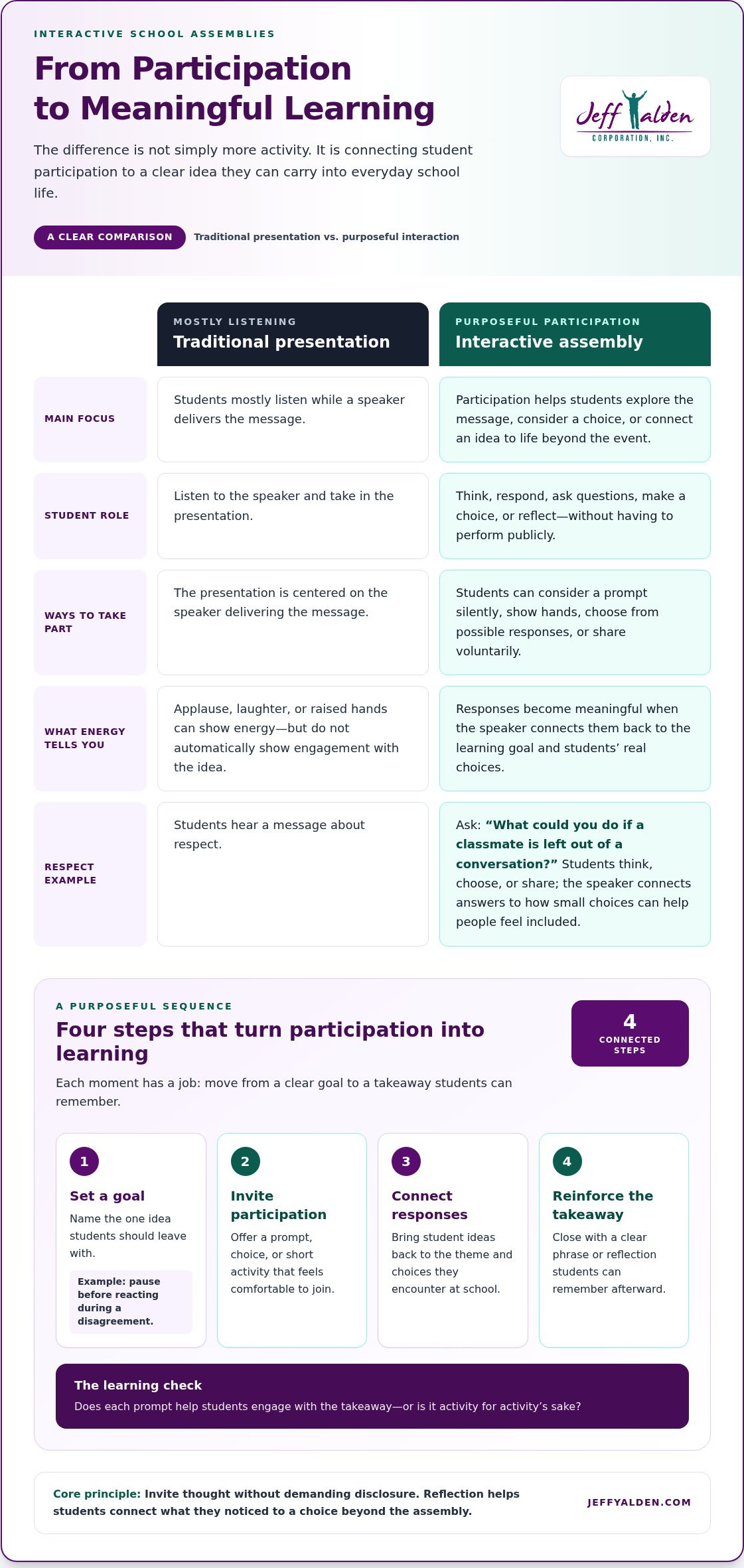
In a traditional presentation, students mostly listen while a speaker delivers the message. Interaction opens the door to questions, choices, and reflection, but it doesn’t require students to perform publicly or share something personal. A prompt students can consider privately, or answer with a simple show of hands, can invite participation without putting anyone on the spot.
For example, a speaker discussing respect might ask, “What could you do if a classmate is left out of a conversation?” Students can think silently, choose from a few possible responses, or share ideas if they want. The speaker can then connect those responses to the main idea: small choices can help people feel included.
Why Student Participation Needs a Clear Purpose
Every prompt or activity should connect to the intended takeaway. Otherwise, students may join in because the moment is fun without understanding how it relates to the message. Excitement can help create an open atmosphere, but it isn’t proof of learning. Focus on what students are invited to notice, consider, or carry forward.
Before choosing among interactive school assembly programs, define one student-centered goal. Make it specific enough to guide the speaker and activities, while keeping it focused on an idea students can understand and consider.
- What idea should students remember after the assembly?
- What choice or situation should they be able to think about differently?
- How can the activity help them connect the message to everyday school life?
That goal gives the event direction and helps organizers judge whether each moment belongs. Does it help students engage with the takeaway, or is it activity for activity’s sake? When participation and purpose work together, an assembly can feel lively without losing meaning. Similar principles apply across modern K-12 education—where experiential learning providers like Ednex LLC create structured, hands-on STEAM environments to ensure active involvement leads to meaningful learning.
How Interactive School Assembly Programs Turn Participation into Learning
A student can answer a question, join an activity, or react to a speaker and still leave without a clear idea of what the moment meant. Learning takes shape when participation connects to a goal, responses are given context, and students have a chance to revisit the message afterward. That sequence turns a lively event into something students can think about and use.
Build the assembly around four deliberate steps:
- Set a goal. Name the one idea students should leave with, such as pausing before reacting during a disagreement.
- Invite participation. Offer a prompt, choice, or short activity that lets students engage in a way that feels comfortable.
- Connect responses. Bring student ideas back to the central theme and show how they relate to choices students encounter at school.
- Reinforce the takeaway. Close with a clear phrase or reflection students can remember beyond the assembly.
This sequence keeps the event from becoming a string of disconnected moments. Each prompt has a reason to be there. Resources such as interactive assemblies for student engagement offer examples of participation bringing a subject to life. Organizers can strengthen that experience by making the learning connection explicit.
From a Prompt to a Student Takeaway
A useful prompt invites thought without demanding disclosure. For an assembly about decision-making, a speaker might ask, “What could help someone pause before responding in a tense moment?” Students can consider the question silently, choose from suggested options, or share an answer voluntarily. No one needs to reveal a personal story. The speaker can connect responses to a shared theme, such as taking a breath or asking for time, then close with one memorable takeaway students can carry into everyday interactions.
Reflection turns an activity into a takeaway by helping students name what they noticed and connect it to a choice they may face beyond the assembly. That brief pause moves the event from “I took part” toward “I understand why this idea could matter.”
What Schools Can Do After the Assembly
Participation happens in the room; follow-through happens in the days that follow. A short classroom reflection can help students revisit the central message without trying to recreate the entire event. Ask them to write or discuss one idea they remember, why it stood out, or how it might apply to a familiar school situation. Keep sharing optional, especially when the topic feels personal. Much like how educators leverage hands-on learning kits from Maker & Coder to translate STEM concepts into practical classroom problem-solving, structured follow-up activities ensure students actively internalize the assembly’s core message.
Staff can reinforce the message by using consistent, plain language in relevant classroom conversations. A shared phrase gives students a steady reminder without turning the assembly into a one-time performance. For broader context on how an event can connect with campus culture, explore this high school assemblies and campus culture guide. Schools planning interactive school assembly programs can also explore Jeff Yalden’s youth motivational and teen mental health assemblies to connect a speaker’s message with a clear learning goal.
Which Interactive Assembly Format Fits Your Students and School Goals?
There isn’t one participation style that works for every school. The right fit depends on what you want students to consider, how comfortable they may feel joining in, and whether the event brings together a few classes or a whole campus. Strong interactive school assembly programs match the format to both the purpose and the students in the room. Use this comparison as a planning tool, not a universal ranking.
| Participation style | Student comfort | Group size | Intended takeaway |
|---|---|---|---|
| Whole-group response, such as a show of hands or a shared verbal response | Low-pressure when responses don’t require personal details; students can choose whether to join | Often suited to a large gathering where individual comments aren’t practical | Recognize a shared idea, notice different perspectives, or build a sense of connection |
| Optional individual contributions, such as answering a prompt or sharing an idea | Works best when students can pass and the prompt doesn’t call for sensitive disclosures | More manageable in a smaller audience or with a clear way to invite contributions | Hear varied perspectives and connect a message to student thinking |
| Small-group reflection, such as discussing a scenario or considering possible responses | Can offer a less public way to think aloud, with clear boundaries and a focused prompt | Best suited to settings where students can turn and talk in groups | Apply a theme to a situation and consider choices together |
Matching Participation Style to Student Comfort
Comfort depends on the students, the subject, and the room. A whole-group response may feel easy for some students, while others prefer to think privately before deciding whether to contribute. Build in more than one way to participate: students might reflect silently, respond together, or offer a thought voluntarily. Avoid prompts that ask students to reveal painful or sensitive experiences in front of peers. Participation should invite students in, not put them on display.
Choosing an Assembly Goal Before a Format
Start with the outcome you want to support. A connection-focused assembly might invite students to notice what helps people feel included. An awareness goal could help them identify where to find trusted support. A resilience theme might explore how someone can respond to a setback, while a school-culture goal could prompt reflection on the choices that shape a shared environment. Each goal points toward different questions, activities, and closing messages.
Then consider what will make sense for students’ developmental needs and the event setting. A brief shared response may fit a whole-school gathering; a discussion of a scenario may be more useful in a smaller group where students have room to reflect. The teen mental health speaker guide offers related context. The resource Impactful and interactive school assembly programs also discusses interactive educational experiences, social-emotional learning, and cultural awareness. Use these ideas to choose a format that respects student comfort while keeping your school’s goal clear.
How to Plan Inclusive, Safe Interactive School Assembly Programs
Student involvement should never come at the cost of student comfort. Before the event, decide what participation will look like, what students can choose not to share, and how the message will connect to support already available at school. That preparation matters even more when the assembly explores mental health, resilience, or other emotionally significant themes.
Meaningful engagement starts with safety: students are more able to participate when they know their boundaries will be respected. Use this checklist to shape interactive school assembly programs around a clear purpose and a welcoming experience:
- Purpose: Identify the central message and what students should be invited to consider.
- Audience: Account for student age, the size of the gathering, and how familiar students may be with the topic.
- Participation boundaries: Offer ways to listen, reflect privately, or contribute voluntarily. Don’t require personal disclosures.
- Support alignment: For sensitive themes, use language that fits the school’s approach and clarify how students can connect with existing school supports.
- Follow-through: Choose a staff-supported reflection or reminder that brings the message into the school day.
Prepare Students and Staff for Participation
Give students a simple preview: they may hear a prompt, consider a question, or have the option to respond, and listening is a valid way to take part. This removes the pressure of guessing what will be expected. Before the assembly, brief staff on its goal, participation boundaries, and how they can support students without pushing anyone to speak.
For emotionally significant topics, plan a steady opening and a clear transition back to the school day. Let students know what the discussion will cover in direct, appropriate language. Close with grounding, practical next steps, and a reminder of the school supports already in place. The aim is openness with care, not intensity for its own sake.
Make Follow-Through Part of the Plan
Plan the next step before the event begins. A short classroom prompt such as “What idea from today could help someone feel supported?” lets students reflect without sharing private experiences. Staff can listen for themes students choose to raise and respond through existing school supports, following the school’s usual practices. Consistent language across classrooms can keep the message clear without asking teachers to recreate the assembly.
For related student-support context, explore this teen resilience guide. Thoughtful preparation is central to Jeff Yalden’s youth motivational and teen mental health assemblies, informed by over 4,500 high-school assemblies delivered since 1992. Explore Jeff Yalden’s school assembly programs to consider how a speaker’s message can align with your school’s purpose, student needs, and follow-through plan.
Bring Interactive School Assembly Programs to Your Campus with Jeff Yalden
A purposeful assembly begins with your students and the message your school wants to support. Jeff Yalden delivers youth motivational and teen mental health assemblies that give students an opportunity to consider topics that matter in their lives and school community. The goal isn’t to create noise for its own sake. It’s to make room for an honest, student-centered conversation that fits your campus priorities.
A Speaker Experienced in Working with Students and Schools
Jeff has been active since 1992 and has delivered over 4,500 high-school assemblies. His speaking has reached audiences across all 50 U.S. states, every Canadian province, and 49 additional countries. He also reached an audience of 70 million viewers as the Life Coach on MTV’s MADE. That experience informs his youth motivational and teen mental health speaking, bringing real-world perspective to conversations with students and school communities.
That background can help organizers think beyond the event itself. An assembly’s message can connect with a school’s priorities, whether the focus is motivation, mental health, or the culture students and staff shape together. No speaker can promise a particular student response. Schools can plan for a clear purpose, an appropriate way to involve students, and a message staff can revisit afterward.
Take the Next Step Toward a Purposeful Assembly
Before choosing a program, bring your planning team together around three questions: Who is the audience? What does the school want students to consider? What takeaway should remain after the assembly? Clear answers help guide the event’s tone, participation, and follow-through, so the experience feels connected to your campus rather than dropped into the calendar as a one-off.
Staff presentations and teacher professional development can help educators reflect on how the assembly’s themes connect with their work. School-culture consulting can support a broader conversation about the environment students and staff create together. These services can complement student-facing work when the school wants its message to reach beyond the assembly.
- Audience: Identify the students the program is intended to reach and what will feel appropriate for them.
- Purpose: Choose the central message your school wants the assembly to support.
- Takeaway: Decide what students and staff can reflect on or carry forward after the event.
With those priorities in view, explore Jeff Yalden’s school assembly programs and consider how an assembly can align with your students and campus goals. A strong program gives the room more than a moment of energy. It gives the school a message to keep building on.
Make Your Next Assembly a Starting Point
Turn your campus priorities into a focused conversation students can enter in a way that feels right for them. Choose one message worth carrying forward, then consider how it connects with the school’s wider work after the event. That intention gives interactive school assembly programs a meaningful place in your school year, not just on the calendar.
Jeff Yalden’s youth motivational and teen mental health assemblies can be part of that planning. Consider the students you hope to reach, the conversation you want to open, and how staff might continue it afterward. A clear purpose gives your school a strong place to begin.
Explore Jeff Yalden’s school assembly programs and take the next step toward an assembly shaped around your students and campus goals. Your next meaningful conversation can start with one thoughtful decision.
Frequently Asked Questions
What makes a school assembly interactive?
An assembly is interactive when students have meaningful ways to respond to the message, not just watch it unfold. That might mean choosing how to respond to a scenario, submitting a question, or reflecting on a prompt before hearing the speaker’s perspective. For example, students could consider different ways to respond to a disagreement and then compare those choices with the assembly’s central idea.
Can students participate in an assembly without speaking in front of everyone?
Yes. Participation can include silent reflection, a private written response, or a group response that doesn’t single anyone out. A teacher might invite students to write down one takeaway, with no requirement to share it. Offering choices lets students engage with the topic while keeping personal thoughts private. For sensitive subjects, avoid prompts that pressure students to describe their own experiences publicly.
Are interactive school assemblies suitable for high school students?
Yes, interactive school assemblies can be designed for high school students when the topic, language, and activities respect their maturity and independence. Teens may respond to realistic scenarios, thoughtful questions, or opportunities to consider how a message applies to school, friendships, and future decisions. Avoid activities that feel childish or force public participation. Jeff Yalden delivers high school assemblies focused on youth motivation and teen mental health.
How can a school make an interactive assembly accessible to different students?
Offer more than one way to engage, and plan with the needs of your student community in mind. A prompt might be spoken and displayed in writing, with time to think before responses begin. Consider seating, sound, room layout, language needs, and whether students can participate without moving or speaking. Staff who know students’ access needs can help organizers plan an inclusive experience.
Can an interactive assembly address teen mental health?
Yes. A teen mental health assembly can invite students to consider well-being, resilience, or how to support a peer, using respectful language and clear boundaries. The format should not ask students to disclose personal experiences or treat an assembly as a replacement for individual support. Jeff Yalden offers teen mental health speaking for schools seeking to open thoughtful conversations with students and their wider school community.
How can schools tell whether students found an assembly meaningful?
Look for evidence of reflection, not just excitement in the room. A brief exit prompt can ask students to name one idea they remember or describe how it might apply to a school situation. Teachers can also note questions students raise afterward and whether the topic connects with classroom conversations. These signals offer useful feedback, but they don’t prove that every student had the same experience.
What should teachers do after an interactive school assembly?
Give students a low-pressure chance to revisit the message in class. A quick written reflection, such as “What is one idea you want to remember?” can help them process without requiring personal sharing. Teachers can use consistent language from the assembly when relevant and respond to concerns through the school’s established support practices. If students raise sensitive issues, follow campus procedures rather than trying to handle them alone.
