
The best high school speaker for freshmen orientation is one who can speak honestly about friendships and peer pressure while fitting the school’s schedule and students’ needs. There’s no single presentation length for every school: at High Tech High School in North Bergen, freshman orientation meets once a week for a 40-minute class period. The right choice depends on your program’s format, goals, and the kind of interaction you want students to experience.
You want freshmen to feel welcomed, not lectured at. You also want a message that meets them where they are as they navigate new friendships, social pressure, and the transition to high school. This guide explains how a high school speaker for freshmen orientation can address those challenges and what to consider when choosing one, including scheduling, presentation length, customization, and interactive style. You’ll have a clearer way to decide what fits your orientation and what could help students begin the year feeling more connected and prepared.
Key Takeaways
- Look for a speaker who can make conversations about friendship and peer pressure feel honest, practical, and relevant to incoming students.
- Match the presentation schedule and length to your orientation format, then shape the content around the transition challenges your freshmen face.
- Choose an interactive style that gives students a way to reflect and participate without putting anyone on the spot.
- Prioritize a speaker who connects with teenagers, communicates with empathy, and offers takeaways students can use beyond orientation day.
- Explore how different speaker backgrounds and presentation approaches can support your school’s goals for welcoming freshmen.
Friendships, peer pressure, and social skills
Freshman orientation often happens a few weeks before classes begin, when familiar routines and friendships are still ahead. Students may worry about finding their people, speaking up, or handling pressure to fit in. A useful session makes those concerns easier to discuss, then gives students words and actions they can use. For example, a student can practice saying, “I’m not comfortable with that,” when a new friend pressures them to make a choice they don’t want to make.
Friendships need more than a warm welcome; they grow through repeated, low-pressure contact. Academic, volunteer, and social clubs can help freshmen adjust while creating opportunities to take on leadership. A speaker can make this practical by asking students to name an interest, then connect it to a club, activity, or conversation starter. The goal isn’t to promise instant friendship. It’s to help students take a first step, such as inviting a classmate to attend a club meeting together.
Peer pressure can be subtle: laughing at a cruel joke, joining a group chat that targets someone, or hiding an interest to avoid standing out. Use realistic scenarios to help students notice the pressure, pause, and choose a response. They might redirect the conversation, set a boundary, or find a trusted adult. These examples build social skills without asking students to share private experiences in front of classmates.
Alternatives to a professional orientation speaker include a student-led panel, a discussion facilitated by school counselors, or small-group activities led by teachers. Schools can also pair club introductions with practical conversation prompts, giving students an easy reason to talk.
School district requirements can differ, so follow the district’s own approval process for outside speakers, including visitor procedures and content review. This keeps planning aligned with local expectations.
To assess a speaker’s safety, credentials, and references, review their background and experience with teenagers, then request school references and a clear presentation outline. Discuss how sensitive topics are handled, how participation works, and what steps help protect students’ privacy and comfort. A speaker should explain these choices plainly, without relying on a dramatic story or a big promise. That transparency helps schools judge whether the message fits freshmen and the setting.
2. Presentation scheduling, length, and customization
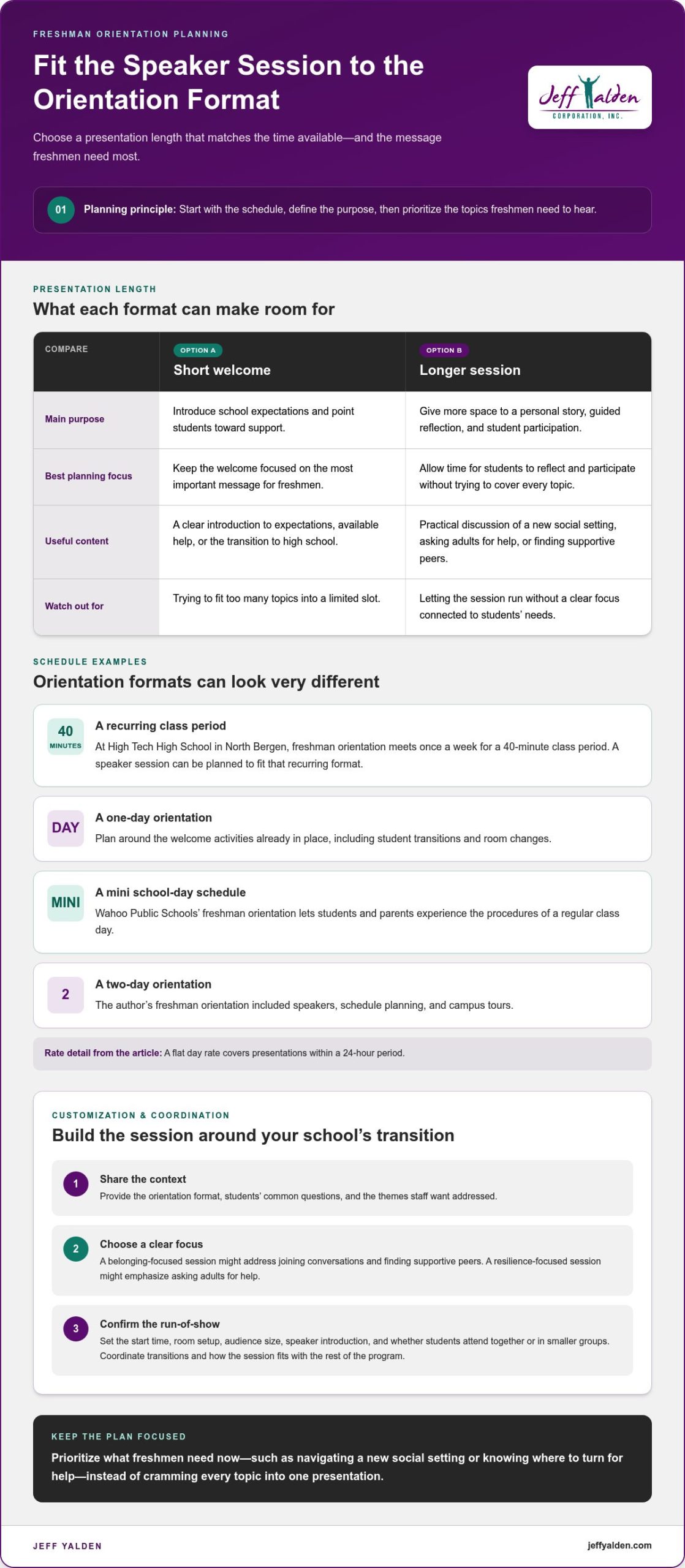
Start with the orientation schedule, then fit the presentation into the time students can give it. At High Tech High School in North Bergen, freshman orientation meets once a week for a 40-minute class period. That example shows how a speaker’s session can fit a recurring class, rather than a single welcome event. A school holding orientation in one day can instead plan around its existing welcome activities, student transitions, and room changes.
Before setting the presentation length, define its purpose. A short welcome may introduce the school’s expectations and point students toward support. A longer session can make room for a personal story, guided reflection, and student participation. Avoid cramming every topic into one presentation. Prioritize what freshmen need to hear, such as navigating a new social setting or knowing where to turn for help.
Customization should connect the message to the school’s transition. Share the orientation format, students’ common questions, and the themes staff want addressed. For example, a school emphasizing belonging might focus on joining conversations and finding supportive peers. Another school may prioritize resilience and asking adults for help. This preparation gives the speaker a clear focus without turning the presentation into a list of school rules.
Coordinate practical details before the event. Confirm the start time, room setup, audience size, and who will introduce the speaker. Decide whether freshmen will attend together or in smaller groups. If several organizations contribute to orientation, agree on who handles transitions and how the speaker’s topics fit with the rest of the program. A simple run-of-show helps prevent schedule changes from cutting into the core message.
What questions should schools ask before booking a speaker? Ask what students will learn, how the presentation can be customized, what length and setup it requires, and how participation is handled. Also discuss the speaker’s experience with high school students and approach to sensitive topics.
For a college-bound audience, keep the distinction clear: freshmen orientation prepares high school students for their current school community, not college registration. Choose examples and language that match ninth graders’ immediate lives. A school assembly presentation approach can help planners consider how a speaker’s message fits the event’s goals and schedule.
Freshman orientation programs at public high schools commonly let students tour the school, obtain their schedules, and ask questions about the upcoming year. The Wahoo Public Schools freshman orientation includes a mini school-day schedule so students and parents can experience the procedures of a regular class day. That format offers a way to make planning concrete: students can consider how a schedule and classroom procedures fit into their upcoming school experience. When comparing presentation arrangements, note that the flat day rate covers presentations within a 24-hour period.
The author’s freshman orientation lasted two days and included speakers, schedule planning, and campus tours. The author says students have four years of college ahead of them when planning their class schedules at orientation. Those details can help organizers decide where a presentation fits within a broader orientation, while keeping the focus on students’ immediate questions and school routines. A speaker can complement tours, schedule planning, and opportunities to ask questions rather than displacing them.
3. Interactive presentation style
An interactive presentation gives freshmen something to do with the message, not just something to hear. For example, a speaker can describe a student facing pressure to skip an academic activity, then invite the room to suggest respectful responses. Students can compare options without being asked to reveal personal experiences. That keeps the conversation active while respecting individual comfort.
Choose participation methods that offer different levels of visibility. A show of hands can quickly reveal which school routines feel unfamiliar, while silent reflection gives quieter students time to think. Pair discussions let students rehearse a simple opener, such as asking a classmate what club they might attend. Each format creates an opportunity to participate without requiring a public speech.
Good prompts are specific and grounded in freshmen’s daily lives. A scenario about being left out of a lunch conversation can lead to practical ideas: approach someone, ask an open question, or invite another student to join. A speaker can then connect those actions to building community. This goes beyond “be yourself” and gives students words they can try.
Interactive does not have to mean loud or unpredictable. A structured activity might ask students to consider a fictional dilemma, write a response privately, and discuss answers voluntarily. The speaker should explain participation expectations before starting and let students pass. That clarity matters when the topic touches on belonging, conflict, or personal boundaries.
Notice how the speaker balances energy with listening. If a student offers an answer, the speaker can acknowledge it, ask what makes that response useful, and invite another perspective. For example, “Tell a trusted adult” may be one option, while setting a direct boundary may suit another situation. Respectful follow-up keeps the exchange thoughtful rather than turning it into a performance.
Schools can assess fit by matching activities to the room and orientation format. A large auditorium may suit reflection prompts and voluntary responses; a smaller group can support paired practice. Share the seating arrangement, microphone setup, and students’ participation preferences during planning. Those details help the speaker choose activities students can actually do in the space.
Look for a clear link between each activity and a useful takeaway. After a scenario, students might name one person or place they could turn to for support. After a conversation exercise, they could identify a question that helps start a friendship. Ask what students will practice, how they can opt out, and how the session will return to its central message.
4. What makes an effective freshman orientation speaker?
An effective speaker understands the pressure of entering a new school and speaks directly to that transition. Before the event, they learn the orientation’s goals, students’ age range, and the schedule. For example, if freshmen are meeting teachers and finding classrooms, the message should connect confidence with asking questions and seeking help.
Credibility comes from clear, age-appropriate communication, not dramatic claims. A speaker should explain challenging ideas in language ninth graders can follow. When discussing peer pressure, for instance, they can describe a realistic choice, show how to pause, and offer practical responses. Students should leave with actions they can take, not just a memorable slogan.
Look for a speaker who balances personal storytelling with useful guidance. A story about struggling to fit in can create connection, but it needs a clear takeaway, such as naming a trusted adult or setting a boundary. The story should serve students’ needs rather than make them responsible for the speaker’s feelings.
Emotional awareness matters when a presentation touches on mental health, belonging, or conflict. An effective speaker avoids asking students to disclose private experiences in front of classmates. They explain participation choices, respect students who pass, and direct personal concerns to appropriate school staff. That care keeps a powerful message grounded and respectful.
Strong delivery also means adapting to the room. In an auditorium, a speaker may use a clear opening, concise stories, and pauses for reflection. In a smaller group, they can invite discussion and respond to student questions. Either way, students need time to process the message rather than hear one uninterrupted speech.
Notice how the speaker handles an unexpected answer. If a freshman says, “I don’t know anyone here,” a thoughtful response acknowledges the feeling and offers a manageable first step, such as introducing themselves to one classmate. The speaker should avoid dismissing the concern with a quick command to “just be confident.”
Before the event, give the speaker a brief orientation plan with the school’s goals, key transition challenges, and preferred tone. Then compare the planned message with the schedule and student activities. A session about belonging, for example, should complement the welcome program rather than repeat instructions about lockers or classroom routines.
Ultimately, an effective speaker leaves students with language they can use. Ask what freshmen will be able to say or do afterward. A strong answer might include asking a teacher for help, stepping away from uncomfortable pressure, or starting a respectful conversation. Those concrete takeaways make the presentation useful beyond orientation day.
5. What types of speakers are best for incoming high school freshmen?
The best fit depends on what freshmen need to take away from orientation. A speaker focused on transition skills can help students manage new routines, meet classmates, and ask teachers for help. For example, a practical session might model how to introduce yourself to a lab partner or approach a teacher after missing an instruction. Look for a clear match between the speaker’s focus and the school’s goals.
A speaker with lived experience can make topics like belonging and resilience feel human. A story about starting over can resonate when it leads to useful steps, such as finding a trusted adult or joining an activity. Ask whether personal stories support students’ learning rather than take over the presentation. Freshmen should feel included, not responsible for carrying the speaker’s emotions.
A motivational speaker may suit an orientation built around confidence, effort, and school engagement. The strongest message isn’t simply “work hard.” It connects motivation to a realistic choice, such as attending a club meeting even when walking into the room feels awkward. Check that the speaker’s language respects students who feel uncertain, instead of suggesting confidence comes easily to everyone.
A mental health-focused speaker can be appropriate when the school wants students to understand resilience, emotional well-being, and seeking support. The presentation should use age-appropriate language and explain how students can turn to trusted adults at school. For example, a speaker can discuss what to say when a friend seems overwhelmed, without pressuring students to share personal experiences publicly.
School educators, counselors, or alumni can also speak effectively. A counselor can explain how students access school support, while an alumnus can share a concrete story about adjusting to ninth grade. These voices work well when the audience needs practical, school-specific guidance. They may be less suited to a broad motivational message unless the speaker has a clear plan to connect personal experience to student needs.
A student panel offers another format. Current students can describe how they found clubs, handled a difficult first week, or learned to ask for help. A moderator should keep answers focused and make room for different experiences, rather than presenting one student’s path as a universal guide. This option can pair naturally with a guest speaker who brings a broader message.
To choose, write down the orientation’s main purpose, identify the students’ most immediate challenges, and match those needs to a speaker’s strengths. Then consider the format: a personal story, practical guidance, or student discussion. If your school wants a message rooted in resilience and connection, explore speaker options for freshman orientation.
Then consider what incoming students need to do next. Encourage them to take required placement exams before attending orientation, since some schools may restrict course registration until the exams are complete. During the event, students can ask orientation leaders and other experienced students questions to learn about academic and wellness services. That practical guidance can complement a speaker’s message and leave freshmen better prepared to navigate the school.
Jeff Yalden: High School Assemblies
Jeff Yalden’s High School Assemblies are a natural fit when your freshman orientation needs an honest message about resilience, mental health, and navigating change. As a Teen Motivational Speaker, Jeff addresses students through school assembly programs focused on meaningful conversations and personal growth. This can complement practical orientation activities by giving students space to reflect on the challenges of entering high school.
Consider this approach when you want a speaker to connect with teenagers and bring emotional well-being into the orientation experience. It is not a substitute for clinical counseling or crisis services; it is a school assembly offering. Share your goals and orientation format to shape the presentation around your students’ needs.
Contact Jeff Yalden to discuss a High School Assembly for your freshmen orientation.
Give Freshmen a Strong Start
The first days of high school can shape how students see themselves in a new community. A thoughtful orientation gives them more than directions; it can help them feel ready to participate, ask for support, and make their own choices. Choosing a high school speaker for freshmen orientation is an opportunity to set that tone with honesty and purpose.
As you plan the next step, focus on the message you want students to carry into the school year. Jeff Yalden offers High School Assemblies, High School Assembly Programs, and the perspective of a Teen Motivational Speaker. These can support an orientation centered on connection, resilience, and meaningful conversations with students.
Contact Jeff Yalden to discuss an assembly for your freshmen. Their first chapter in high school is just beginning, and your welcome can help them meet it with courage.
Frequently Asked Questions
What topics should a speaker cover at high school freshman orientation?
A speaker should address situations freshmen are likely to face during their first weeks, including finding help, managing new responsibilities, and responding to conflict. For example, students can discuss what to do when they miss an assignment or feel excluded from a group project. Include practical language for asking a teacher for clarification, and explain how the school’s own support system works.
Where can schools find speakers for freshman orientation?
Schools can look for speakers whose work focuses on teenagers, school assemblies, motivation, or mental health. Jeff Yalden offers High School Assemblies and works as a Teen Motivational Speaker. As you compare options, match the speaker’s strengths to your orientation goals, then review a sample presentation outline and school references. A high school speaker for freshmen orientation should connect with ninth graders and understand the school setting.
How long should a freshman orientation keynote or presentation be?
Set the presentation length by working backward from the full orientation agenda. Allow time for the speaker’s main message, student reflection, and transitions to the next activity. For example, if students must move to advisory groups afterward, reserve time for that transition rather than letting the presentation run over. A clear run-of-show helps protect the session’s key takeaway without disrupting the day.
