
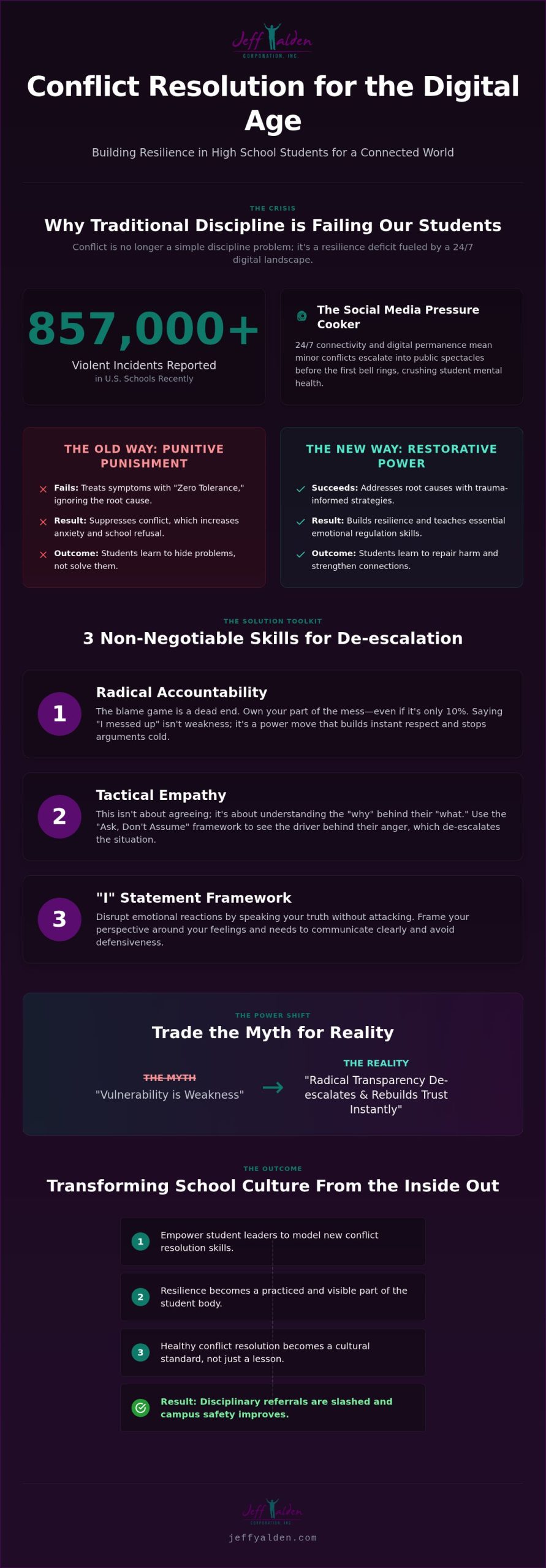
Conflict isn’t a discipline problem to be managed with a handbook; it’s a resilience deficit that’s tearing our campuses apart. With over 857,000 violent incidents reported in U.S. schools recently, the “wait and see” approach is officially dead. We need to talk about conflict resolution skills for high school students as a survival kit for the 2026 digital landscape. You’ve seen the cycle. A single social media comment escalates into a hallway confrontation by first period, leaving students paralyzed by anxiety or facing another suspension. It’s exhausting for them, and it’s draining for you.
I get it. I’ve stood in those hallways and felt that tension. You want a safer campus where students actually self-regulate instead of waiting for an adult to intervene. This isn’t about clinical theories; it’s about radical transparency and real-world tools. I promise that by mastering these essential skills, you’ll build a culture that protects mental health and slashes disciplinary referrals. We’re going to dive into the shift from punitive punishment to restorative power, exploring how proactive, “upstream” strategies can turn a potential blow-up into a moment of genuine human connection.
Key Takeaways
- Stop relying on “zero tolerance” rules that only hide the drama. Learn how to address the root causes of digital-age conflict through restorative power.
- Master the core conflict resolution skills for high school students that focus on radical self-honesty and owning your part of the mess.
- Trade the “vulnerability is weakness” myth for a new reality. Radical transparency is the fastest way to de-escalate a situation and rebuild trust instantly.
- Learn a real-time framework to disrupt emotional reactions and use “I” statements that speak your truth without attacking anyone else.
- Transform your campus from the inside out. Empower student leaders to model resilience so conflict resolution becomes a cultural standard, not just a lesson.
Why Conflict is Erupting in High Schools (and Why Traditional Discipline Fails)
We’re dealing with a different beast in 2026. Conflict isn’t just about who said what in the cafeteria. It’s about what was recorded, edited, and shared to five thousand people before the final bell rings. The old “he-said-she-said” disputes have been replaced by digital permanence. When every mistake is screenshotted and archived, the pressure to never back down becomes a crushing weight. This is why Conflict resolution is no longer an elective life skill; it’s a survival requirement.
Traditional discipline is failing our kids because it treats the symptom, not the soul. Zero tolerance policies are a band-aid on a bullet wound. They look good on paper, but they just push the fire underground. When we suppress conflict through suspension rather than resolving the root cause, we leave students’ conflict resolution skills for high school students completely undeveloped. They don’t learn how to fix the mess; they just learn how to hide it better next time. This suppression leads to a massive spike in anxiety and school refusal. It’s a cycle that ends in crisis.
The Social Media Pressure Cooker
The keyboard warrior effect is real. It’s easy to be cruel when you don’t have to look someone in the eye. 24/7 connectivity means there’s no “safe space” to escape the drama. A minor misunderstanding on a Friday night becomes a campus-wide war by Monday morning. Digital escalation in 2026 teen culture is the rapid, public amplification of private friction through algorithmic visibility and a permanent social record. Students feel they have to “win” the conflict to save their reputation, which makes empathy feel like a liability.
The Mental Health Connection
This is where the work of a teen mental health speaker becomes vital. Acting out isn’t just “bad behavior.” Most of the time, it’s a scream for help from a kid with low resilience and high trauma. When we use trauma-informed approaches, we stop asking “what’s wrong with you” and start asking “what happened to you.” Teaching conflict resolution skills for high school students requires us to address the internal pain that fuels the external friction. We need a “vulnerable authority” to lead the way. Students don’t need another clinical lecture from a distant expert. They need someone who has been in the dirt, survived the fire, and can show them that vulnerability is actually their greatest strength in de-escalating a fight.
The 3 Non-Negotiable Skills for Resolving High School Conflict
If you think conflict resolution is just about “getting along,” you’re missing the point. These aren’t suggestions. They are life-saving tools for building resilience in teens. In a world that’s ready to record your every mistake, you need a strategy that works when the pressure is on. We’re talking about conflict resolution skills for high school students that actually hold up in the hallway, not just in a textbook.
Owning Your Truth: Radical Accountability
The “blame game” is a dead end. It’s a trap that keeps you stuck in the dirt. When you point the finger at someone else, you give away your power. Radical accountability means owning your part of the mess, even if it’s only 10% of the problem. There is an incredible, visceral power in saying “I messed up” in front of your peers. It doesn’t make you look weak; it makes you look untouchable. Accountability builds instant respect on campus because it’s so rare. When you stop defending your ego, you start solving the problem. This level of honesty is the foundation of conflict resolution skills for high school students who want to lead, not just follow.
Tactical Empathy vs. Sympathy
Sympathy is feeling sorry for someone. Tactical empathy is understanding the “why” behind their “what.” It’s a tool for de-escalation, not a sign of agreement. You don’t have to like the person to understand what’s driving their anger. I call this the “Ask, Don’t Assume” framework. When you’re developing conflict resolution skills, you have to look past the surface-level attack. Empathy acts as a shield against bullying because it removes the fuel from the fire. It’s hard for someone to keep attacking you when you’ve already identified the pain they’re trying to hide. It changes the game entirely.
Finally, you have to master emotional regulation. This is the ability to stay “cool” when things get “hot.” It’s about that split-second decision between reacting and responding. If you can control your breath and your heart rate in a confrontation, you’ve already won. You become the anchor in the storm. I’ve seen this transformation happen in real-time during my High School Assembly Programs, where we move from chaos to clarity by simply teaching kids how to breathe through the friction. These skills don’t just fix a fight; they build a future.
Radical Transparency: How Vulnerability De-escalates Situations Instantly
Most kids think vulnerability is a death sentence for their social life. They’ve been taught that showing any emotion other than anger or indifference is a sign of weakness. They’re wrong. In the heat of a conflict, vulnerability is the ultimate power move. It’s the only thing that can cut through the “tough guy” or “mean girl” act that fuels 90% of campus drama. When you’re real about your own fear, hurt, or insecurity, you stop the escalation dead in its tracks. You dismantle the walls that students spend years building.
I call this the “Real and Raw” approach. It’s about being a “vulnerable authority” who leads by example. When a teacher or a student leader admits they don’t have all the answers, it gives everyone else permission to drop the act. This transparency changes the frequency of the entire school. It moves the conversation from “I’m going to win this fight” to “I’m going to solve this problem.” This is where conflict resolution skills for high school students move from theory into reality.
The Power of Lived Experience
Students can spot a fake from a mile away. They don’t want a clinical lecture from someone who has never been in the dirt. They listen to those who have “been there” and survived the fire. This is why bringing in a high school assembly speaker who “gets it” is so vital. Personal stories of failure, conflict, and resolution are the best tools we have. By sharing the “raw” parts of my own journey, I show students that you can be vulnerable and still be a victor. It models a new kind of strength that doesn’t require an enemy.
Normalizing the Struggle
We have to stop acting like having a problem with a peer is a shameful secret. It’s part of being human. When we normalize mental health conversations, we lower the temperature of the whole school. Conflict-driven aggression is almost always a mask for internal pain. If we foster “real talk” in the hallways, we give students a release valve before the pressure leads to an explosion. Here is how you start:
- Acknowledge the feeling: “I can see you’re frustrated, and honestly, I’ve been there too.”
- Drop the ego: “I might have handled that wrong. Let’s talk about it.”
- Prioritize the person: Make it clear that the relationship matters more than being “right.”
Normalizing the struggle removes the stigma of “having a problem.” It creates a culture where conflict resolution skills for high school students are seen as a badge of honor. When we stop punishing the struggle and start supporting the resolution, the entire campus culture transforms from the inside out.
A Step-by-Step Guide to Resolving Peer Conflict in Real-Time
High school is a pressure cooker. When the heat is on, you don’t need a preschool lesson on “sharing.” You need a framework that actually holds up in the hallway, the locker room, and the group chat. These conflict resolution skills for high school students are designed for the moments when your heart is racing and your reputation is on the line. It’s about moving from a reactive explosion to a proactive resolution without losing your respect or your cool.
The ‘Pause’ Technique for High-Stress Moments
The first step is always the ‘Pause.’ This is the moment you disrupt the immediate emotional reaction that wants to burn everything down. You have to understand the 10-second rule; the first 10 seconds of a conflict determine the outcome. If you react instantly, you’re usually reacting from fear or anger. Instead, try a grounding exercise: feel your feet on the floor or count three things you can hear. The ‘Pause’ is your mental reset button in a world that demands an immediate reaction. It gives your brain a chance to catch up with your emotions so you can choose your next move rather than just exploding.
Constructive Dialogue: Moving Beyond the Argument
Once you’ve paused, you move to the ‘I’ Statement. This is how you speak your truth without attacking theirs. Instead of saying, “You’re a liar,” try a script like: “I feel disrespected when you share our private texts because it makes me feel like I can’t trust you.” This is the ‘Respectful Pivot.’ You’re disagreeing without being disagreeable. This is a habit that an academic life coach reinforces daily. It’s not about being “nice”; it’s about being effective. You’re stating the facts of your experience, which is a position that’s impossible for someone else to argue against.
The final steps are where the real resolution happens. You have to ‘Listen’ to what is NOT being said. Look for the hurt behind their anger. Then, you ‘Collaborate’ to find the ‘third way’ where both parties win. It’s not about you winning and them losing; it’s about the relationship surviving. Finally, use the ‘Check-In.’ A day or two later, send a text or grab them in the hall. Ask if things are still good. This ensures the resolution sticks and the drama doesn’t restart the moment you walk away. If you’re ready to bring this level of radical change to your school, it’s time to book a Teen Motivational Speaker who can show your students how to lead with resilience.
Transforming School Culture Through Resilience and Leadership
Real talk: conflict resolution isn’t a poster in the hallway or a one-off lesson. It’s a cultural shift that has to breathe through every classroom and locker room. We’re talking about a fundamental change in how we treat each other. When we prioritize conflict resolution skills for high school students, we aren’t just lowering suspension rates. We’re building a foundation of resilience. It’s a known fact that healthy communication is the bedrock of effective teen suicide prevention programs. Unresolved conflict is a primary driver of the isolation and hopelessness that leads to crisis. If we don’t teach them how to fix their mess, they’ll feel trapped by it. We’re here to show them the way out.
Empowering Student Leaders
We need to empower the campus influencers. I’m not just talking about the straight-A students; I’m talking about the kids who set the social temperature. Training these leaders to be primary de-escalators changes everything. When a student leader models tactical empathy, bullying and isolation lose their power. Peer-to-peer mentorship is far more effective than any adult lecture. We need to integrate these skills into student council and athletic programs so leadership is defined by the ability to bring people together, not push them apart. This isn’t just about avoiding a fight; it’s about building a tribe where everyone feels seen.
The Jeff Yalden Impact: Beyond the Assembly
I’ve seen schools transform in a single afternoon. A high-impact message at a school assembly can be the spark, but the fire needs fuel. That’s why I focus on teacher professional development to support the students’ new habits. It takes the whole tribe to sustain a cultural shift. We move from a reactive “zero tolerance” mindset to a proactive, resilience-based culture. This is how we protect mental health and transform the school from the inside out. It’s time to stop managing behavior and start mentoring souls. Conflict resolution skills for high school students are the tools they’ll use for the rest of their lives. Ready to change your campus culture? Book Jeff Yalden for your next assembly and let’s get to work.
Ignite a Cultural Shift on Your Campus
The days of managing conflict through a handbook are over. We’ve explored how shifting from punitive discipline to restorative power can transform your school from the inside out. By prioritizing conflict resolution skills for high school students, you’re doing more than stopping hallway drama; you’re building a foundation of resilience that protects mental health and saves lives. It’s about trading the keyboard warrior culture for radical transparency and tactical empathy. This is the work that changes everything.
I’ve spent over 30 years in the trenches with schools just like yours. As an expert in crisis postvention and suicide prevention, I’ve seen how a Red Dot level impact can turn a struggling campus into a tribe of leaders. Don’t wait for the next crisis to act. If you’re ready to empower your students and teachers with real-world tools, it’s time to take action. Book Jeff Yalden for Your High School Assembly today. Let’s walk this path together and give your kids the future they deserve. You’ve got this.
Frequently Asked Questions
What are the 5 main conflict resolution skills for high school students?
Mastering conflict resolution skills for high school students starts with five core pillars: radical self-honesty, tactical empathy, emotional regulation, active listening, and collaborative problem solving. It’s about owning your part of the mess while understanding the “why” behind someone else’s “what.” When kids learn to pause before reacting and use “I” statements to speak their truth, they move from drama to resolution. These tools are the foundation of campus-wide resilience and personal growth.
How can teachers help students resolve conflicts in the classroom?
Teachers must stop being distant experts and start being “vulnerable authorities.” Instead of just handing out detentions, facilitate restorative circles where students can have “real talk” about the friction. You can model these habits by admitting your own mistakes and showing tactical empathy during heated moments. By creating a trauma-informed environment where it’s safe to be imperfect, you help students practice their resolution skills in a controlled, supportive space.
Why is conflict resolution important for teen mental health?
Unresolved friction is a primary driver of teen anxiety and school refusal. When a student feels trapped in a cycle of social drama, their mental health takes a massive hit. Learning conflict resolution skills for high school students provides a release valve for that pressure. It builds the resilience needed to bounce back from social setbacks. Without these tools, minor disagreements often spiral into deep isolation, hopelessness, and severe mental health crises.
How do social media and cyberbullying impact high school conflict?
Digital permanence turns a 30-second argument into a 24/7 campus-wide war. In 2026, the “keyboard warrior” effect makes it easy to attack without empathy. Because everything is screenshotted and shared, the social stakes are incredibly high. This digital escalation requires students to have even stronger self-regulation skills. They need to learn how to disrupt the online cycle and bring the conversation back to a human, face-to-face level to find real resolution.
Can conflict resolution skills prevent teen suicide or crisis?
Absolutely. Healthy communication and resolution are the bedrock of any effective suicide prevention program. Most crises are fueled by a sense of isolation and the belief that a situation is unfixable. When we teach kids how to navigate conflict, we give them hope and a way to reconnect with their tribe. Removing the weight of unresolved social pain is a critical step in building the resilience that saves lives.
What is the difference between conflict resolution and mediation?
Conflict resolution refers to the internal skills and mindset an individual uses to settle a dispute. Mediation is a structured, third-party process where a neutral person helps two parties reach an agreement. Think of resolution as the “toolbox” and mediation as the “workshop.” While mediation is a great formal process, we want every student to have the resolution skills to settle things in the hallway before a formal mediator is ever needed.
How do I teach a student who is ‘always in drama’ to change their behavior?
You have to address the “why” behind the “what.” Constant drama is usually a mask for low resilience or underlying trauma. Stop focusing on the specific fight and start focusing on radical accountability. Help them see that their “tough” persona is actually a wall keeping them isolated. By using a “real and raw” approach, you can show them that vulnerability is a far more effective way to gain respect than constant confrontation.
What should a school leader do when a peer conflict escalates into a crisis?
When conflict hits a breaking point, you need immediate crisis intervention and a postvention plan. This is where professional authority matters. You must prioritize safety while maintaining radical transparency with the student body. Don’t hide the mess; address it head-on to prevent further escalation or “copycat” behavior. Bringing in an expert like Jeff Yalden, who has handled these situations since 1992, can help stabilize the culture and begin the healing process.
