
What if the reason your teenager is struggling has nothing to do with their intelligence and everything to do with a system designed to break them? You see the burnout coming. You have tried the tutors. You have sat through the conferences. Yet, the “motivation gap” remains a chasm. It is agonizing to watch a brilliant kid feel insignificant because they are drowning in a high-pressure culture. You are likely terrified of a mental health crisis, and traditional tutoring just isn’t touching the root cause.
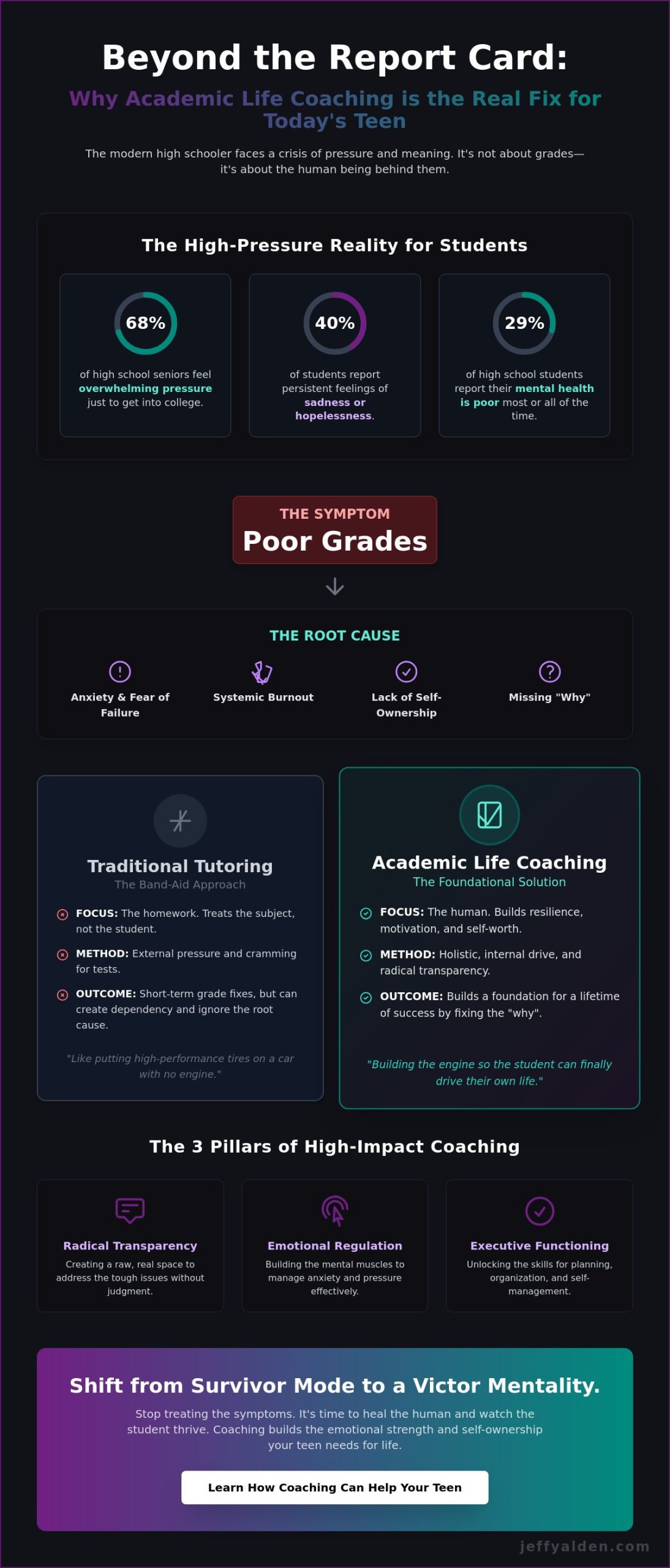
I have been in those trenches, and I know that finding an academic life coach for high school students is the pivot your family needs. This isn’t about hiring someone to nag them about a chemistry quiz. It is about building the ironclad resilience required to thrive in 2026. We are moving past the surface-level study tips to address the 40% of students reporting persistent feelings of hopelessness. When we prioritize the human being over the GPA, the grades actually start to take care of themselves.
This guide explores how coaching builds the emotional strength and self-ownership your teen is missing. You will learn how to reduce family conflict and help your student finally take the lead. We are shifting the focus from surviving high school to mastering life.
Key Takeaways
- Stop treating the symptom and start healing the human by understanding why coaching succeeds where traditional tutoring fails to spark true motivation.
- Explore the power of an academic life coach for high school students to build the “real-world” resilience your teen needs to navigate a high-pressure system.
- Master the three pillars of high-impact coaching, focusing on radical transparency and emotional regulation to finally unlock executive functioning.
- Identify the “vibe check” secrets that ensure your student connects with a mentor who leads with lived experience and vulnerable authority.
- Discover how to turn academic struggle into a byproduct of better mental health, shifting your teen from survivor mode to a “victor” mentality.
Why Your High Schooler is Struggling (And It’s Not Just the Grades)
Your kid is smart. You know it. They know it. But the report card tells a different story. It is a story of missed assignments, late nights, and a growing wall of silence between you and your teen. We have to stop pretending that an extra hour of math help is going to fix a soul that feels crushed by the weight of expectations. In 2026, the pressure isn’t just high; it is systemic. Students are navigating a world where 68% of seniors feel overwhelming pressure just to get into college. When a student feels like just another number in a massive system, they stop trying. They check out.
This is where an academic life coach for high school students steps in. We aren’t here to nag. We are here to bridge the gap between clinical therapy and traditional tutoring. Think of it this way: Academic coaching isn’t about the subject matter. It is about the student’s relationship with themselves and their future. It is a holistic approach that treats well-being as the foundation for every grade they earn. The “smart but failing” student is the primary candidate for this because their struggle isn’t a lack of ability. It is a lack of alignment.
The Crisis of Meaning in High School
High school can feel like a factory. If a teen feels insignificant in a sea of thousands, they withdraw. They lose their “why.” Add in the constant noise of social media and digital burnout, and you have a recipe for total shutdown. Telling a kid in this state to “just study harder” is the worst advice you can give. It is like telling someone with a broken leg to just run faster. It backfires. It creates more shame, more guilt, and more resistance. They don’t need more pressure. They need a reason to care again.
Grades as a Symptom, Not the Problem
Grades are just data points. They are symptoms of what is happening under the surface. Sometimes, there is a genuine learning disability. But more often than not, there is an emotional block. Anxiety is a master of disguise. It frequently masquerades as “laziness” or a lack of motivation in the classroom. According to the CDC in March 2026, 29% of high school students reported their mental health was not good most or all of the time. When a teen is terrified of failing, they might stop trying entirely so they can fail on their own terms. We have to address these mental health roots before we can expect them to focus on long-term goals.
Academic Life Coaching vs. Traditional Tutoring: The Radical Difference
Tutoring fixes the homework. Coaching fixes the human doing the homework. That is the hard truth we have to face as parents and educators. If your teenager is staring at a textbook with zero motivation, hiring a subject matter expert is like putting high-performance tires on a car with no engine. It looks good in the driveway, but you aren’t going anywhere. Traditional tutoring is almost always built on external pressure. It is about checking a box, finishing a worksheet, or cramming for a Friday quiz. But when you engage an academic life coach for high school students, you shift the focus to internal drive. You are asking the teen to finally take the wheel of their own life.
We provide a space that is real and raw. It is a sanctuary that the modern classroom simply cannot offer. In school, everything is measured by a rigid rubric or a standardized test score. In coaching, we measure by growth, resilience, and radical transparency. Working with an academic life coach for high school students provides the emotional scaffolding that helps them stand on their own two feet. It is the difference between surviving a difficult semester and building a foundation for a lifetime of success.
Tutoring: The Band-Aid Approach
Tutoring has its place. If your kid missed three weeks of Chemistry because of an illness, get them a tutor. That is a specific subject gap. But the danger is “tutor dependency.” This happens when a student never learns to lead themselves because they have a professional holding their hand through every assignment. More hours of study won’t fix a student who is mentally checked out. If the “why” is missing, the “how” doesn’t matter. Stop throwing money at subject experts if the heart isn’t in the work.
Coaching: The Foundation of Resilience
Coaching builds the mental muscles required to handle the inevitable setbacks of life. Even elite institutions like the Harvard Academic Resource Center recognize that academic success is tied to strategy and mindset, not just raw intelligence. You need to know how to find a teen life coach vs therapist who can navigate this delicate balance. A therapist often heals the past; a coach builds the future. Having a mentor who isn’t a parent or a school authority figure changes the dynamic. It removes the “nagging” factor and replaces it with a partnership. If you want to see this transformation in action, connecting with a teen life coach who speaks their language is the first step toward real change.
The Three Pillars of High-Impact Teen Coaching in 2026
We have to stop treating students like data points on a spreadsheet. If we want real change, we have to go deeper than the surface. High-impact coaching is built on three unbreakable pillars that transform a struggling student into a resilient leader. This isn’t about corporate-style goal setting that feels cold and clinical. It’s about raw, honest connection. When you bring in an academic life coach for high school students, you are investing in a foundation that supports the whole human being, not just their transcript.
The first pillar is Radical Transparency. High schoolers are masters of the “I’m fine” mask. They wear it like armor to protect themselves from the 83% of teens who name academic pressure as a major stressor. We break those walls down. We create a space where it’s okay to be a mess, because that is where the work actually starts. By being vulnerable and real, we show them that their struggles don’t define them. This is the core of building resilience in teens who have forgotten how to bounce back.
Executive Functioning Meets Emotional Intelligence
Executive functioning is usually taught as a set of mechanical skills. That’s a mistake. In 2026, we see organization and time management as acts of self-care. When a student is one of the 77% who aren’t getting enough sleep, their brain can’t organize a backpack, let alone a semester. We teach them to manage their mental clutter to reduce anxiety. It is about learning to respond to a heavy workload with a plan rather than reacting with a panic attack. When an academic life coach for high school students links emotional regulation to study habits, the “motivation gap” begins to close.
Finding the Student’s ‘North Star’
Success is not just a college acceptance letter. If that is the only metric, burnout is inevitable. We help teens discover their unique strengths and character traits that exist outside of a classroom. This is their “North Star.” When a student understands their “why,” the “how” becomes much easier. A clear sense of purpose naturally improves GPA and attendance because the work finally has meaning. We aren’t just preparing them for a test; we are preparing them for a life they actually want to live. They move from being a passenger in their own life to being the driver.
How to Identify the Right Life Coach for Your Student
Choosing the right person is the most critical decision you will make in this process. You can find a hundred people with fancy certifications, but if they haven’t lived it, your teen will smell the “fake” from a mile away. You need an academic life coach for high school students who leads with lived experience. They need to be a “vulnerable authority,” someone who isn’t afraid to share their own scars to help your child heal theirs. If the coach feels like just another clinical expert or a glorified teacher, the connection will fail before it starts. Teens don’t need another person talking at them; they need someone who knows how to walk with them.
The “Vibe Check” is non-negotiable. If your teen walks out of that first meeting and says, “I don’t like them,” listen. You cannot force a mentorship. For real change, you have to find someone who earns their respect through radical transparency. Check out this how to find a life coach for my teenager guide to see what a true connection looks like. During your consultation, ask the tough questions. Ask how they handle resistance. Ask if they are willing to be the “bad guy” when necessary. You don’t want someone who is too soft. You want someone who is firm, fair, and fiercely dedicated to your teen’s growth.
The Importance of Postvention Awareness
In 2026, we cannot ignore the high stakes. A coach must be trained in more than just time management. They need a deep understanding of teen suicide prevention programs. They are often the first ones to see the red flags that parents and teachers miss because they are in the “raw” space with the student. They must be able to handle the heavy conversations without flinching. If they can’t talk about the dark stuff, they can’t lead your teen back to the light. This level of awareness is what separates a coach from a mentor who truly saves lives.
Setting Realistic Expectations for Success
Transformation is a marathon, not a sprint. You won’t see a 4.0 GPA in the first week. If an academic life coach for high school students promises that, run. Real success starts with improved communication at home and a noticeable drop in your teen’s stress levels. We are rebuilding a mindset from the ground up. True transformation usually takes months to stick, not days. We are moving them from a victim mentality to a “victor” mentality. That shift is the greatest grade they will ever earn. It changes their entire trajectory.
If you are ready to stop the cycle of burnout and start building real resilience, it is time to connect with a teen life coach who actually gets it.
Jeff Yalden: Mentorship That Transforms Campus and Classroom Performance
Jeff Yalden doesn’t do “clinical.” He doesn’t do “detached.” He does real, raw, and life-changing. Jeff isn’t just another expert with a wall of certificates; he is a vulnerable authority who has walked through the fire himself. As an academic life coach for high school students, he leads by example. He shows teens that it’s okay to be imperfect, but it’s not okay to stay a victim. Students see his scars and realize they don’t have to hide theirs. This radical transparency is the secret sauce. It creates an immediate, visceral connection that traditional support systems often fail to reach. When Jeff speaks, students listen because they know he’s been in the trenches.
The transformation Jeff brings isn’t just about a better GPA. It’s about a total mindset overhaul. He replaces the “victim” mentality, where everything happens to the student, with a “victor” mindset, where the student takes ownership of their life. This shift is the foundation of true resilience. If you are looking for a life coach for troubled teens who understands the high stakes of 2026, you need someone who speaks the language of the modern teenager. Jeff navigates the dark stuff without flinching, leading them back to a place of hope and power.
From the Assembly Stage to One-on-One Mentorship
There is a powerful synergy between Jeff’s school-wide impact and his individual coaching. His high school assemblies often serve as the spark that lights the fire. He has a unique ability to build trust with thousands of students at once, breaking down the walls they’ve built against authority. When a student transitions from the assembly crowd to one-on-one coaching, the foundation of trust is already solid. Many students who “hate therapy” or “don’t do counselors” thrive in Jeff’s program because it feels like a partnership, not a prescription. He isn’t analyzing them; he’s advocating for their best self.
Take the Next Step for Your Student
The path to a different future starts with a single decision. You can book a school speaker to transform your entire campus culture or secure a spot for individual mentorship. However, this process requires a commitment from you as a parent. You must be willing to support the change and step back to let your teen lead. It’s about creating an environment where their new “victor” mentality can actually grow. Remember, it is never too late to turn the ship around. No matter how deep the struggle feels right now, an academic life coach for high school students can help your child find their North Star again. Let’s start the work today.
Ignite the Victor Mentality in Your Teen
We have seen that grades are just the surface. True success comes from building the emotional scaffolding your child needs to face a high-pressure world. An academic life coach for high school students doesn’t just fix a schedule; they help a human being find their “why.” By choosing radical transparency over clinical detachment, we can bridge the gap between where your teen is and where they deserve to be. It’s about moving from surviving to thriving.
Jeff Yalden brings over 30 years of “real and raw” mentorship to every interaction. As a Red Dot level expert in campus culture and a specialist in suicide prevention and crisis intervention, he provides the high-impact support that schools and families need in 2026. He doesn’t just talk about change; he facilitates it with a heart for the mission. It is time to stop the cycle of burnout and start building resilience that lasts a lifetime.
Bring Jeff Yalden to your school or book a coaching session today. Your teen isn’t broken; they are just overwhelmed. You don’t have to navigate this journey alone. Let’s turn this ship around together and give your student the future they were meant to have.
Frequently Asked Questions
What exactly does an academic life coach do differently than a tutor?
A tutor helps your kid pass Friday’s quiz, but an academic life coach for high school students helps them master the life skills needed for every challenge they will ever face. We don’t just look at the homework; we look at the human being doing the work. This means addressing executive functioning through the lens of emotional regulation. We build the “mental muscles” that traditional tutoring ignores.
How do I know if my high schooler needs a coach or a therapist?
Therapy is primarily about healing wounds from the past, while coaching is about building a proactive, resilient future. If your teen is in a clinical crisis or dealing with deep trauma, they need a therapist. If they are “smart but failing,” drowning in systemic pressure, or have lost their “why,” they need a coach. We provide the “real and raw” mentorship that bridges the gap between clinical care and traditional academic support.
Can academic life coaching help with college applications and SAT prep?
Coaching provides the emotional scaffolding and organizational tools to survive the college application gauntlet without a total breakdown. We don’t teach SAT formulas, but we teach the stress management skills to keep your teen from spiraling during the test. By helping them find their “North Star,” we make the application process a journey of self-discovery rather than a source of burnout.
How long does it take to see results in my teen’s grades and attitude?
You will likely see a drop in household tension and a shift in communication within the first few weeks of starting. However, real mindset transformation is a marathon, not a sprint. We are moving your teen from a victim mentality to a victor mentality. This shift takes consistent work and radical transparency, but the results are sustainable long after the coaching sessions end.
Is academic life coaching effective for students with ADHD or learning differences?
Coaching is a game-changer for students with ADHD because it treats organization as an act of self-care rather than a chore. We help these students understand their unique brain wiring so they can stop fighting against themselves. By teaching them to manage mental clutter and reduce anxiety, an academic life coach for high school students turns learning differences from a source of shame into a manageable part of their success.
Coaching is a game-changer for students with ADHD because it treats organization as an act of self-care rather than a chore. We help these students understand their unique brain wiring so they can stop fighting against themselves. By teaching them to manage mental clutter and reduce anxiety, an academic life coach for high school students turns learning differences from a source of shame into a manageable part of their success. For adults who require similar evidence-based support, Collins Psychology provides specialized therapy programs tailored to managing these challenges throughout adulthood.
What happens if my teenager refuses to participate in coaching?
Resistance is usually a defense mechanism against authority, and we break it down with radical transparency. We don’t nag; we connect. When a teen realizes their coach is a “vulnerable authority” who has been in the trenches, the wall of silence starts to crumble. We earn their respect by being real and raw, not by being another clinical expert talking at them.
How much does academic life coaching for high schoolers typically cost?
Costs in the coaching industry vary depending on the level of expertise and the depth of the program. Some professionals offer session-based rates, while others provide comprehensive monthly memberships or multi-session packages. You should research individual coaches to find a structure that fits your family’s specific needs. The focus should always be on finding a mentor who truly speaks your teen’s language and can drive real change.
