
Your teen needs guidance, not just another rule about putting the phone down. A workshop for parents on teen social media use can help you advise your teen to keep online life balanced through open conversations, clear family boundaries, and attention to how social media affects everyday routines. Adolescent brain development generally begins before puberty, around age 10, and continues through early adulthood, so understanding how platform features meet adolescents’ needs can make those conversations more useful. According to Pew Research Center, nearly half of U.S. teens said they were online “almost constantly” in a 2024 survey.
It’s understandable to worry when social media seems to compete with sleep, school, or time together. But fear and blanket restrictions can leave teens without the skills to make thoughtful choices. This guide explains how teen social media use can affect wellbeing, why these platforms appeal to adolescents, and how to talk about safer, more balanced habits. You’ll find practical ways to set expectations, stay curious about your teen’s online world, and keep communication open, even when conversations get uncomfortable.
Key Takeaways
- Look at how social media affects your teen’s sleep, school, friendships, and activities to spot when use may be getting out of balance.
- Create a family media plan together, with clear boundaries that fit your household and leave room for ongoing conversation.
- Explore what draws teens to social media, including connection, identity, and creativity, so your guidance starts with understanding rather than fear.
- For a school-wide conversation about teen wellbeing, Jeff Yalden’s High School Assemblies can bring these issues into a shared setting.
Current research and statistics on adolescent social media use and mental health
Social media is woven into many teenagers’ daily lives. In a 2024 survey, Pew Research Center found that 95% of U.S. teens had access to a smartphone. Nearly half said they were online “almost constantly,” according to Pew Research Center. These figures describe access and connection, not whether a teen’s use is healthy or harmful.
Platform use varies, too. Pew Research Center reported that 55% of U.S. 13-to-17-year-olds used Snapchat, while 32% reported using Facebook. For caregivers, the practical question is how these experiences affect a particular teenager. Ask whether online interactions support friendships or add pressure, and discuss body-image concerns prompted by edited photos, appearance-focused posts, or comparison. Social media alone doesn’t explain a teen’s mental health, but it can be part of a wider conversation.
Are there free or low-cost workshops for parents about teens and social media? Schools and community organizations may offer free or low-cost sessions, depending on their programs. A workshop for parents on teen social media use can help caregivers prepare questions about privacy, peer pressure, and healthy habits.
How much do parent workshops on teen social media use cost? Costs vary by organizer, event format, and whether a school or community group hosts the session. Check the event details for the fee before registering. There is no single price for every workshop.
Where can parents find teen social media workshops near me? Start with your school district’s family events calendar, local library listings, or parent-teacher group announcements. Search your town or district name with “teen social media workshop” to find nearby options.
Are there online workshops or webinars for parents about teen social media use? Yes. Online sessions can be easier to attend from home. Before enrolling, check whether the event is live or recorded, and prepare a question about your teen’s experience.
Use each session to identify a next step. You might agree to discuss a concerning post calmly, review privacy settings together, or create a family media plan. Notice whether social media is interfering with school, friendships, or activities, and ask your teen what feels difficult to manage. These conversations turn general guidance into support that fits the young person in front of you.
Screen-time reduction and social media balance
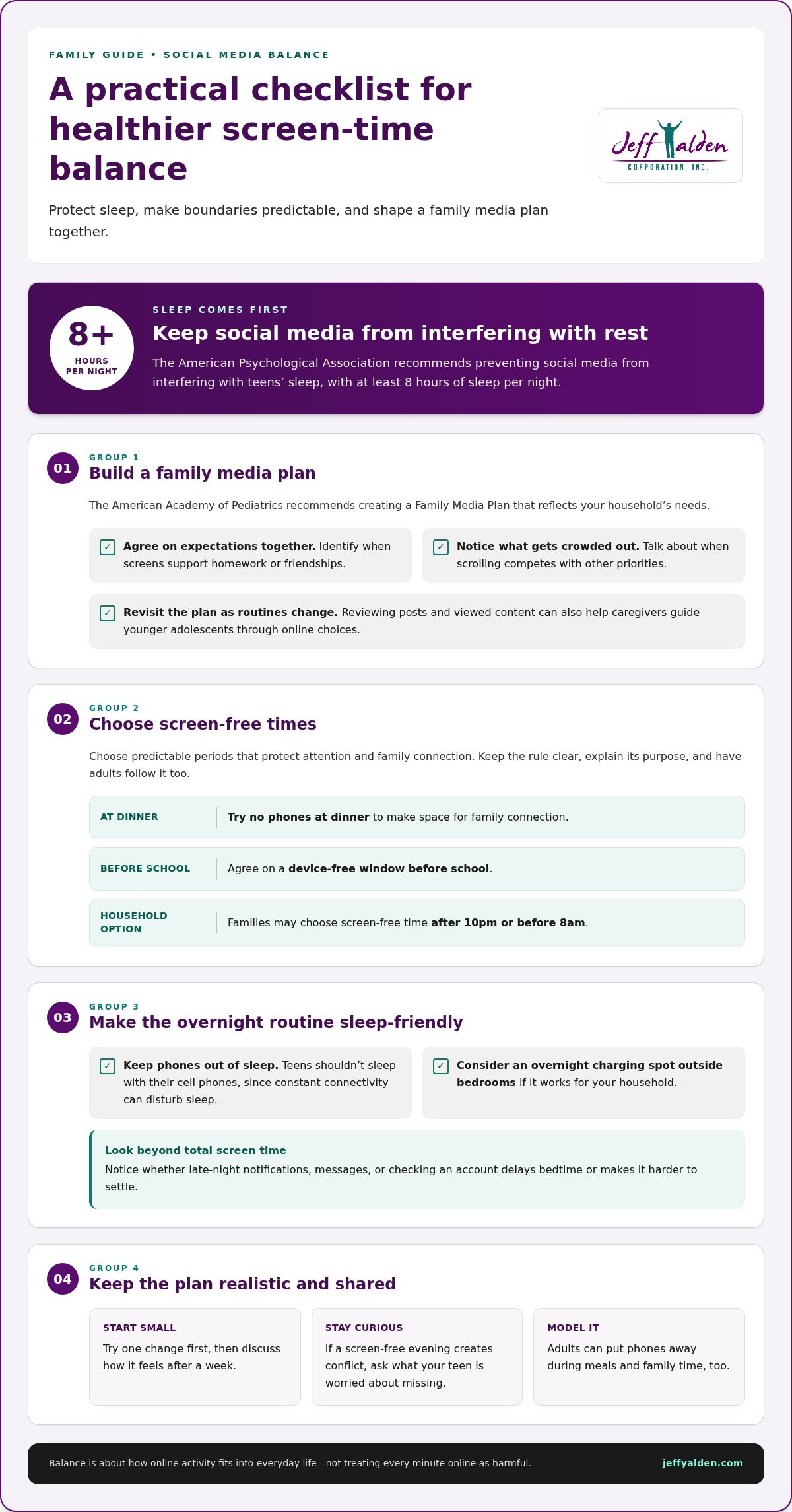
Research-based guidance focuses on protecting sleep, not treating every minute online as harmful. The American Psychological Association recommends preventing social media from interfering with teens’ sleep, with at least 8 hours of sleep per night.
Screen-Time Guidelines and Limits
The American Academy of Pediatrics recommends creating a Family Media Plan that reflects your household’s needs. Set expectations together: identify when screens support homework or friendships, and when scrolling crowds out other priorities. Revisit the plan as routines change. Reviewing posts and viewed content can also help caregivers guide younger adolescents through online choices.
Screen-Free Times
Choose predictable screen-free periods that protect attention and family connection. For example, your household might try no phones at dinner, then agree on a device-free window before school. Families may also choose screen-free time after 10pm or before 8am. Keep the rule clear, explain its purpose, and have adults follow it too. Consistency makes the boundary easier to understand.
Screen Use and Sleep
Late-night notifications, messages, or the urge to check an account can interrupt rest. Teens shouldn’t sleep with their cell phones, since constant connectivity can disturb sleep. Agree on an overnight charging spot outside bedrooms, if that works for your household. Protecting sleep means looking beyond total screen time: notice whether online activity delays bedtime or makes it harder to settle.
Start with one change, then discuss how it feels after a week. If a screen-free evening creates conflict, ask what your teen is worried about missing and adjust the plan together. Adults can model healthy social media habits by putting phones away during meals and family time. For a school-wide conversation about mental health and healthy digital habits, a school mental health speaker can help bring students and adults into the discussion.
Why are teens attracted to social media?
Social media gives teens ways to connect, express themselves, and explore identity. It can help them maintain relationships, share creative work, and find communities beyond school. That’s why a simple restriction may feel like losing access to friends, not just an app. Start by asking what your teen enjoys online and what feels negative.
To avoid turning the conversation into a conflict, lead with curiosity rather than accusation. Ask your teen to show you a favorite account or describe a stressful interaction, then listen before setting limits. Regular conversations about how platforms work make guidance feel ongoing, rather than like sudden punishment after a problem.
Make privacy practical. Sit together and review each account’s audience, location-sharing options, message permissions, and profile details. Explain why passwords should never be shared, even with friends. If someone online asks for private information or proposes meeting in person, advise your teen to pause and talk with a trusted adult first.
Workshops often discuss platforms teens use, including YouTube, TikTok, Instagram, Snapchat, and Facebook. Topics may include privacy settings, chat controls, content exposure, and parental-control options. The right settings depend on your teen’s age, maturity, and online activities, so review them together rather than relying on a tool alone.
Set boundaries through shared agreements. Choose a specific rule, such as keeping accounts private or limiting chats with strangers, and explain the safety reason behind it. Ask your teen what feels fair, then revisit the agreement as activities or relationships change. Boundaries work best when everyone understands them.
Build digital citizenship through shared learning. Look at a post together and discuss whether it respects others, reveals personal information, or could harm someone’s mental health. If your teen reports cyberbullying or troubling content, stay calm, listen, and decide together on a next step. This helps build skills for navigating online spaces, not just following rules.
Developing adolescent brains and social media features
Adolescence is a period of ongoing development, not a switch that flips at adulthood. Brain development generally begins before puberty, around age 10, and continues through early adulthood. That long arc matters when children encounter platforms built around quick feedback. A comment or like can feel immediate and personal, while the ability to pause and weigh consequences is still developing.
Look at an app’s features, not just its name. Like counts can invite comparison, while frequent notifications can draw attention back to posts or conversations. The American Psychological Association advises parents to limit teens’ use of platforms that display like counts or encourage excessive use. Discuss a real example: how might a photo with few responses affect someone’s mood or self-esteem?
Social media can also meet genuine adolescent needs. Teens use it to stay connected with friends, explore identity, and share creative work. Taking away access without understanding its value can stop conversation instead of building judgment. Ask what your teen gains from an account, then discuss which features feel supportive and which leave them anxious, distracted, or caught in comparison.
Match boundaries to your teen’s development. A younger teen may need more caregiver involvement with content and settings, while an older adolescent can take a larger role in setting limits. Review the plan as responsibilities change, including transitions such as starting university. The goal isn’t to eliminate every risk, but to help teens notice effects, pause, and choose a safer response.
Shared learning gives that guidance room to grow. The American Academy of Pediatrics’ Center of Excellence on Social Media and Youth Mental Health glossary covers safety settings and healthy boundaries. Explore a setting together, then ask your teen to explain how it works. For a school community ready to bring adolescent development and mental health into a shared conversation, start a conversation about a school assembly.
Jeff Yalden: High School Assemblies
Jeff Yalden’s High School Assemblies give schools a shared setting for conversations about teen wellbeing and mental health. When social media, online pressure, or emotional resilience are concerns across a school community, an assembly can complement family conversations and boundaries. It isn’t a substitute for individual clinical care, but it can help open dialogue among students and educators.
As a Teen Motivational Speaker and High School Speaker, Jeff Yalden speaks to young people in school settings. Schools looking to address adolescent mental health more broadly can explore his High School Assembly Programs.
Visit jeffyalden.com to learn more about Jeff Yalden’s High School Assemblies.
Make the Next Conversation Possible
Your next step doesn’t have to be a perfect plan. Choose a moment to reconnect: ask your teen what they enjoy online, what feels uncomfortable, and what support they want from you. Listen before offering advice. A small shift can turn rules into a conversation your teen is willing to continue.
A workshop for parents on teen social media use can help families build shared language and practical boundaries. Schools can extend that conversation beyond the home through Jeff Yalden’s High School Assemblies and High School Assembly Programs, or his work as a Teen Motivational Speaker. These offerings bring discussion of adolescent wellbeing into a school setting.
If your school is ready to create space for that conversation, contact Jeff Yalden. Start with a clear intention, stay open to your teen’s perspective, and keep showing up. Progress begins with connection.
Frequently Asked Questions
What advice should I give my teen?
Encourage your teen to pause before posting and consider who might see or share the content. If an online exchange upsets them, remind them they can step away and talk with you without being shamed. You might say, “Let’s work out what would help you feel safe.” Keep the focus on their choices and the support you can offer, not blame.
What are teens doing online?
Teens use the internet for more than scrolling through social feeds. They might watch a tutorial, share artwork, stream a game, message classmates about a group project, or make plans with friends. Ask your teen to describe a typical online evening. That specific picture can reveal what’s social, creative, school-related, or simply entertaining in their digital routine.
What topics should a parent workshop on teen social media use cover?
A useful workshop connects platform features with real family situations. Look for discussion of privacy, online pressure, harmful content, and how to respond when a teen raises a concern. Practical sessions may include role-play, such as practicing a calm response to an upsetting message, and time for caregivers to adapt ideas to their household.
How can parents set healthy social media rules and screen-time limits for teens?
Make rules specific to situations rather than relying only on a broad daily limit. For example, agree that entertainment feeds stay closed during homework, while your teen can still use a device for a class assignment. Decide together how to handle exceptions, then revisit the agreement when school demands or family routines change.
What are the risks of cyberbullying, sextortion, and harmful content on teen social media?
These experiences can cause fear, shame, or distress, and teens may hesitate to share what happened. Make clear they can come to you without losing your support. Listen, avoid blame, and help them consider immediate next steps, such as ending the interaction and using the platform’s reporting tools. Seek support from a mental health professional if the experience affects their wellbeing.
