
Big feelings aren’t the problem; teens need ways to move through them without letting the moment make every choice. Teaching teens emotional regulation skills means helping them notice what they feel, pause, and choose a response, using tools such as slow breathing, taking a break, journaling, movement, or talking with someone they trust. The goal isn’t to shut emotions down. It’s to make room for them while supporting thoughtful choices and mental health.
You may already see how stress, conflict, or sudden change can make it harder for a teen to respond calmly. That doesn’t mean they’re failing, or that one strategy will work for everyone. With practice and support, teens can build a toolkit for real life. This article explores practical emotional regulation skills, how self-regulation develops through adolescence, and ways to help students practise before a difficult moment arrives. It also explains how emotional regulation relates to mental health, so you can support teens with compassion and recognize when they may need more help.
Key Takeaways
- Help teens identify what they’re feeling and choose a response instead of trying to suppress the emotion.
- Model calm, constructive strategies and let students choose tools that feel useful to them.
- Prepare students to use strategies such as breathing, taking a break, or reaching out to someone they trust.
- Notice when emotional struggles are affecting well-being, and recognize when additional support may be needed.
1. What Are The Skills Of Emotional Regulation?
Emotional regulation means experiencing an emotion without letting it dictate every action. A teen can feel anger, anxiety, grief, or embarrassment, then pause, name the feeling, and choose what to do next. The goal isn’t emotional silence. Crying, asking for space, or talking honestly can all be constructive responses.
Teaching teens emotional regulation skills means helping them practise specific responses, not demanding instant calm. An educator might offer a student a choice: take a quiet break, try slow breathing, or talk with a trusted adult. Having a choice gives teens a say in what happens next. A welcoming classroom, where students aren’t mocked for expressing feelings, also supports belonging and makes it easier to ask for help.
Model these tools openly. A parent who feels frustrated can say, “I’m getting tense, so I’m taking a moment before we continue.” This shows a teen how to notice an emotion and respond without escalating. Parents and educators can also discuss possible strategies when everyone is calm, rather than introducing a new tool during a heated moment.
When a teen is overwhelmed, lower your voice, listen without interrupting, and acknowledge the feeling: “You sound hurt; I’m here.” Avoid arguing about whether the emotion is justified. Offer space or a conversation, while keeping clear limits around harmful behavior.
Look for progress across real situations. After a challenging homework session or disagreement, consider whether the teen named a feeling, tried a strategy, returned to the task, or asked for support. Progress may mean recovering more constructively, not avoiding every difficult emotion.
Validation doesn’t mean approving every action. A caregiver can say, “It makes sense that you’re angry,” then set a boundary: “I won’t let you insult your sister.” This separates the emotion from the behavior. Consistent role modelling, empathy, and respectful choices give teens examples they can adapt for themselves.
2. How self-regulation develops through adolescence
Self-regulation begins in infancy, grows substantially during the toddler and preschool years, and continues developing into adulthood. During adolescence, the brain is still changing: emotional responses may feel intense while planning and impulse-control skills are developing. The human brain reaches an adult state in a person’s early twenties, so a teen’s reaction under stress can reflect development, not simply unwillingness to cooperate.
Self-regulation includes three connected abilities: cognitive, behavioral, and emotional regulation. Cognitive regulation supports planning, attention, and problem-solving, such as breaking a school project into manageable steps. Behavioral regulation helps a teen pause before acting or adapt to a social situation. Emotional regulation involves noticing feelings and choosing how to respond.
Regulating emotions isn’t the same as suppressing them. Suppression means hiding or pushing feelings away; regulation means recognizing a feeling, allowing it to be there, and deciding what to do next. A teen can admit, “I’m disappointed,” and still discuss a setback without lashing out.
Mindfulness helps teens notice thoughts and feelings in the present moment without judging them. For example, a student who feels anxious before speaking in class can notice the tension, name the anxiety, and observe the urge to avoid participating. That pause can make room for a deliberate choice.
Positive self-talk can offer teens another response to negative inner commentary. They might write an affirmation grounded in their own values, such as, “I care about learning, and I can ask for help.” Written affirmations have been reported to support self-esteem and executive skills, including working memory.
Adults can encourage self-reflection after emotions settle. Ask, “What did you notice, and what might help next time?” Keep feedback specific: “You returned to the discussion after taking a pause.” In school, an educator can make these conversations part of everyday learning. High School Assembly Programs can also create space for shared conversations about emotional awareness and growth.
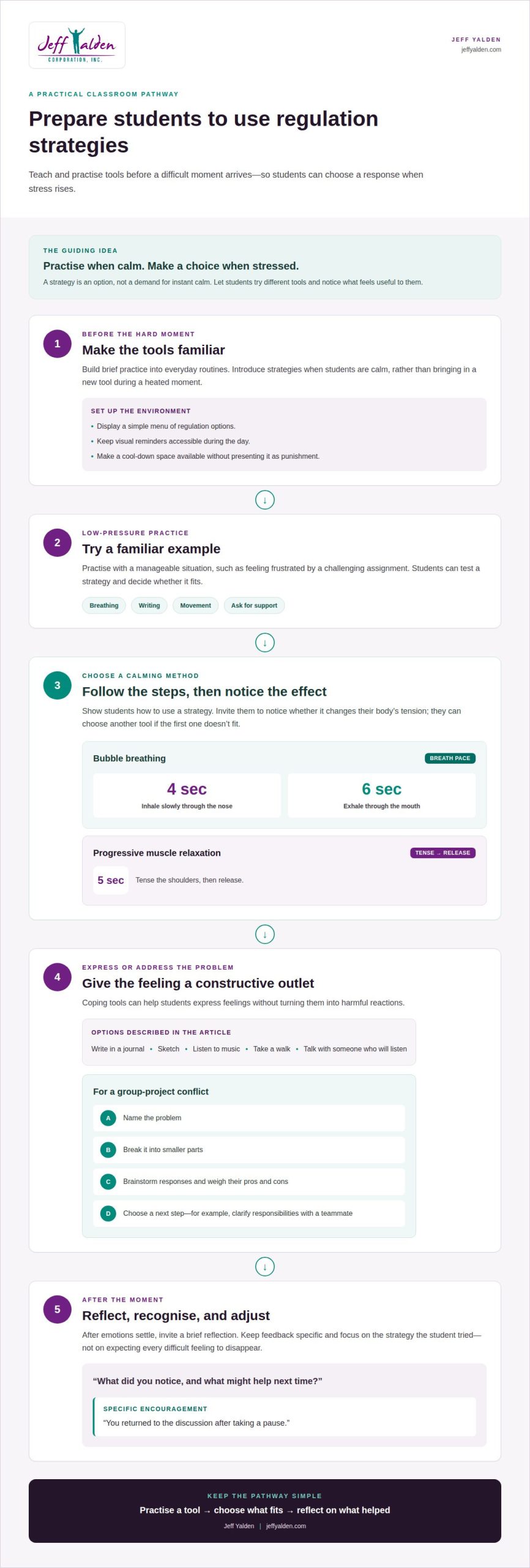
3. Preparing students to use regulation strategies
Schools can teach strategies before a difficult moment, then give students opportunities to practise. An educator might display a simple menu of options, such as breathing, writing, movement, or asking for support. A classroom cool-down area gives students space to use a chosen tool, while visible reminders help them remember it during a busy day. Practise with a low-pressure example, such as feeling frustrated by a challenging assignment.
Calming strategies work best when students know the steps. For bubble breathing, inhale slowly through the nose for 4 seconds, then exhale through the mouth for 6 seconds. In progressive muscle relaxation, tense the shoulders for 5 seconds, then release. Invite students to notice which method changes their body’s tension. They can choose a different strategy if the first one doesn’t fit.
Coping tools also help students express feelings without turning them into harmful reactions. A student could write in a journal, sketch after a stressful class, listen to music, take a walk, or talk with someone who will listen. Encourage students to try different options during calm periods, so choosing a response feels familiar when stress rises.
Problem-solving gives a student something practical to do about a difficult situation. For a group-project conflict, help them name the problem, break it into smaller parts, brainstorm possible responses, and weigh each option’s pros and cons. Then they can choose a next step, such as asking a teammate to clarify responsibilities.
Schools can prepare adolescents by building brief practice into everyday routines. Teachers can model a strategy before a test, keep visual prompts accessible, and make a cool-down space available without presenting it as punishment. Students can also plan ahead: identify a stressful situation, choose a tool, and decide which trusted adult to approach. This preparation helps them practise self-regulation and develop a response they can use beyond the classroom.
4. Emotional regulation and mental health
Emotional regulation supports mental health, but difficulty regulating emotions doesn’t automatically mean a teen has a disorder. Stress, hunger, illness, disrupted routines, and traumatic events can all affect reactions. Lack of sleep, exercise, or nutritious food may also make coping harder. Look for patterns: does distress rise after missed meals, conflict, or a demanding school day? This context helps adults respond appropriately and encourage support without shaming the teen.
Professional help is important when emotional difficulties are significant, persistently interfere with daily life, or involve harmful behavior. Take any danger to the teen or others seriously. A trusted adult can listen without judgment, describe specific concerns, and help connect the teen with a qualified mental health professional. Don’t wait for a perfect explanation before taking distress seriously.
Therapy can help teens understand emotions and build ways to manage them. Dialectical behavior therapy, or DBT, is one option for older children because it focuses on distress tolerance and emotion regulation. A mental health professional can consider the teen’s needs, challenges, and circumstances when discussing an appropriate approach. Skills practice can complement that support, but shouldn’t replace professional care when a teen is struggling significantly.
Ask directly about immediate safety if a teen talks about self-harm or seems at risk. For a mental health crisis, call 988 or go to the nearest emergency room, according to the Substance Abuse and Mental Health Services Administration. For a physical health emergency, call 911 or go to the nearest emergency room, according to the National 911 Program. Schools can also strengthen everyday support by preparing staff to recognize distress and respond with care. Explore school mental health support to help make these conversations more open and informed.
Jeff Yalden
Jeff Yalden helps schools bring conversations about teen mental health, resilience, and emotional regulation into their communities. His High School Assemblies and High School Assembly Programs can complement classroom efforts by giving students and educators a shared opportunity to discuss handling intense feelings and seeking support. This is a fit when your school wants to foster open conversations about mental health alongside the everyday strategies students practise.
An assembly can support awareness and conversation, but it isn’t a substitute for individual professional care when a teen needs it. Start by considering what message would best serve your students and school community. To explore how Jeff Yalden can support your school’s conversations about teen emotional well-being, contact Jeff Yalden.
Make the next conversation count
A teen’s willingness to speak up can grow from the way adults respond today. Make emotional honesty part of everyday school life, not a conversation reserved for a crisis. Keep the door open, listen without rushing to fix everything, and show students that asking for support is a strong next step.
Teaching teens emotional regulation skills is ongoing work, shaped by the language and care surrounding young people. Jeff Yalden’s work as a Teen Motivational Speaker can help schools bring student-centered conversations about mental health and resilience into their communities. The goal isn’t a perfect response every time. It’s a culture where students can keep learning, speak honestly, and feel less alone.
If you’re ready to continue that conversation in your school community, contact Jeff Yalden. Small steps matter. Keep showing up, and help make room for hope.
Frequently Asked Questions
What Are The Skills Of Emotional Regulation?
Emotional regulation skills help teens notice emotions and choose how to act on them. These include recognizing feelings, identifying what triggered them, pausing before reacting, and communicating needs respectfully. For example, after a tense group chat, a teen might mute notifications, write down what upset them, and decide whether to respond later. The aim is thoughtful action, not pretending the emotion isn’t there.
What is self-regulation?
Self-regulation is the ability to manage thoughts, feelings, and behavior to pursue a goal or respond to a situation. A student preparing for a presentation might organize notes, manage nervousness, and keep practising instead of avoiding the task. Self-regulation includes cognitive, behavioral, and emotional abilities. These work together: planning the next step can make it easier to stay focused and respond constructively.
What does emotional dysregulation look like?
Emotional dysregulation can involve reactions that feel difficult to manage, such as intense anger, panic, or shutting down during conflict. A teen might leave class after receiving critical feedback, then struggle to return to the task. One incident alone doesn’t establish a mental health condition. Consider the context, how often difficulties arise, and whether they disrupt relationships, learning, or daily activities.
Why do teens have greater emotional reactions?
Adolescents may react strongly because brain systems involved in emotional responses and impulse control develop at different rates. The amygdala can be highly active while the prefrontal cortex, which supports planning and impulse control, continues developing. That doesn’t mean every teen will respond intensely. A public mistake, friendship conflict, or stressful school day can make a reaction especially hard to manage.
What emotional regulation skills are most important for teens to learn?
Start with skills teens can use in different situations: noticing emotional cues, pausing before acting, choosing a calming tool, and asking for support. Add problem-solving and balanced self-talk. After a disappointing grade, for instance, a teen could name the frustration, avoid sending an angry message, and identify one question to ask the teacher. Practising a sequence like this makes strategies easier to recall under pressure.
How can parents teach teenagers to recognize and name their emotions?
Parents can help teens identify feelings by reflecting what they observe without insisting they know exactly what the teen feels. Try, “You’ve been quiet since practice. Are you disappointed, tired, or something else?” Give the teen room to correct you. Talking about emotions during a calm moment, or after a TV character faces a setback, can make naming feelings feel less confrontational.
