
Failing grades are a reason to get curious, not to panic or punish. If you’re asking, “My teen is failing school, what do I do?” start by listening, then meet with school staff to understand what’s happening and agree on practical support. Look beyond grades, too: stress, learning needs, attendance, or mental health concerns may be part of the picture.
You’re right to take the change seriously. School struggles can feel urgent, but shame and pressure may make it harder for your teen to explain what’s really going on. A calm conversation can open the door.
This guide will help you work with teachers and counselors, explore possible causes, build on your teen’s strengths, and recognize mental health signs that deserve attention. You’ll have clear steps to take without reducing your teen to a report card.
Key Takeaways
- Meet with teachers, counselors, and administrators to review your teen’s grades, attendance, and support options, then agree on clear next steps.
- Look for patterns behind missed work or falling attendance, and ask your teen what feels difficult and what support might help.
- Notice your teen’s strengths and interests alongside school challenges; small chances to build confidence can help them reconnect with learning.
- Take emotional changes seriously: in 2023, 40% of U.S. high school students reported persistent sadness or hopelessness, according to the Centers for Disease Control and Prevention.
1. Meeting with teachers, counselors, and administrators
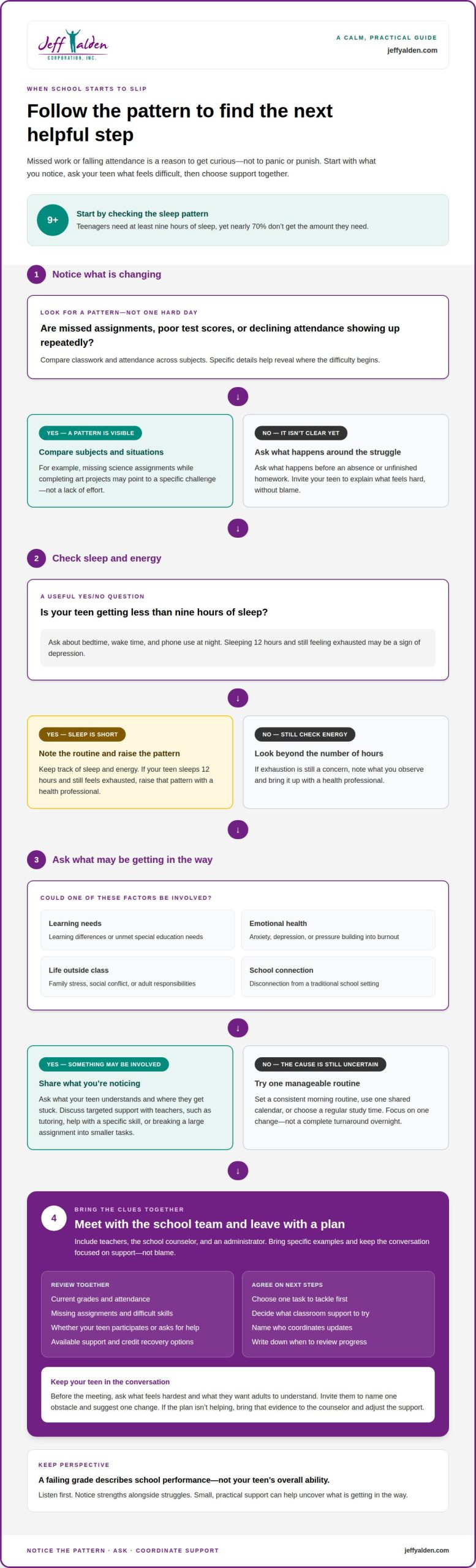
If you’re asking, “My teen is failing school; what do I do?” arrange a meeting with their teachers, school counselor, and an administrator. Ask the team to review current grades, attendance, missing assignments, and available support. Bring examples, such as a recent test score or several unsubmitted tasks. Specific details help everyone discuss what’s happening instead of trading general impressions.
Use the meeting to pinpoint where the problem begins. Ask each teacher which skills or assignments are causing the most difficulty, and whether your teen participates or asks for help in class. Ask the counselor about support options and credit recovery. Then agree on who will coordinate updates and when you’ll review progress. A clear plan might identify one missing assignment to tackle first, classroom support to try, and a date to reconnect.
Include your teen in the conversation where possible. Before the meeting, ask what feels hardest and what they want adults to understand. During the discussion, invite them to describe one obstacle and suggest one change. Teachers can ask a struggling student to identify reasons for failing and write a plan to improve. Keep the focus on solutions, not blame. Punishment for grades can shut down honest conversation; listening helps reveal what support may help.
Holding your teen back can affect their confidence and relationships with classmates, while changing schools can disrupt familiar routines and support. Online school offers a different setting, but may mean less in-person contact and require your teen to manage learning more independently. Discuss these trade-offs with school staff before choosing a path.
Leave the meeting with agreed next steps, not just concern. Ask teachers for specific suggestions to use at home, such as checking the assignment portal together or setting a regular study period. Write down each action, who is responsible, and the follow-up date. If the plan isn’t helping, bring that evidence to the counselor and adjust the support.
2. Recognizing academic struggles and possible root causes
Look for patterns, not just one difficult assignment. Missed work, poor test scores, and declining attendance can signal emerging academic struggles. Compare classwork and attendance across subjects. A teen missing science assignments but completing art projects may face a specific challenge, not a lack of effort. Ask what happens before school absences or unfinished homework. The answer may point to a barrier adults haven’t noticed.
Sleep deserves attention, too. Teenagers need at least nine hours of sleep, yet nearly 70% don’t get the amount they need. Ask what time your teen goes to bed, wakes, and uses a phone at night. Sleeping 12 hours and still feeling exhausted may be a sign of depression. Don’t treat exhaustion as laziness; note the pattern and raise it with a health professional.
Academic problems can be connected to learning differences, unmet special education needs, anxiety, depression, family stress, social conflict, or adult responsibilities. Disconnection from a traditional school setting can also make learning harder. Ask your teen what feels difficult in class, what they understand, and where they get stuck. Then discuss targeted support with teachers, such as tutoring, help with a specific skill, or breaking a large assignment into smaller tasks.
How can you help with attendance, organization, study habits, and homework? Set a consistent morning routine, use one shared calendar, and choose a regular study time. Check the assignment portal together, then let your teen handle the next step. If pressure is building into burnout, reduce the daily overload where possible and talk through competing demands. Focus on one manageable change, such as starting homework before gaming, rather than expecting a complete turnaround overnight. A visible checklist can track finished work without turning every evening into a confrontation.
3. Building confidence through strengths and interests
A failing grade describes school performance, not your teen’s overall ability. Make a two-column page together: “Hard right now” and “Things I can do.” Your teen might struggle with written assignments but enjoy fixing bikes, caring for younger siblings, drawing, or explaining games. Name specific strengths, not broad labels. “You kept practicing that guitar chord” feels more believable than “You’re good at everything.”
Ask your teen to choose one interest to build on. If they enjoy cooking, invite them to plan a meal, read a recipe, and estimate ingredients. If they love music, ask them to compare lyrics or research an artist’s background. These examples connect school skills with something meaningful. Don’t turn every hobby into homework, though. Keep some activities enjoyable and pressure-free.
Use a small, visible goal to help your teen experience progress. For example, they could ask one question in class, revise one paragraph, or complete one practice problem before stopping. Let them choose the goal and how to track it. At the end of the week, review what they tried and what helped. If the target felt too big, make the next step smaller.
Specific feedback matters. Notice effort and strategies: “You opened the assignment and started with the first question.” Avoid praise that dismisses the struggle, such as “You’re smart, so this should be easy.” That can make mistakes feel like proof of failure. Instead, ask what your teen learned from trying, even if the result wasn’t perfect. Concrete recognition helps separate a difficult task from their sense of worth.
Share strengths with teachers, too. Tell them your teen explains ideas well aloud, persists with hands-on tasks, or responds to written directions. Ask how those abilities might support classroom participation. At home, protect time for one interest each week, such as a sketchbook, basketball practice, or helping with a family project. Confidence grows through real chances to contribute, make choices, and see effort lead somewhere.
4. Mental health signs that can accompany failing grades
Failing grades can appear alongside changes in mood, sleep, or connection. In 2023, 40% of U.S. high school students reported feeling persistent sadness or hopelessness, according to the Centers for Disease Control and Prevention. Watch for sharp changes from your teen’s usual behavior. Notice withdrawal, irritability, lost interest, or frequent exhaustion. Write down when each change began and where it appears. Compare your notes with school attendance and completed assignments.
Irritability is a recognized depression criterion for young people in the DSM. A teen may snap over homework, stop seeing friends, or seem unusually hopeless. One difficult day doesn’t explain the whole picture. Look for changes that persist or affect daily life. Ask gently what feels different, rather than labeling your teen or assuming grades explain everything. Share specific observations with your teen’s pediatrician or school counselor.
To discuss failing grades without escalating conflict, choose a calm moment and lead with care: “I’ve noticed school feels harder lately. What’s been going on?” Listen before offering solutions, and avoid threats, blame, or comparisons with siblings. Ask what support would make the next school day feel more manageable.
Start a clinical evaluation by contacting your teen’s pediatrician. A pediatrician can screen for physical issues and refer to a mental health professional. A comprehensive psychiatric evaluation gathers information through interviews with the teen and parent, plus questionnaires. Self-harm raises the long-term risk of a suicide attempt, so take disclosures seriously. If your teen is in immediate danger, call or text 988 or 911. For school-wide support, explore ways to bring mental health conversations into school assemblies.
Jeff Yalden: High School Assemblies
Jeff Yalden’s High School Assemblies help schools open supportive conversations about mental health, resilience, and the pressures teens face. They’re a natural next step when school leaders want a shared, school-wide message about student well-being, alongside individual support from the family and school team.
Through High School Assembly Programs, Jeff Yalden brings students together for encouragement and honest discussion. A Teen Motivational Speaker can create space for students to reflect on challenges and recognize that a report card doesn’t define their worth. These assemblies complement, rather than replace, the practical steps families and educators take when a teen is struggling academically or emotionally.
If your school is considering an assembly or a High School Speaker, contact Jeff Yalden to discuss the right next step for your school community.
Turn concern into a steady next step
A difficult stretch at school can start to shape how your teen sees themselves. Keep the bigger picture in view: grades matter, but they aren’t the whole measure of a young person’s ability or future. Your steady presence can help your teen face the problem without facing it alone.
If you’re asking, “My teen is failing school, what do I do?” focus on the next conversation, not a perfect long-term plan. Keep listening, stay connected with school staff, and give your teen a role in decisions. Progress may start with being honest about what feels hard and accepting support.
Schools can also create space for open, supportive conversations about the challenges teens face. If your school is considering that kind of support, contact Jeff Yalden. Keep showing up for your teen. One caring, honest step can help make the next one possible.
Frequently Asked Questions
What should parents do first when a teenager is failing school?
Start with a calm, private conversation before imposing consequences. Try: “I’m concerned, and I want to understand what’s making school difficult.” Give your teen time to answer without interrupting or immediately correcting them. Then choose one immediate step together, such as identifying the class that feels most overwhelming. Listening first can make it easier to uncover what needs attention.
How can parents find out why their teen is failing classes?
Look for differences across classes, assignments, and settings, then ask your teen what those patterns feel like. Do they understand lessons but struggle to begin homework, or feel lost in one subject? Invite teachers to share what they observe in class. If physical concerns may be affecting learning, contact the pediatrician to discuss screening and possible referrals.
What signs of learning disabilities, ADHD, depression, anxiety, or bullying can affect school performance?
Grades alone can’t identify a learning disability, ADHD, depression, anxiety, or bullying. Notice specific changes instead: difficulty with particular school tasks, distress around a class or peer group, withdrawal, or a sudden drop in participation. Ask your teen what happens in those moments, and record examples to share with school staff or a pediatrician. An assessment can help clarify what support may fit.
How can parents work with teachers, school counselors, and administrators to create an academic support plan?
Ask the school team to turn concerns into a written, workable plan. For example, identify one priority class, the support the teacher will provide, and the task your teen will tackle first. Clarify who will share updates and how the team will judge whether the approach is helping. Include your teen’s input so the plan addresses a real obstacle and feels possible to follow.
What mental health warning signs require urgent help when a teen is struggling in school?
Take any disclosure of self-harm or immediate danger seriously. Stay with your teen and call or text 988, or call 911, if they’re in immediate danger. For concerns that aren’t immediate but still worry you, contact their pediatrician and describe the changes you’ve noticed. Don’t wait for grades to improve before addressing a serious safety concern; emotional well-being comes first.
