
A memorial doesn’t have to be grand to matter. Thoughtful memorial activities for a deceased student can include charitable giving, photographs, shared memories, scrapbooks, and tributes shaped by what they loved. The strongest ideas help classmates remember the person, not only the loss.
A familiar photo or a story shared among friends can mean a lot. But choosing what feels right can be hard when people are grieving differently. Give students room to participate in a way that feels comfortable, or to step back if they need to.
Here are practical ways to honor a student’s interests and keep their memory present, from creating a scrapbook or memory display to supporting a cause they cared about. A shared theme, favorite activity, or tradition can also turn remembrance into a meaningful act of connection.
Key Takeaways
- Honor the student’s values through a charitable cause, scholarship, or community project that reflects what mattered to them.
- Create a photo display that lets classmates remember meaningful moments while respecting that people may respond to it differently.
- Bring friends and family together to collect stories, photographs, and keepsakes in a scrapbook or shared memory project.
- Shape a tribute around the student’s passions, and consider a school assembly to support meaningful conversations about grief and resilience.
1. Charitable donations in a loved one’s name
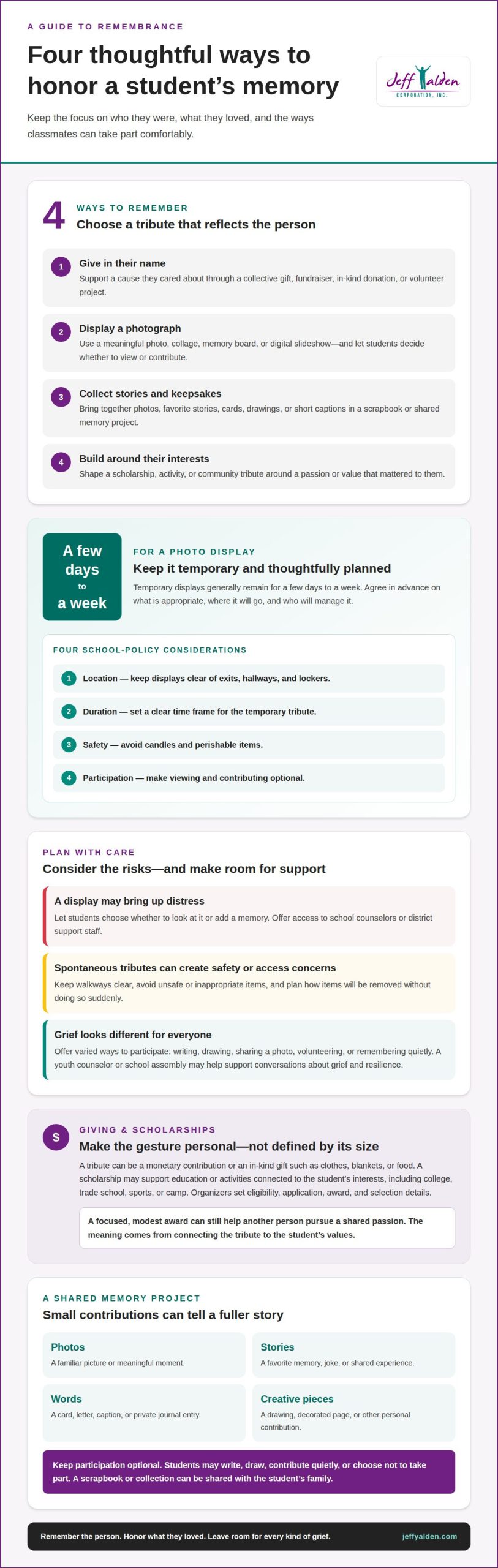
A charitable gift can turn a student’s interests into support for others. The class might donate to a cause the student cared about or organize a fundraiser in their name. The tribute could be monetary, such as a collective contribution, or in-kind, such as clothes, blankets, or food. Choose an approach connected to the student’s values so the gift feels personal rather than generic.
A memorial scholarship can help another student pursue an interest the deceased student shared. It might support education or activities such as college, trade school, sports, or camp. Organizers decide the eligibility requirements, application process, award amount, and selection process. The fund doesn’t need to provide a large gift to make a difference. Even a modest, focused award can help keep the student’s passion alive.
Giving time can be part of the tribute, too. Friends, classmates, or family members can volunteer with a local organization connected to the student’s values. If helping others mattered to them, for example, the group might support a community project. A charity walk, service project, or fundraiser can bring people together around action, not only a donation. The American Association of Suicidology recommends directing students’ efforts after a suicide toward projects that help living people.
Keep participation welcoming and manageable. The school community can share a donation opportunity, while students choose whether to contribute, volunteer, or take part another way. Some may prefer to write a message or remember their classmate quietly. For a fundraiser, explain its connection to the chosen cause and the student’s interests. A meaningful memorial doesn’t depend on the size of the gift. It comes from making the gesture thoughtful, specific, and rooted in what the student loved.
A shared service project or charity walk can make remembrance an active community effort, alongside a fundraiser in the deceased person’s name. Volunteering with an organization connected to the student’s values can channel grief into meaningful action.
A scholarship may also reach students or community members who share the deceased person’s passions, supporting education or activities tied to those interests without requiring a large gift.
2. Displaying a photograph of the student
A classroom photograph can give friends a familiar way to remember a student who passed away. Choose an image that reflects their personality, such as a candid photo from a school play or team event. A photo collage, memory board, or digital slideshow can pair pictures with brief notes about meaningful moments. Keep the display temporary, and let students choose whether to look at it or participate.
School memorial policies should set clear expectations for location, duration, safety, and participation. Temporary displays generally remain for a few days to a week. Schools should avoid permanent memorials because they can be difficult to apply consistently after future deaths. A park bench may be meaningful, but schools should weigh that option against this concern and their existing approach. Keep photo displays clear of exits, hallways, and lockers.
Families and students can help shape a display by sharing photos, suggesting a location, and choosing whether to add written memories. A teacher might gather contributions for a board, then offer the finished display to the student’s family or move it elsewhere. Agree on which photos feel appropriate and who will manage the display before sharing images. This keeps the tribute personal without putting one grieving student in charge.
Memorial costs depend on choices such as printed photos, display materials, or a digital slideshow; there’s no single price for every school. Risks include distress from seeing an image, blocked access, and unsafe or inappropriate items at a spontaneous memorial. Keep displays clear of walkways, avoid candles and perishable items, and plan how items will be removed without doing so suddenly. Students can speak with school counselors or district support staff for grief support. Schools can also involve a youth counselor. If a school-wide conversation would help, an assembly can create space to discuss grief and resilience.
3. Sharing memories and creating scrapbooks
A scrapbook lets classmates collect memories in one place to share with the student’s family. Invite friends to contribute a photo, favorite story, card, or small drawing. Short captions can explain why a moment mattered, such as a class project, team celebration, or joke shared at lunch. Leave room for different kinds of memories. Some students may want to write; others may prefer adding color or choosing a picture.
A story wall can bring those contributions into the classroom temporarily. Pair photos with brief memories, such as “She always saved me a seat” or “He made every practice fun.” Students can also write letters to thank their classmate, say they miss them, or share what they wish they could say. Younger students may prefer drawing or dictating a sentence to a trusted adult; older students might write privately in a journal.
Creative work can make remembrance personal without requiring everyone to speak aloud. Students might paint a rock, decorate a page, or add a written memory to a shared book. Keep participation optional and offer a quiet way to contribute. A scrapbook can be made individually or with family, then dedicated to the student’s memory. The school can give the collection to the family or move it elsewhere.
These temporary projects offer alternatives to permanent memorials: a class can create a scrapbook, memory wall, or digital collection to share with family later. If the student loved learning or a particular activity, a scholarship fund can also honor that passion by supporting related education or opportunities. Keep any written guidelines clear, including who can apply and how recipients are chosen. The goal is to remember the student through stories and actions that reflect who they were, while allowing each classmate to take part in a way that feels comfortable.
4. Memorial themes based on interests
Start with what made the student unmistakably themselves. If they loved basketball, classmates could dedicate a game to them; if they enjoyed gardening, they could plant a garden or tend a shared space. A music fan’s memorial might include favorite songs, while an outdoor enthusiast could be remembered through a hike, camping trip, or picnic at a meaningful spot. A theme gives friends a concrete way to connect the tribute with the person’s life.
Let students help shape the activity. They might suggest a favorite team, hobby, or era, then choose a fitting classroom token or memorial activity. If the student loved cooking, friends and family could prepare a favorite meal and share stories around the table. A celebration of life can also include favorite foods and music, giving people room to remember together without requiring everyone to speak.
Faith and culture can guide a tribute, too. A gathering might include prayer, cultural music, dance, or another meaningful ritual. For someone who loved nature, a class could visit a favorite park or create a garden together. Choose activities that reflect the student and community, rather than following a template. Ask students for ideas, and make participation voluntary so everyone can honor their classmate in a comfortable way.
A themed tribute can be a one-time event or become an annual tradition on the student’s birthday or another meaningful day. A class might hold a picnic, organize a charity dinner, or dedicate a school activity to their memory. If the plan includes releasing butterflies or sky lanterns, first consider applicable laws, regulations, and safety requirements. The guiding principle is simple: choose an activity rooted in the student’s real interests, then let that connection shape the details.
Schools should involve students in planning so activities respond to their interests and needs. A classroom token can reflect the student’s interests or favorite activity, while a themed memorial service might draw on a favorite sports team, hobby, or era. Cooking or baking favorite foods can create opportunities to share memories and support one another. A celebration of life may include stories, balloons or lanterns, and favorite foods and music. Outdoor tributes may include releasing butterflies or birds as symbols of spirit and a love of nature.
Jeff Yalden
Jeff Yalden helps schools support students as they remember a classmate and talk about grief. When a school wants to pair its memorial plans with a broader conversation about resilience and mental health, a High School Assembly Program or High School Speaker can be a useful next step. These offerings give students space to reflect together while keeping the tribute focused on the student’s life and interests.
Memorial activities matter, but students may also need caring adults who listen and check in over time. A school assembly can complement those ongoing relationships; it doesn’t replace individual support when a student needs it. Choose an assembly when a shared, school-wide conversation fits the community’s needs.
Contact Jeff Yalden to discuss support for your school community.
Let remembrance open a path forward
A student’s influence doesn’t end with a memorial. The care classmates show one another afterward can help the community carry that person’s values forward. Let students help decide what comes next, and make room for different responses: joining an activity, talking with someone they trust, or remembering privately. The most meaningful memorial activities for a deceased student make space for grief while helping the living stay connected.
If your school wants support creating a thoughtful conversation about loss, Jeff Yalden offers High School Assemblies and speaks as a Teen Motivational Speaker. An assembly can complement the school’s remembrance efforts and bring students together around resilience and mental health.
Reach out to Jeff Yalden about support for your school community. A caring next step can help students feel less alone as they remember and move forward.
Frequently Asked Questions
What are meaningful memorial activities for a deceased student?
Meaningful tributes reflect who the student was and give classmates a comfortable way to participate. A class might dedicate a familiar school activity to their memory, invite students to share something they appreciated, or create a quiet moment of reflection. Keep the gesture focused on the student’s life, and let people remember in different ways.
How can classmates honor a student who has died at school?
Classmates can honor their friend by supporting one another through the school day and sharing concerns with a trusted adult. A student might invite a grieving classmate to sit together at lunch, for example, while a group could ask a teacher to set aside time for a respectful remembrance. Nobody has to speak publicly; listening and showing up can matter.
