
A teen’s hands are shaking. Their chest feels tight. They can’t focus on what anyone is saying. In that moment, a long list of advice won’t help. A simple, steady response can. The right coping strategies for teen anxiety attacks start with one manageable step and the calm presence of someone the teen trusts.
If you’re a teen, parent, teacher, or other trusted adult, it makes sense to feel shaken when anxiety surges. The symptoms can be frightening, and it’s hard to know what to say without adding pressure. You don’t have to fix everything in that moment. You can help make the next minute feel more manageable.
This article offers a short plan for responding during an anxiety attack, supporting a teen without shame or false reassurance, and checking in afterward. You’ll also learn when recurring or intense anxiety calls for support from a qualified mental health professional, and where to turn if someone may be in immediate danger. One calm step at a time.
Key Takeaways
- Intense anxiety can feel frightening, but symptoms alone can’t diagnose what a teen is experiencing.
- Use a simple, flexible response: stay calm, offer brief support, and let the teen choose a safe next step.
- Afterward, allow time to recover before inviting a gentle, blame-free conversation.
- Learn which coping strategies for teen anxiety attacks may help in the moment, and how to make support feel respectful at home or school.
- If anxiety repeatedly disrupts daily life, a trusted adult can help connect the teen with a qualified mental health professional.
What Does an Anxiety Attack Feel Like for a Teen?
Intense anxiety can feel frightening, especially when a teen’s body reacts before they can explain what’s happening. A racing heart, tight chest, or sudden rush of fear may make the moment feel dangerous. The experience is real. It doesn’t mean the teen is overreacting, and it doesn’t reveal a diagnosis on its own.
People often use “anxiety attack” to describe a period of intense anxiety, but it isn’t a formal diagnosis. A sudden surge of fear may feel different from worry that builds gradually around school, relationships, or what might happen next. The phrases can overlap in everyday conversation, but they don’t automatically mean the same thing as a diagnosed anxiety disorder or panic disorder. Symptoms and timing alone can’t tell you which, if any, condition is present. For broader background, the overview of anxiety disorders describes common symptoms, possible causes, and treatment approaches.
How anxiety can show up in the body and mind
Anxiety doesn’t follow one script. A teen might notice a pounding heart, tense muscles, shaky hands, stomach discomfort, or a feeling of being unable to sit still. Their thoughts may race, lock onto a feared outcome, or become hard to organize. Some teens go quiet or struggle to focus; others feel an urgent need to leave the situation. One teen’s experience may look very different from another’s.
These sensations can be intense and disruptive without proving a specific diagnosis. If you’re a teen, it may help to notice what you experience without trying to label yourself. Later, you could jot down what was happening, what you noticed in your body and thoughts, and what helped you feel steadier. Think of this as gathering clues, not building a case against yourself. If the episodes are worrying or getting in the way of daily life, share what you’ve noticed with a trusted adult or qualified professional.
Why a teen may feel overwhelmed
Pressure can come from several directions. Schoolwork, tests, friendships, conflict at home, family stress, or a major transition may contribute to anxious feelings for some teens. Sometimes there’s no obvious trigger at all. A teen may feel overwhelmed even when others can’t see a clear reason, and they may not be able to explain it in the moment.
That’s not proof that someone caused the episode or that the teen is choosing to feel this way. Avoid reducing the experience to one event or blaming a parent, a friend, or social media. More than one factor may be involved, and sometimes the reason isn’t clear. A curious, nonjudgmental approach helps adults understand a teen’s experience without turning the conversation into an interrogation.
Understanding these differences is a useful first step toward finding coping strategies for teen anxiety attacks that fit the individual teen. The goal isn’t to force a quick explanation. It’s to take the experience seriously, notice personal patterns, and make room for support.
Coping with Teen Anxiety Attacks: A Simple Plan
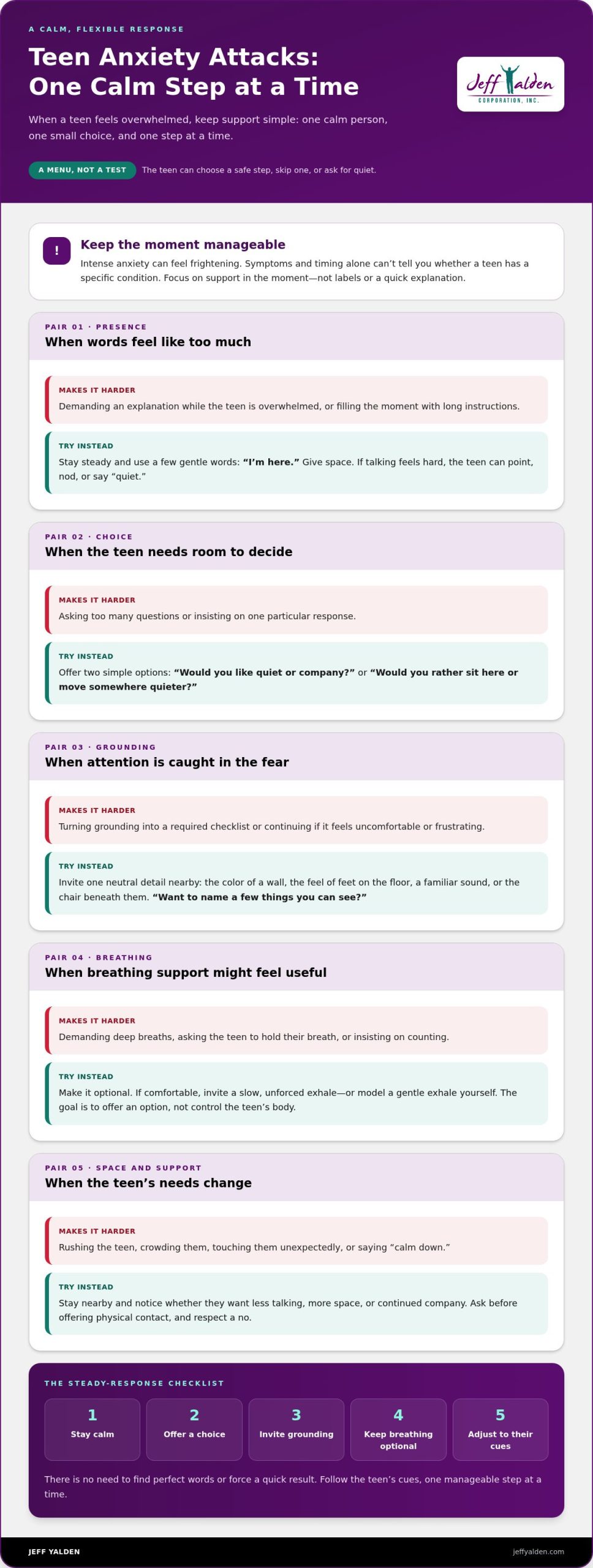
During intense distress, long explanations and complicated instructions can be too much to process. Keep the response simple: one calm person, one small choice, one step at a time. This sequence is a menu, not a test. A teen can choose the safe step that feels manageable, skip one that doesn’t, or ask for quiet.
- Offer a steady presence. Speak gently and use a few words: “I’m here.” Give the teen space, and don’t demand an explanation while they’re overwhelmed. If you’re the teen, you can point, nod, or say “quiet” if talking feels hard.
- Offer a choice. Ask, “Would you like quiet or company?” or “Would you rather sit here or move somewhere quieter?” Keep the options simple. Too many questions can add pressure.
- Try one grounding detail. Invite the teen to notice something neutral nearby, such as the color of a wall or the feel of their feet on the floor. They can choose to participate or simply listen.
- Make breathing optional. If it feels comfortable, invite a slow, unforced exhale. Don’t demand deep breaths, ask them to hold their breath, or insist on counting. The aim is to offer an option, not control the teen’s body.
- Stay nearby and adjust. Notice whether the teen wants less talking, more space, or continued company. There’s no need to rush them or insist on a particular technique.
Ground attention in the present
An easy sensory scan can give attention somewhere neutral to land. Ask the teen to choose one or two senses, not complete a checklist. They might name a few objects in the room, spot two colors, listen for a familiar sound, or notice the chair beneath them. Keep your prompt brief: “Want to name a few things you can see?” If it feels uncomfortable or frustrating, stop and offer another choice. Grounding is an invitation, not a demand.
Use supportive words and comfortable breathing
Your calm matters more than finding perfect words. Try, “I’m here,” “You don’t have to explain right now,” or “Would you like quiet or company?” If the teen is comfortable with it, you can model a gentle exhale yourself. Don’t say “calm down,” minimize what they’re feeling, crowd them, or touch them unexpectedly. Ask before offering physical contact, and respect a no.
Some coping strategies for teen anxiety attacks may feel useful in one moment and uncomfortable in another. Follow the teen’s cues rather than pushing for a quick result. At home or school, adults can also build a more supportive environment by normalizing mental health conversations. Jeff Yalden’s teen mental health assemblies offer an educational way to encourage those conversations in school communities.
What Helps After an Anxiety Attack, and What Can Make It Harder?
The intensity may ease before a teen feels ready to jump back into the day. Recovery looks different for everyone. One teen might want to sit quietly; another may feel ready to return to class or a familiar activity. Offer rest and practical choices, then let the teen set a manageable pace. Pushing for an immediate explanation or insisting they act “normal” can add pressure when they’re still worn out.
Right after an episode, focus on what the teen needs now: privacy, company, water, a quieter place, or time before resuming a task. Don’t treat returning to routine as a test of whether they’re okay. A gradual return can help preserve a sense of choice, especially if the teen is still tired or unsettled.
Reflect without turning the episode into a failure
Wait until the teen seems ready to talk. Ask permission first: “Would you like to talk about what happened, or leave it for now?” If they want to reflect, keep the conversation curious and brief. Ask what they noticed, what felt helpful, and what they might prefer next time. Listen without correcting their account or demanding a clear cause. If a strategy didn’t help, that’s useful information, not proof that the teen failed. They can also choose not to discuss it yet.
Build low-pressure practice into everyday life
When things feel calmer, a teen can try a grounding or relaxation exercise they chose, so it’s familiar if they want it later. Practice is an option, not homework, and a routine, exercise, or mindfulness practice can’t guarantee that anxiety won’t return. The aim is to explore what feels comfortable, not to prevent every difficult moment.
A short personal plan can make coping strategies for teen anxiety attacks easier to remember. Keep it somewhere the teen can access, such as a note on their phone or a card in a backpack. It might include:
- A grounding or relaxation step they’re willing to try.
- Words or support they find reassuring, or things they’d rather adults avoid.
- The trusted adult they can approach at school and a comfortable place to go.
- A simple way to signal they need space, company, or help.
Let the teen shape the plan and update it when their preferences change. For families and school staff, agreeing on a discreet way to offer support can reduce uncertainty without drawing unwanted attention. Keep the plan flexible. What feels helpful one day may not feel right the next.
Coping skills can support well-being, but they aren’t a substitute for assessment or treatment. If anxiety keeps disrupting school, sleep, relationships, or daily activities, a trusted adult can help the teen connect with a qualified mental health professional. For young people whose worries stem from interpersonal challenges and social anxiety, programs like Social Skills Australia offer evidence-based training to build confidence in everyday interactions. The goal isn’t to judge how well a teen used a technique. It’s to listen, learn what support fits, and make room for more help when it’s needed.
When Should Adults Seek More Help for Teen Anxiety?
Coping strategies for teen anxiety attacks can offer support in a difficult moment, but adults shouldn’t have to judge alone whether a teen needs more help. If anxiety keeps interfering with school, sleep, relationships, or everyday activities, it’s a good time to talk with a qualified mental health professional. The concern isn’t whether the teen can push through. It’s whether distress is repeatedly getting in the way of their life.
A trusted adult can help start that conversation and arrange support. A parent or caregiver might reach out to the teen’s doctor or a qualified mental health professional. At school, a counselor or another trusted staff member may help the teen and family understand possible next steps. Adults can describe what they’ve observed and listen to what the teen says, without trying to diagnose them. Asking for help isn’t failure. It’s a caring response to something that deserves attention.
Signs that everyday coping may not be enough
There’s no single checklist that determines when a teen needs support. Notice patterns instead: Is anxiety repeatedly making it hard to attend school, sleep, connect with friends, or manage usual responsibilities? Does the teen seem persistently distressed, or are episodes becoming harder to manage? These concerns are worth discussing, even if the teen can’t explain exactly why they feel anxious.
Try a calm opening: “I’ve noticed this has been affecting your day. Would you be open to talking with someone together?” Offer choices where possible, such as starting with a trusted adult, school counselor, doctor, or qualified mental health professional. Respecting the teen’s voice can make the next step feel less overwhelming. Adults don’t need to know the diagnosis to take a teen’s distress seriously.
Responding to immediate safety concerns
Immediate danger is different from ongoing anxiety. If a teen may harm themselves or someone else, has already been hurt, or can’t stay safe, treat the situation as urgent. Stay with them. Don’t leave them alone while there’s immediate risk of harm.
In the United States, call or text 988 for the 988 Suicide & Crisis Lifeline, which offers crisis support. If there’s immediate danger requiring emergency response, call 911. If you’re unsure what to do, prioritize staying present and contacting urgent support rather than trying to manage the crisis by yourself. Be direct and gentle: “I’m staying with you. We’re getting help now.”
Schools can also help make mental health conversations less isolating by building a culture where students can speak up and trusted adults know how to respond. Explore Jeff Yalden’s teen mental health assemblies as an educational complement to appropriate care, not a substitute for professional support.
How Parents and Schools Can Make Teen Anxiety Support Feel Safer
A teen is more likely to use support when it feels respectful, predictable, and private. Adults don’t need perfect words. They need to listen without rushing to fix the feeling, offer choices instead of commands, and show the teen that asking for help won’t bring shame or unwanted attention.
Families and school staff can work with the teen to create a simple support plan before a difficult moment. Agree on a trusted adult, a discreet way to check in, and a place at school where the teen can regroup if needed. Ask what the teen wants adults to say or do, and what tends to make things harder. A plan should guide support, not lock the teen into a script.
Create a supportive response at home and school
Include the teen in decisions wherever possible. For example, they might choose to tell a teacher, “I need a minute,” or agree on a quiet check-in signal with a parent. Share only the information relevant adults need to support the teen, while being clear that immediate safety concerns may require involving others. That balance helps protect privacy without leaving a teen to manage distress alone.
Consistency can help, too. If the teen has agreed that a certain adult or place feels supportive, family members and school staff can use calm, nonjudgmental language that respects those preferences. Avoid discussing the teen’s anxiety in front of peers or sharing personal details more widely than needed. Afterward, check in privately: “Did that plan feel okay? What would you change?” Small adjustments can make support feel more like partnership and less like something being done to them.
Make mental health conversations part of school culture
Support also grows from the environment around a teen. School assemblies can help normalize conversations about mental health, challenge stigma, and encourage students to reach out to a trusted adult. Educator professional development can give staff space to consider how they respond to students and contribute to a more supportive school culture. These are educational complements to appropriate individual care, not treatment or a replacement for it.
Jeff Yalden’s teen mental health speaker programs and teen suicide prevention programs can support open school conversations about student well-being. The goal is not to suggest that one assembly or staff session can resolve a teen’s anxiety. It’s to help make honest conversations easier, so students know they can seek support and adults are better prepared to respond with care.
When adults coordinate, protect a teen’s dignity, and keep appropriate care at the center, support can feel less intimidating. The teen still gets a voice. And the next step can feel possible.
Make the Next Step One of Connection
A teen shouldn’t have to carry anxiety alone, and a trusted adult doesn’t need a perfect script to show up. The next step can be a small one: agree on how to check in, make room for an honest conversation, or help the teen connect with appropriate professional support. Keep listening. Keep their dignity at the center.
The coping strategies for teen anxiety attacks in this guide can help families and school communities respond with care, but education and encouragement aren’t clinical treatment. Jeff Yalden supports student well-being through educational assemblies and staff professional development. Since 1992, he has delivered over 4,500 high-school assemblies, bringing mental health conversations into school communities.
Explore Jeff Yalden’s teen mental health programs to learn how educational support can help schools make space for open, stigma-reducing conversations. A compassionate response won’t solve everything at once. It can help a teen feel seen, supported, and more able to take the next step.
Frequently Asked Questions
How long does an anxiety attack usually last?
There isn’t one set duration; an intense episode may ease relatively quickly or leave a teen feeling unsettled for longer. Recovery can take additional time, too. Try not to watch the clock or make the teen feel rushed. Reduce demands where possible and check what they need. If episodes keep happening, feel unusually prolonged, or interfere with daily life, talk with a qualified health professional.
Can a teen have an anxiety attack without knowing the trigger?
Yes. A teen may not recognize a clear cause, and there may be no obvious event immediately beforehand. Stress can build gradually, or a feeling may surface in a situation that seems ordinary to other people. That doesn’t mean the teen is hiding something. Avoid pressing them to explain. If they’re willing later, they can note what was happening before the episode and look for patterns over time.
What should I say to a teen having an anxiety attack?
Keep your words simple and offer a choice: “You don’t have to explain. Would you like me to sit nearby or give you room?” Speak calmly, then allow time for the teen to respond. Avoid rapid-fire questions or promises you can’t know are true. If other people are watching, ask whether they’d prefer a quieter, more private spot, as long as it’s safe.
Can caffeine make anxiety worse for teens?
It can. Caffeine may cause jitteriness, a faster heartbeat, or trouble sleeping, sensations that can feel especially uncomfortable for someone already anxious. Energy drinks, coffee, tea, and some sodas contain caffeine, though amounts differ. If a teen notices a connection, they could track what they drank and how they felt, then discuss it with a parent or health professional. Don’t assume caffeine explains every episode.
Should someone breathe into a paper bag during an anxiety attack?
No. Don’t have a teen breathe into a paper bag. Breathing difficulty or dizziness can have causes other than anxiety, and a bag can make it harder to get enough oxygen. Instead, encourage the teen to breathe naturally and comfortably, without forcing deep breaths or breath-holding. If breathing trouble is severe, new, or getting worse, seek urgent medical help rather than assuming anxiety is the cause.
Can anxiety cause chest pain in a teenager?
Anxiety can be associated with chest discomfort, but chest pain shouldn’t automatically be attributed to anxiety. Other health issues can cause it, and a teen may need medical assessment to understand what’s happening. Tell a trusted adult and seek medical advice, especially if the pain is new or concerning. If the teen has severe symptoms, trouble breathing, faints, or may be in immediate danger, call 911 in the United States.
What if a teen refuses to talk about their anxiety?
Don’t force a conversation. Let the teen know you’re available, then offer another way to communicate, such as a text, a note, or talking while doing an activity together. You can also ask whether they’d rather speak with another trusted adult. If you’re worried they may hurt themselves or can’t stay safe, act on that concern: stay with them and get urgent help, even if they don’t want to explain.
