
Building a positive school community online means creating a shared space where students feel connected, supported, and able to learn together, even when they’re apart. It takes more than a screen and a schedule: relationships, shared purpose, and meaningful ways for every student to take part matter. Without those connections, distance can feel isolating.
Strong learning is about more than finishing assignments. Students also need room to connect, speak up, and feel they belong. That human side of school matters online, too.
Here, you’ll learn what community building really means and how purposeful online activities and relationships can support students’ academic and social-emotional success. We’ll explore practical ways to spark connection, build trust across distance, and make a virtual school community feel more welcoming and alive.
Key Takeaways
- Build connection into online learning with welcoming routines, active teacher responses, and ways for students to share their perspectives.
- Strengthen community by partnering with families and community groups, listening to their needs, and working toward shared goals.
- Use collaborative games and shared events to help students discover common ground, contribute, and celebrate progress together.
- Make relationships across distance feel personal through regular check-ins, teacher presence, and opportunities for students to know one another.
1. Student academic and social-emotional success
At school, students do more than learn academic content. They build relationships, practice social skills, and discover where they belong. Online, those connections need deliberate support. When students feel connected to teachers, peers, and school, they’re more engaged and motivated, and better prepared to take ownership of learning. Encouragement and accountability give classwork a shared purpose.
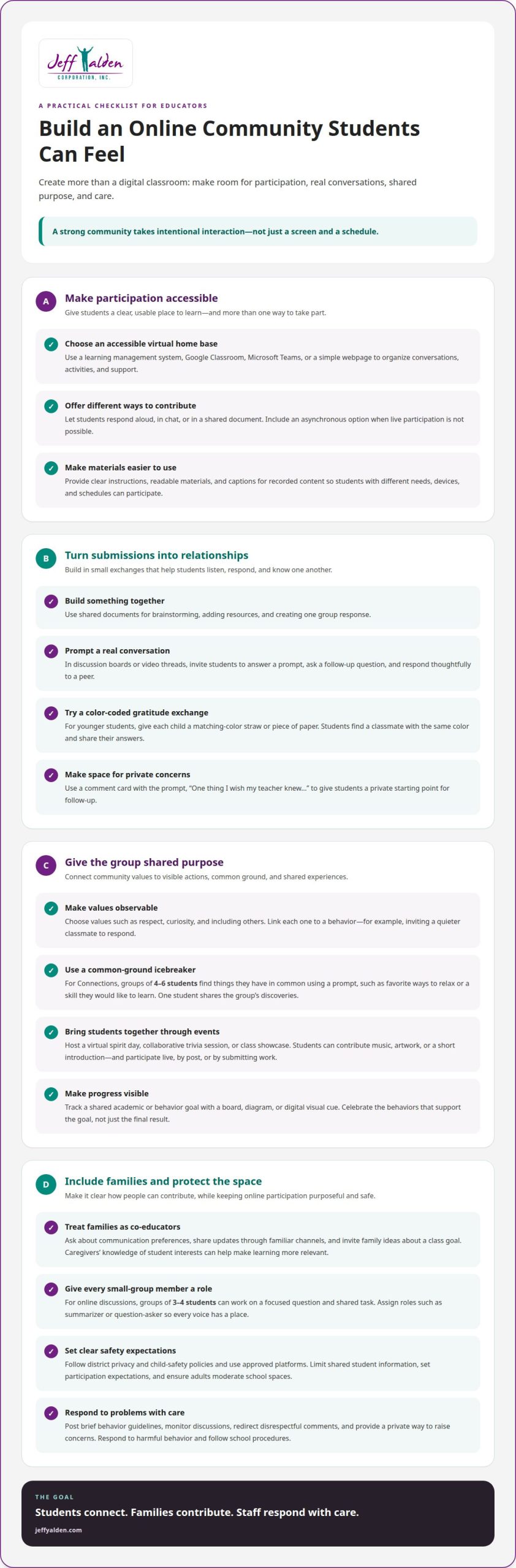
Choose a platform students can access and use for the work at hand. A learning management system, Google Classroom, Microsoft Teams, or a simple webpage can serve as a virtual home base. Use it to organize class conversations, share activities, and make support easy to find.
Make participation accessible by offering more than one way to contribute. Let students respond aloud, in chat, or through a shared document, and provide an asynchronous option when live participation isn’t possible. Use clear instructions, readable materials, and captions for recorded content. These steps help students with different needs, devices, and schedules take part.
Shared documents make group work visible: students can brainstorm, add resources, and build one response together. Student-led discussion boards or video threads offer another way to connect. Invite students to answer a prompt, ask a follow-up question, and respond thoughtfully to a peer. Those small actions create real conversations, not just a string of submissions.
For younger students, try a color-coded gratitude activity. Give each child a matching color straw or piece of paper, then have them find a classmate with the same color and share their answers. This simple partner exchange helps students notice one another and practice listening.
Student ownership also means making space for concerns. Use a comment card with the prompt, “One thing I wish my teacher knew…” Students can share privately, giving teachers a concrete starting point for follow-up. Research can inform decisions, but listening directly to students helps teachers respond and build a stronger classroom community.
2. What is Community Building?
Building a positive school community online means creating shared experiences where students, families, staff, and community groups can contribute to learning. It takes intentional interaction, not just a digital setting. For example, a class can agree on shared values, then use regular meetings to connect those values to daily conversations and decisions.
In the United States, follow district privacy and child-safety policies and use approved platforms for school communication. Practical safeguards include limiting shared student information, setting clear participation expectations, and ensuring adults moderate school spaces.
Participation grows when schools make it clear how families can contribute and listen to what they need. Ask about communication preferences, share updates through familiar channels, and invite families’ ideas about a class goal. Treat families as co-educators: a caregiver’s insight into a student’s interests can help teachers create more relevant learning experiences. Community groups can also connect class projects with local knowledge or shared interests.
Make progress visible. Track a shared academic or behavior goal with a board, diagram, or digital visual cue, and update it as students contribute. For online small-group discussions, assign groups of 3-4 students a focused question and a shared task. Give each student a role, such as summarizer or question-asker, so every voice has a place. Tutoring and group study sessions can reinforce learning while giving peers a reason to explain ideas and work through challenges together.
A positive online community looks like students asking questions, families sharing useful perspectives, and staff responding with care. Moderation makes participation safer and more purposeful: post brief behavior guidelines, monitor discussions, redirect disrespectful comments, and provide a private way to raise concerns. A teacher, for example, can remind students to discuss ideas without attacking classmates, then follow up privately when a concern needs individual attention. Clear expectations help the group stay connected and focused.
3. Interactive games and shared community events
A shared mission takes shape when students practice it together. Start with classroom values such as respect, curiosity, and including others, then connect each value to an observable behavior. For example, “include others” might mean inviting a quieter classmate to respond during a virtual activity. Repeated interactions help students see these values as part of their community, not just words on a screen.
Try Connections, an online icebreaker where students work in groups of 4-6 to find things they have in common. Give each group a short prompt, such as favorite ways to relax or a skill they’d like to learn. Ask one student to share the group’s discoveries. The activity gives classmates an easy first conversation and helps foster belonging through common ground.
Shared events can build on that momentum. Host a virtual spirit day, collaborative trivia session, or class showcase where students contribute music, artwork, or a short introduction. Keep participation flexible: students might speak live, post a response, or submit work for the event. Offering different ways to join helps more students connect.
A shared class goal gives the group something concrete to work toward. Choose a behavior or performance target, explain how progress will be tracked, and offer a reward when the class reaches it. For instance, students might aim to give thoughtful responses during a discussion while a visual tracker records each contribution. Keep the goal clear, and celebrate the behaviors that support it, not just the final result.
To prevent cyberbullying and harassment, set clear expectations for respectful participation, moderate online spaces, and provide a private way to report concerns. Respond promptly to harmful behavior and follow school procedures. Effective community programs can combine a recurring virtual gathering with student-led sharing, collaborative games, and class-wide goals. The strongest activities give students a reason to participate, a shared purpose, and a way to recognize one another’s contributions.
4. Building relationships across distance
Online relationships need more than scheduled lessons. The community of inquiry framework identifies three elements of an engaged learning community: social presence, teaching presence, and cognitive presence. In practice, students need chances to connect with people, clear guidance from educators, and meaningful work that asks them to think. A regular check-in in an asynchronous course helps establish teaching presence, even when classmates aren’t online together.
Start each term with a welcome video. Introduce yourself, share your teaching approach, and explain what students can expect from the lesson routine. Then show the person behind the screen: share a brief personal story in an announcement or discussion, and respond to students with specific follow-up questions. These small, steady actions invite students to contribute and help build a sense of belonging.
Give students structured opportunities to learn about one another. In a “Soundtrack of your life” activity, each student chooses 5-10 songs that represent their life and explains a selection to classmates. Invite students to respond with a question or a shared connection. Students who prefer not to speak live can contribute in writing, giving more classmates a way into the conversation.
Feedback can strengthen relationships, too. A short voice or video response can make guidance feel more personal than written comments alone. For example, name an effective choice in a student’s assignment, then offer a clear next step. Ongoing communication also helps families stay connected to teachers and school staff, support students at home, and advocate for their needs. School leaders can build trust by aligning their words with their actions and holding themselves accountable.
These practices work best as part of a consistent rhythm, not a one-time welcome. Establish recurring check-ins, respond to student contributions, and make room for leadership by inviting students to guide a discussion or introduce a lesson topic. Explore ways to strengthen school connections.
Jeff Yalden: High School Assemblies
Jeff Yalden’s High School Assemblies can complement online community-building when students need a shared, in-person space to discuss mental health, resilience, and connection. Online activities help relationships grow over time; an assembly can bring those conversations together and give students a common experience to reflect on.
Schools can use a High School Assembly Program to encourage honest conversations about student well-being across the school community. As a Teen Motivational Speaker, Jeff Yalden delivers assemblies focused on supporting students and normalizing conversations about mental health. This school-wide speaking program is not a substitute for ongoing individual care.
If an assembly could support your school’s efforts to strengthen student connection, contact Jeff Yalden to discuss your goals.
Turn connection into a lasting commitment
A thriving online community isn’t built in one event or lesson. It grows through everyday choices: who gets heard, how students are supported, and whether connection stays a priority when schedules get busy. Choose one practice to strengthen, then make it part of the rhythm of school life. Small, consistent actions can help students feel they belong, even when distance separates them.
Building a positive school community online also means recognizing when a shared conversation could benefit from a larger gathering. A school assembly can bring students together around themes of resilience and mental health, complementing the relationships educators nurture throughout the year. If that’s a meaningful next step for your school, contact Jeff Yalden to discuss how an assembly could support your community’s goals.
Keep showing up. Every thoughtful conversation gives students another reason to feel connected, supported, and ready to take part.
Frequently Asked Questions
What is Community Building?
Community building is the ongoing work of helping people connect, contribute, and feel responsible for a shared environment. In a school, that includes how students, educators, and families interact, not just which digital platform they use. For example, a student who welcomes a new classmate into a discussion helps shape the community through a small, meaningful action.
What is school culture?
School culture is the shared set of expectations, habits, and relationships that shapes everyday life at school. You can see it in how adults respond to mistakes, how students treat differing opinions, and whether families feel heard. For instance, a school that treats questions as part of learning shows through its daily actions that it values curiosity.
What are effective ways to build a welcoming online school community?
Make the first interaction simple, specific, and low-pressure. A teacher might open a class space with a welcome message, explain how students can participate, and offer a prompt about a favorite book, hobby, or learning goal. Follow up by acknowledging contributions by name and inviting students to help shape future discussion topics. This gives newcomers a clear first step and a reason to return.
How can schools measure engagement and the health of an online community?
Look beyond login counts. Notice whether students contribute across activities, respond to classmates, and seek help when they need it. Pair those observations with short, anonymous feedback prompts, such as asking whether students feel comfortable sharing an idea or know where to raise a concern. Comparing responses and participation patterns over time can reveal where connection is strong and where routines need adjustment.
