
An anti-bullying speaker for middle schools can help students recognize exclusion, respond safely when bullying happens, and build a culture of empathy and respect. The most useful presentations go beyond slogans, giving students practical ways to support a peer and report concerns to a trusted adult.
A single assembly cannot resolve every conflict or change school culture overnight. But an engaging, age-aware message can open honest conversations and give students language for choosing a better response, even when speaking up feels difficult.
This article explains what an anti-bullying presentation can cover, how schools can reinforce its message, and what to consider when choosing a speaker. Realistic examples, clear response strategies, and follow-through can help middle school students practice resilience, empathy, and respect.
Key Takeaways
- Build prevention into everyday school culture by making inclusion, speaking up, and reporting concerns clear expectations.
- Choose presentations that get students involved and connect anti-bullying messages to situations they recognize.
- Help students practice empathy and resilience with practical ways to support peers and respond respectfully.
- Match the speaker’s approach to middle school students’ developmental needs, then reinforce the message through school-wide follow-through.
Bullying prevention and positive school culture
Prevention works best when an assembly connects with everyday school practices. Students need clear steps, age-appropriate examples, and consistent follow-through from adults.
School Prevention Presentations
School bullying prevention presentations can show students how to recognize exclusion, report concerns, and respond without escalating conflict. The U.S. Government Publishing Office describes a 2004 Arizona student-proposed bill that included confidential bullying reports to school officials. Schools can use that idea to explain their own reporting pathways, including which trusted adults receive concerns and what happens next.
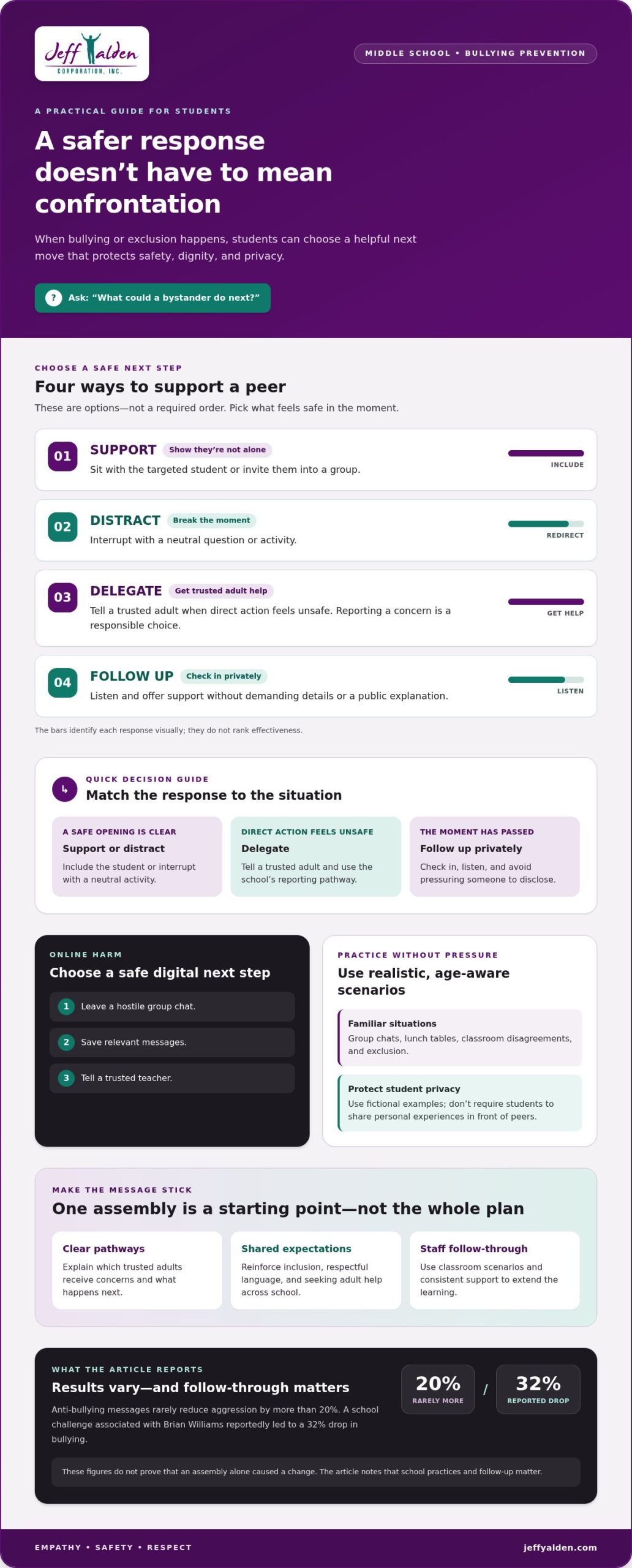
What evidence shows anti-bullying assemblies reduce bullying? Results vary: anti-bullying messages rarely reduce aggression by more than 20%, while a school challenge associated with Brian Williams reportedly led to a 32% drop in bullying. These figures don’t prove that an assembly alone caused a change; follow-up and school practices matter.
A video-based prevention curriculum can reinforce an assembly with short scenarios, discussion prompts, and staff-led follow-up. Review materials for age-appropriate language, emotional intensity, and practical response steps. When planning, consider curriculum access, speaker fees, staff time, and the school’s prevention priorities. Choose content students can use, not just material with polished production.
Kindness as Prevention
Kindness becomes practical prevention when students know how to act on it. They can invite a peer who is alone to sit with them, include someone in a group, offer a kind word, or tell an adult about repeated targeting. These small choices can interrupt isolation and make respect visible in shared spaces like lunchrooms and hallways.
What risks should schools consider when planning an anti-bullying presentation? A speaker who spends most of the session performing may leave little time for useful strategies. Graphic stories can overwhelm students, and asking them to disclose personal experiences publicly can compromise their privacy. Choose engaging, emotionally appropriate content, protect student privacy, and plan how staff will follow up. The Centers for Disease Control and Prevention associates bullying with substance use, another reason to make prevention part of a broader, supportive school culture.
Interactive, high-energy presentations
Energy captures attention, but purposeful participation turns attention into learning. A useful presentation lets students rehearse choices rather than simply watch. For example, pause a hallway scenario and ask, “What could a bystander do next?” Students can compare responses and consider how kindness, respect, and safety shape each choice.
Middle school students have different developmental needs. A fifth grader and an eighth grader may benefit from different examples, pacing, and discussion prompts. Effective assemblies use age-appropriate language and connect it to familiar situations, such as group chats, lunch tables, and classroom disagreements. Keep participation active without asking students to share personal experiences in front of peers.
Safe bystander intervention means choosing a response that does not put students at greater risk. Teach a simple set of options:
- Support: Sit with the targeted student or invite them into a group.
- Distract: Interrupt the moment with a neutral question or activity.
- Delegate: Tell a trusted adult when direct action feels unsafe.
- Follow up: Check in privately and listen without demanding details.
These actions show students that intervention does not have to mean confronting someone. Reporting concerns is a responsible choice, too. An engaging assembly can model each response through short scenes, audience polls, and guided discussion, then give staff shared language to reinforce afterward.
PBIS, or Positive Behavioral Interventions and Supports, can connect the presentation to Tier 1 expectations taught across the school. Tie the assembly’s message to specific behaviors, such as including classmates, using respectful language, and seeking adult help. A prevention curriculum can extend that learning through classroom scenarios and follow-up activities. For younger elementary students, simplify scenarios; for older middle school students, include digital citizenship and peer conflict strategies.
If your school wants an interactive format tied to student needs, explore middle school assembly programs as one way to bring these skills into a shared learning experience.
Jim Jordan’s intermediate program identifies exclusion as a form of bullying. This helps students recognize that harm can involve being left out, not just direct insults or conflict. In discussion, they can consider how to include a peer, interrupt exclusion safely, or seek help from a trusted adult.
Empathy, resilience, and respect
Empathy grows when students notice how their behavior affects others. A joke that makes one group laugh may leave a classmate feeling exposed. Ask students to pause, consider the other person’s perspective, and choose a response that protects their dignity. This simple sequence turns an abstract lesson into a decision students can practice.
What topics should an anti-bullying speaker cover for middle school students? Include empathy, resilience, respectful behavior, cyberbullying, digital footprints, peer conflict strategies, and how to use school reporting pathways. Give students clear examples of supporting someone who is targeted without escalating the situation.
Resilience does not mean pretending hurtful behavior does not matter. It means identifying a safe next step, such as leaving a hostile group chat, saving relevant messages, and telling a trusted teacher. A speaker can use a fictional scenario to help students rehearse these choices without asking anyone to share private experiences. The goal is practical learning, not pressure to appear unaffected.
Leadership starts with everyday choices. A student who notices a classmate being excluded can invite them into a group, check in privately, or ask an adult for help. These actions show that leadership does not require a title or public confrontation. School lessons should also make clear that adults are responsible for stopping bullying, while peers can offer safe support.
Respect grows stronger when the message continues beyond the presentation. Teachers can reinforce the same strategies in class discussions, group work, and responses to harmful comments. For example, students can practice turning a dismissive remark into a firm, respectful disagreement. This connects the assembly to daily learning and gives students a repeatable way to handle conflict. A thoughtful anti-bullying speaker for middle schools can frame resilience as seeking support, learning from setbacks, and treating others with care.
Anti-bullying speaking for schools
A school assembly works best when it fits the students, school culture, and follow-up plan. Treat the speaker as one part of a community-wide approach, not the whole prevention strategy.
Speaker Selection Criteria
How do you choose an effective anti-bullying speaker for a middle school? Look for experience addressing bullying, age-appropriate examples, and practical strategies students can use. Ask how the presentation adapts to different grades and encourages empathy without pressuring students to share personal stories publicly. Students should leave with clear actions and know which trusted adults can help.
Comparing Speaker Options
What are the best anti-bullying speakers for middle schools in the United States? There is no single best fit for every school. Compare speakers based on their middle school experience, content, interaction, and alignment with your school’s goals. Review a sample outline and see whether it covers peer conflict, digital behavior, safe reporting, and respectful responses. A strong fit can connect an assembly with existing prevention work.
Do anti-bullying speakers offer virtual presentations or workshops? Some deliver content virtually, while others focus on in-person assemblies; the format depends on the speaker’s program. A virtual session can use polls and chat-based scenarios, but schools should plan how students can ask sensitive questions privately.
How can schools evaluate whether an anti-bullying assembly is effective? Before the event, set a clear goal, such as improving students’ understanding of reporting steps. Afterward, use a brief anonymous student check-in, gather teacher observations, and see whether students can name a safe response. Track school climate through existing reporting and behavior records.
What questions should schools ask a speaker before booking? Ask what students will learn, how examples change by grade, and how the speaker handles emotional topics. Ask what follow-up materials or staff guidance accompany the presentation so the message continues beyond assembly day.
Ready to connect an engaging school assembly with your students’ needs? Explore assembly options for your school.
Schools should look closely at anti-bullying speakers with fewer than five years of experience addressing bullying, and consider whether they can adapt content to developmental differences between fifth-grade and eighth-grade students.
Jeff Yalden: High School Assemblies
Jeff Yalden is a youth motivational speaker whose High School Assemblies create space for honest conversations about mental health, resilience, and student well-being. Schools can consider his presentations when they want an engaging speaker to help students feel seen and encourage a more supportive school culture.
His work includes High School Assembly Programs and talks on teen mental health. These presentations can complement school prevention efforts by encouraging students to speak up, seek support, and treat one another with respect. An assembly can open the conversation, while school staff continue it through everyday relationships and support.
If you’re planning a school assembly and want to discuss how Jeff Yalden’s work could support your goals, contact Jeff Yalden.
Turn the Message Into a Shared Commitment
Choose a next step your school community can carry forward. Before planning an assembly, decide what students should feel empowered to do afterward and how adults will support that action. A clear purpose gives the event meaning beyond the stage.
An anti-bullying speaker for middle schools can create a moment of connection, but lasting change grows through consistent choices in classrooms, hallways, and online spaces. Keep the conversation alive by making respect visible, listening when students speak up, and responding to concerns with care.
Jeff Yalden offers High School Assemblies, High School Assembly Programs, and talks as a Teen Motivational Speaker. Schools looking for a speaker to engage students and encourage meaningful conversations can explore how his presentations align with their goals.
Contact Jeff Yalden to discuss an assembly for your school. Every step toward a more supportive community matters, and your students deserve to see adults keep showing up.
