
Self-harm needs a calm response and professional support, not blame or silence. Knowing how to help a teen who self-harms starts with listening without judgment, asking directly about their safety, and connecting them with a pediatrician or mental health professional. If a teen is in immediate crisis in the United States, the 988 Suicide & Crisis Lifeline says to call or text 988; if they’re in imminent danger of suicide, call 911, according to the U.S. 911 Program.
You may sense that something deeper is going on. Fear, confusion, or not knowing what to say can make the first conversation feel difficult. You don’t need perfect words. A calm, caring response can help your teen feel less alone while you take their safety seriously.
This article explains why teens may self-harm, what to say and do, and how to find appropriate mental health support. It also covers when to seek emergency help, so you can focus on the next safe step rather than facing uncertainty alone.
Key Takeaways
- Lead with empathy, ask clearly about your teen’s safety, and keep the conversation open even if they aren’t ready to talk.
- Understanding the feelings and situations behind self-harm can help you respond with compassion rather than blame.
- A pediatrician or mental health professional can help identify suitable care and guide the next steps.
- Schools can strengthen supportive conversations through mental-health-focused High School Assemblies with Jeff Yalden.
How can you support a self-harmer?
Respond calmly, listen without judgment, and connect the teen with support. A caring conversation can open the door, but professional help is important too.
Starting supportive conversations
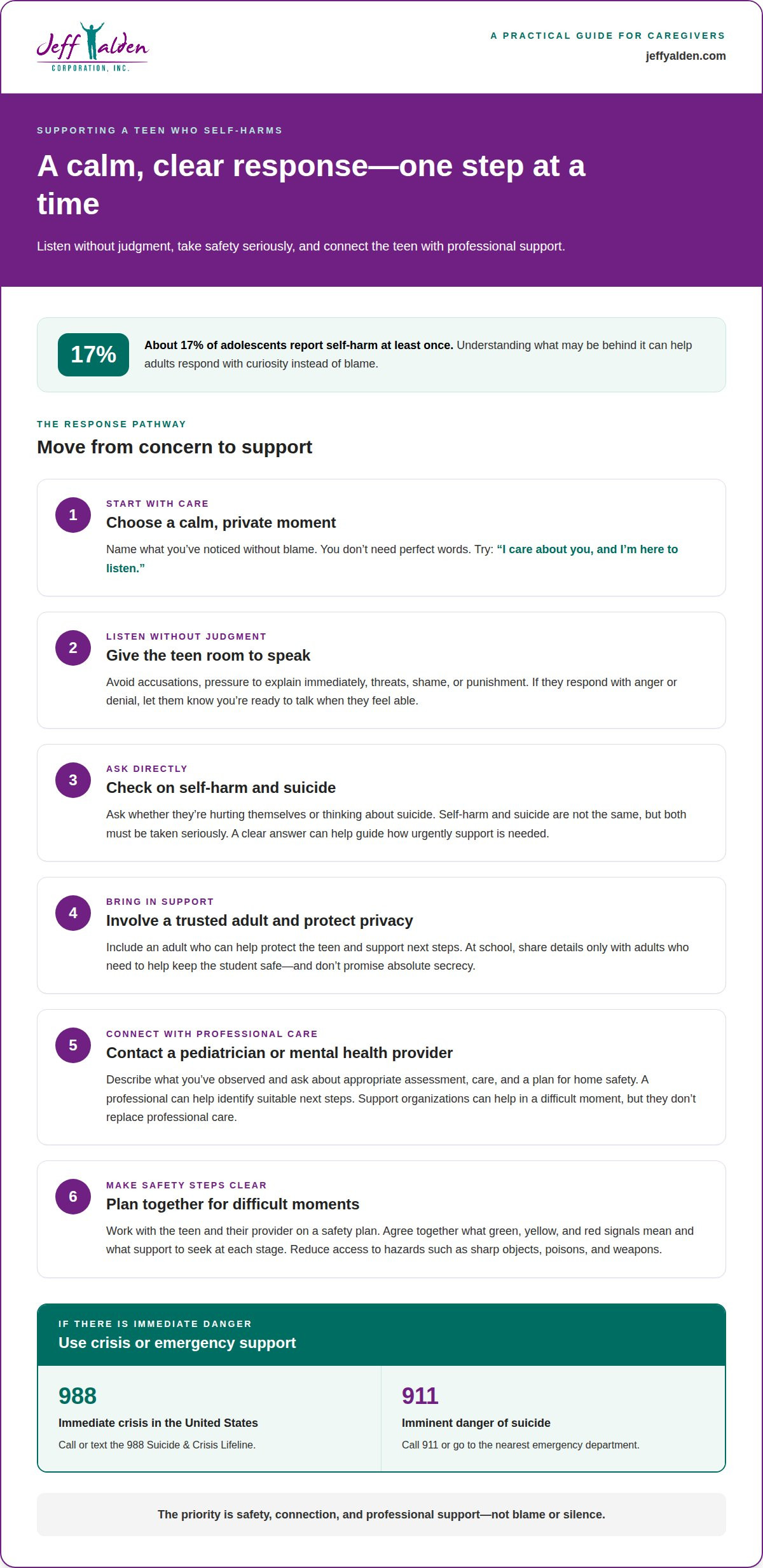
A supportive conversation names your concern without blame and gives the teen space to speak. If you discover self-harm, choose a calm, private moment and say, “I care about you, and I’m here to listen.” Ask directly whether they’re hurting themselves or thinking about suicide. Avoid accusations, leading questions, or pressure to explain immediately. If they respond with anger or denial, let them know you’re ready to talk when they feel able.
Involving caregivers and avoiding harmful responses
Involving a trusted caregiver means bringing in an adult who can help protect the teen and support next steps. If you’re a clinician, let the teen choose whether to begin the conversation or have you lead it. At school, protect the student’s privacy by sharing details only with adults who need to help keep them safe, and don’t promise absolute secrecy. Parents should avoid threats, shame, punishment, or demands that the teen stop immediately. Stay open, listen, and offer caring support.
Finding support organizations
Support organizations can help teens and families feel less alone while they seek ongoing care. A trusted adult, family member, or friend can be part of the teen’s support system. In the United States, teens in immediate crisis can call or text 988, the 988 Suicide & Crisis Lifeline. Crisis Text Line also recommends approaching a teen with care and without judgment. These supports can help someone through a difficult moment, but they don’t replace professional assessment and care.
Planning professional support and safety
A safety plan turns concern into clear, shared steps for a crisis. Contact the teen’s pediatrician or mental health provider about professional support and a plan for home safety and emergency care. Work with the teen to create a traffic-light system: agree together what green, yellow, and red signals mean, and what support to seek at each stage. Reduce access to hazards such as sharp objects, poisons, and weapons. For a teen in imminent danger of suicide, call 911 or go to the nearest emergency department, according to the U.S. 911 Program.
Why Do People Self-Harm?
Self-harm is intentionally hurting oneself without intending to die. A teen may use it to manage overwhelming emotions, distract from distress, feel something during numbness, or express pain they can’t put into words. About 17% of adolescents report self-harm at least once. Understanding its possible purpose helps adults respond with curiosity instead of assuming the teen is seeking attention.
Self-harm and suicide are not the same, but both must be taken seriously. A teen who self-harms may not want to die. However, prolonged or more frequent self-injury is associated with increased risk of suicidal thoughts and attempts. Ask directly about thoughts of suicide instead of trying to infer intent from an injury. A clear answer can guide the urgency of support.
Warning signs can include unexplained injuries, covering skin with clothing, or regularly avoiding situations that expose an affected area. A teen may also seem more anxious, isolated, or overwhelmed. One sign alone doesn’t establish what’s happening. Share specific observations, such as repeated injuries or a sudden change in clothing, and invite the teen to explain without accusation.
When speaking with a pediatrician or mental health professional, describe what you’ve observed: the method, frequency, when it began, and any changes. Promptly mention wounds that seem serious, signs of infection, or other medical concerns. Understanding what happens before and after an episode, including emotions and timing, can help identify triggers and guide care. Don’t interrogate the teen or demand graphic details.
Make the home safer by reducing access to items the teen has used to self-harm, and discuss practical steps with their caregiver and clinician. Keep the focus on safety, not punishment. For example, agree on how potentially dangerous items will be stored, and revisit the plan if the teen’s behavior or needs change. These steps can support recovery while professional care addresses the distress underneath.
Referral to children and young people’s mental health services
For a young person under 18 who self-harms, referral to local children and young people’s mental health services can connect them with appropriate assessment and care. A parent or caregiver can start by contacting the teen’s pediatrician and describing what they’ve noticed, such as changes in mood, self-injury, or difficulty managing daily stress. If the teen is unsure about speaking, explain what the appointment involves and offer to stay with them.
Useful support starts with understanding what happens before and after self-harm. Crisis Text Line recommends exploring the triggers and emotions linked to the behavior. Gently notice patterns with the teen: does the urge follow conflict with a friend, anxiety about school, or feeling isolated? Record the situation, thoughts, feelings, and actions without judgment. These details can help a mental health provider understand what the teen is experiencing.
Then work together on healthier responses that fit the trigger. If a difficult message from a friend sparks distress, the teen might pause before replying, move to a shared space, or contact someone they trust. If strong emotions feel hard to name, writing them down or taking a quiet walk may offer another way through the moment. These alternatives can support coping, but they don’t replace professional care.
A mental health provider can assess the teen’s needs and discuss care for self-harm and related concerns, including depression or anxiety. Depending on the young person, care may include cognitive-behavioral therapy, dialectical behavior therapy, or family therapy. The right approach considers the teen’s thoughts, circumstances, and support at home, not just the behavior itself.
Keep communication open among the teen, caregiver, and provider. Share changes in self-harm, mood, or daily functioning, and ask how the care plan should respond. Consistent, coordinated attention to the teen’s emotional needs and safety can support recovery.
Getting professional help
Self-harm deserves professional attention, even when a teen says they don’t want to die. Cutting and other self-injury can cause physical harm, and the distress underneath may need care. Knowing how to help a teen who self-harms includes contacting their pediatrician and describing the behavior, injuries, stressors, and changes in frequency. Make the appointment even if your teen refuses to attend. You can still explain your concerns and ask about next steps.
In the United States, a person can call or text 988 for the 988 Suicide & Crisis Lifeline when a child is in immediate crisis, according to the 988 Suicide & Crisis Lifeline. Use emergency care when an injury needs urgent medical attention or the teen is in imminent danger. Stay with the teen while arranging help, and tell responders clearly what has happened and what you’re worried about.
A pediatrician can assess immediate health needs and help plan care for underlying distress. Depending on the teen’s needs, a care plan may include talk therapy, stress-reduction techniques, medication, or other support. Share concrete observations: when self-harm occurs, what seems to happen beforehand, and how the teen feels afterward. This helps the professional understand patterns, rather than focusing only on visible injuries.
If your teen won’t speak with a provider, keep the appointment and explain the situation. Ask how to involve them without making care feel like punishment. A teen may find it easier to write down thoughts, bring someone they trust, or start with one concern, such as anxiety or feeling overwhelmed. If you’re unsure how to help a teen who self-harms, tell the professional involved about significant changes.
Schools can also help adults respond consistently. Teacher professional development can support staff in recognizing concerns, handling sensitive conversations, and connecting students with appropriate help. It complements, but doesn’t replace, clinical care. The key takeaway: involve a qualified professional, describe what you’re seeing, and keep safety and the teen’s voice central.
Jeff Yalden
Jeff Yalden helps schools create more open, compassionate conversations about teen mental health. Through High School Assemblies and Teen Motivational Speaker programs, he helps students and educators engage with difficult topics, including resilience and asking for support. These programs can complement a school’s response with a shared, age-appropriate conversation.
Assemblies don’t replace individual assessment, emergency care, or treatment from a mental health professional. They can help students feel more able to speak up and adults recognize when someone needs further support. The teen’s safety and connection to appropriate care remain the first priority.
Contact Jeff Yalden to discuss support for your school community.
Build a path forward together
Knowing how to help a teen who self-harms isn’t about finding perfect words or fixing everything at once. It’s about helping a young person feel seen, keeping communication open, and making room for the next safe step. Progress can start with one honest conversation and continue through steady support from trusted adults.
Schools can help create a culture where asking for help feels possible. Jeff Yalden supports school communities in making conversations about mental health and resilience more open. This work complements individual care; it doesn’t replace a teen’s connection with qualified mental health professionals.
Choose one practical next step today: share your concern with a trusted caregiver, arrange professional support, or explore how your school can encourage compassionate conversations. You don’t have to solve everything alone. Contact Jeff Yalden about support for your school community, and keep showing the teen that reaching for help is possible.
Frequently Asked Questions
Do kids who self-injure face higher risks for suicide?
Yes, self-injury is associated with greater suicide risk, particularly when it continues or becomes more frequent. It doesn’t mean every child who self-injures will attempt suicide, but it does call for serious attention. Tell a qualified professional what you’ve observed and whether the teen has mentioned wanting to die. If they describe immediate intent or danger, seek emergency help instead of waiting for a routine appointment.
How can I help my child?
Help by staying connected and bringing in appropriate support. You might say, “I can see things feel heavy right now. Would it help to sit together, or would you rather write down what’s going on?” Offer simple choices instead of demanding an explanation. Keep checking in without making every interaction about self-harm, and share relevant changes with the professional involved in your child’s care.
How can I tell the difference between NSSI and suicidal behavior?
NSSI, or nonsuicidal self-injury, means deliberately hurting oneself without intending to die; suicidal behavior involves intent to die. You can’t determine intent from an injury’s appearance or method alone. Ask plainly whether the teen has thoughts of suicide and whether they intend to act on them. A mental health professional can assess the full situation, including current thoughts, plans, access to means, and immediate safety.
How can something so painful actually relieve pain?
For some people, physical pain briefly interrupts overwhelming emotional distress, creates a sensation when they feel numb, or offers a sense of control. This temporary shift can make self-injury feel like a coping response, even though it can cause harm and doesn’t resolve the underlying problem. Try to understand what the teen experiences before and after an episode. Those details can help guide safer support.
If my child is self-harming, does it mean they are thinking about suicide?
No, self-harm doesn’t automatically mean your child wants to die. Still, don’t rely on that distinction to assume they’re safe. Ask directly about suicidal thoughts, including whether they’ve thought about acting on them. Listen to the answer without arguing or rushing to reassure them. If you’re unsure about immediate danger, contact a pediatrician, mental health provider, or emergency service for guidance.
Is NSSI a sign of other mental health problems?
Self-harm can occur alongside mental health conditions, but NSSI alone doesn’t establish a diagnosis. It has been associated with depression, anxiety, ADHD, PTSD, eating disorders, and substance use disorders. A qualified provider can explore whether these concerns are present and how they relate to the teen’s behavior. Share changes you’ve noticed in mood, sleep, school participation, or relationships to give the assessment useful context.
