
Grief doesn’t wait for a lesson plan. Professional development on grief and loss for educators should help school staff understand how grief may affect students, respond with care, and recognize the boundaries of their role. It prepares them for real moments: a student struggling to focus, a painful anniversary, or a loss that changes the feel of the classroom.
You already know that compassion matters. But compassion alone can leave educators unsure what to say, what support to offer, and how to care for themselves while showing up for students. This article explains what effective training can cover, from grief-sensitive classroom practices and communication to schoolwide preparation and educator wellbeing. You’ll also learn what shapes the quality of a professional development program and how experienced guidance can help staff feel more prepared, not expected to have every answer.
Key Takeaways
- Build staff confidence with practical guidance for responding to grief while keeping classroom expectations flexible and humane.
- Learn how steady routines, open conversations, and a trusted school contact can help grieving students feel supported.
- Prepare school teams to respond consistently to adversity and make space for educators’ own emotional wellbeing.
- Use professional development to strengthen mental health conversations at school, with Jeff Yalden’s Teacher Professional Development as a next step for educators seeking guided support.
How professional development equips educators with grief-sensitive classroom tools and strategies
Professional development on grief and loss for educators turns good intentions into practical classroom responses. Staff can practice acknowledging a loss without pressuring a student to speak. They can also plan a brief mindfulness, yoga, or dancing brain break to give students a chance to pause and reset. These small, thoughtful choices make support visible without making grief the whole lesson.
Training can challenge the pressure to suppress grief. A student may seem focused one moment and withdrawn the next; neither response means the student is “over it.” The stages often named as denial, anger, bargaining, depression, and acceptance don’t unfold in a fixed order. People experience grief differently, so educators should avoid treating those labels as a checklist or expecting students to show grief in a particular way.
An empathic classroom combines predictable structure with room for individual needs. A teacher might explain the day’s routine, offer a private emotional break, and allow extra time for an assignment. A brief check-in could be: “Would you like to talk, take a pause, or get started with me?” Offering a choice respects the student’s voice without pressing for personal details.
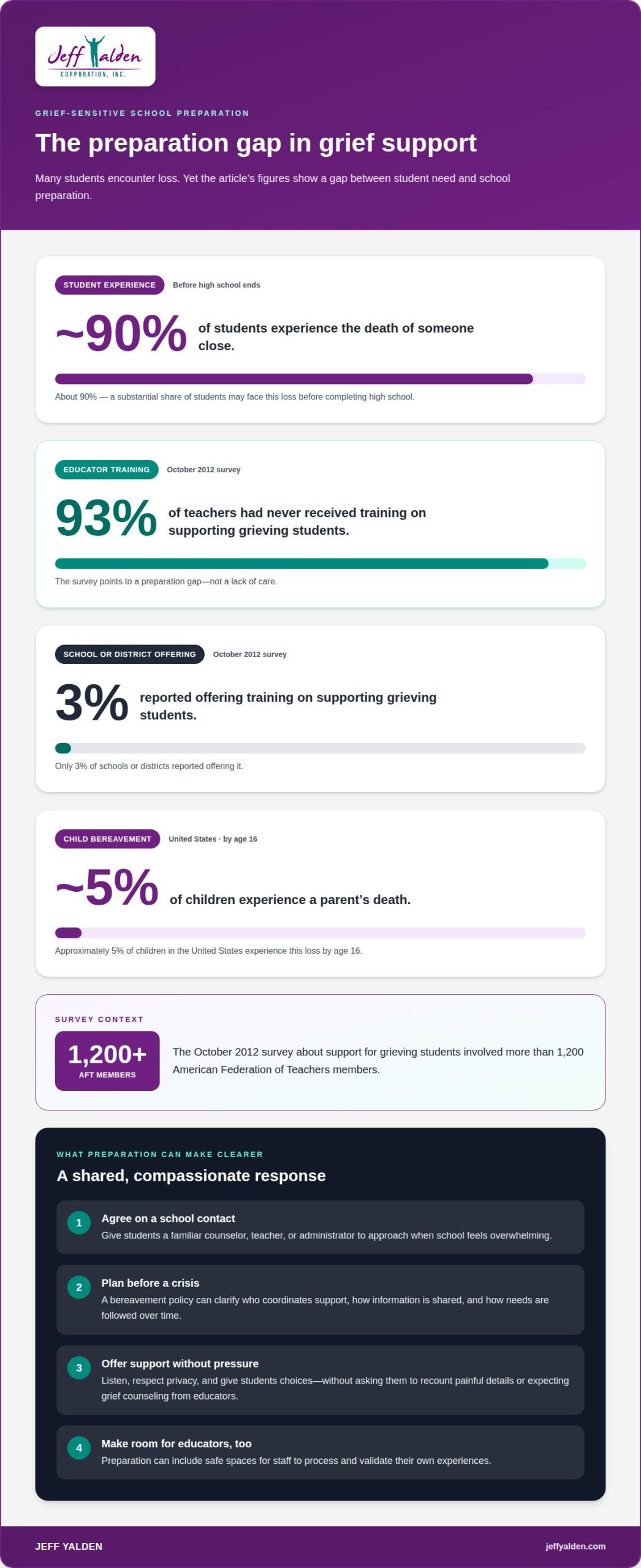
Professional learning can include role-play, sample responses, and discussion of classroom scenarios. In October 2012, a survey about support for grieving students involved more than 1,200 American Federation of Teachers members. The scale of that survey underscores why shared preparation matters. Training helps staff distinguish compassionate classroom support from grief counseling, which educators aren’t expected to provide. It can also help colleagues agree on when to connect a student with a designated school contact. The result is a more consistent response: students encounter care, not silence, and educators have clear next steps when a loss affects learning.
How professional development equips educators with strategies for supporting children and adolescents facing loss
Training helps school staff notice changes, respond with care, and connect students with support. It also clarifies how to support grieving children without expecting educators to provide grief counseling.
Recognizing Signs of Grief
Grief looks different for every child and adult. A student might become unusually quiet, struggle to concentrate, miss school, or react sharply to small frustrations. An adult colleague might withdraw from conversations or find familiar tasks harder. Training helps educators notice changes without diagnosing their cause. A practical first step is a private, low-pressure check-in, followed by sharing concerns with the school’s designated support contact.
Supporting Children Through Bereavement
Bereavement support starts with listening and clear, age-appropriate communication. Training can help staff avoid vague explanations, respect a child’s questions, and coordinate with family members about what the school should share. Approximately 5% of children in the United States experience a parent’s death by age 16. That reality makes prepared, steady school support essential, while each child’s circumstances still call for an individual response.
Professional learning can help schools designate a counselor, teacher, or administrator as a consistent point of contact. A grieving student then has someone familiar to approach when class feels overwhelming or questions arise. Staff can also agree on how to share relevant information with colleagues while protecting the student’s privacy and avoiding repeated requests to recount painful details.
For example, after a student loses a family member, a teacher might check in privately, ask what support would help during the school day, then communicate agreed needs to the designated contact. Educators can keep expectations clear while allowing room for grief to affect participation or concentration. Training gives staff a shared approach, helping children and adolescents find reliable support without being singled out or rushed through bereavement.
How professional development prepares educators to support students facing adversity
About 90% of students experience the death of someone close before completing high school. Yet an October 2012 survey found that 93% of teachers had never received training on supporting grieving students. Only 3% of schools or districts reported offering it. These figures point to a preparation gap, not a lack of care. Training gives school teams shared expectations before a student’s loss demands an immediate response.
Preparation works best before a crisis. After a schoolwide bereavement, staff may be grieving too, leaving little room to absorb new guidance. Professional development can help schools create a bereavement policy in advance, guiding how staff support students and communicate with families. It can clarify who coordinates support, how information is shared, and how students’ needs are followed over time.
Training should also make room for choice, voice, collaboration, and mutuality. These principles help educators involve students in decisions about their support instead of assuming what they need. Trauma-informed and grief-sensitive practices overlap, but neither automatically guarantees the other. Staff can discuss a concrete case, such as a student whose family asks that a death not be discussed. Agreeing on a compassionate response can prevent confusion and conflicting messages.
Educators need support, too. Pressure to stay silent about a student’s death or avoid discussing grief can conflict with personal values and contribute to moral injury. Schools can provide safe physical or virtual spaces for staff to process and validate their experiences. Recognizing relationship-building as real teaching expertise can also ease shame when grief makes classroom work harder. Professional development should help colleagues respond to one another as people, not just as staff facing a difficult situation.
Strong preparation continues beyond initial training. Introductory learning before educators enter service can establish a foundation, while experienced staff benefit from ongoing opportunities to build skills. Schools can also seek bereavement support from community organizations, children’s bereavement centers, hospice programs, and mental health agencies. Clear expectations, advance planning, and staff support help make a school’s response more consistent when adversity affects students.
Mental health continuing professional development for teachers
Ongoing learning helps educators respond to grief thoughtfully while recognizing their own emotional limits. Useful training connects what staff learn to situations they may actually face at school.
Course Costs
How much do grief and loss professional development courses for educators cost? The price depends on the program and is provided after a quote request. Format, session length, group size, travel, and learning materials can affect the total, so schools should first consider what the training needs to cover.
Cost is only one part of the decision. A short session may introduce shared language, while more in-depth learning can include discussion and practice with realistic scenarios. Schools should weigh the intended outcomes, staff participation, and time available alongside the price. A clear scope helps administrators understand what training covers before committing.
Educator Training Topics
What topics are covered in educator training on grief, bereavement, and trauma? Useful training can address how grief affects students, supportive communication, school responses to a death, and the differences between grief-sensitive and trauma-informed practice. It should also clarify educators’ roles and boundaries, using practical cases to help staff apply what they learn consistently.
Do grief and loss training programs offer continuing education credits or certificates? Some programs may offer credits or certificates, with attendance or completion requirements; terms vary by course. Schools can also explore bereavement training through community organizations, children’s bereavement centers, hospice programs, and mental health agencies. The right learning opportunity should suit staff roles and the school’s needs.
Continuing development should also make space for teachers’ wellbeing. Chronic emotional management can contribute to distress and burnout, so learning should help administrators and colleagues acknowledge educator grief instead of treating staff as support tools. For school teams seeking guided development around student mental health, explore educator-focused professional development.
Jeff Yalden: Teacher Professional Development
Jeff Yalden’s Teacher Professional Development is a next step for schools that want educators to feel more prepared for conversations about student mental health. It helps staff build understanding around grief, resilience, and how schools can normalize conversations about mental health.
Consider this professional development when your team wants shared language and a more thoughtful approach to supporting students through difficult experiences. It can complement school programs that bring mental health and resilience into wider student conversations, including High School Assemblies and High School Assembly Programs.
Teacher learning matters, but educators aren’t expected to act as clinical counselors. The goal is to strengthen how school communities discuss mental health and support students within their roles.
Contact Jeff Yalden to discuss Teacher Professional Development for your school.
Make room for better conversations at school
The next step is to decide what your school wants to make possible. Professional development on grief and loss for educators can help staff approach difficult conversations with greater care and keep students’ humanity at the center. Let that intention guide the learning you bring to your team.
Jeff Yalden offers Teacher Professional Development, alongside High School Assemblies, Teen Motivational Speaker programs, and High School Assembly Programs. These offerings can support a wider school conversation about mental health and resilience, complementing the work educators do each day.
You don’t need perfect words before you begin. A thoughtful next conversation can help your school decide what staff need and how to move forward with care. Contact Jeff Yalden to discuss educator professional development, and take a meaningful step toward a school culture where students feel seen and supported.
Frequently Asked Questions
What professional development courses on grief and loss are available for educators?
Educators can look for training focused on student mental health, grief-sensitive responses, bereavement, and schoolwide support. Jeff Yalden’s Teacher Professional Development helps school staff support student mental health and well-being. For example, a school team could seek learning that helps teachers, counselors, and administrators align their responses when a student experiences a difficult loss.
Which organizations offer grief and loss training for teachers and school staff?
Training may be available through children’s bereavement centers, hospice programs, and mental health agencies. Jeff Yalden also offers Teacher Professional Development. Schools can match their learning goal to the right format, whether they want a staffwide discussion, guidance for a particular age group, or a shared school approach. Clarifying the intended audience helps make training relevant to educators’ daily roles.
Are there online or in-person grief education workshops for educators?
Educator workshops may take place online or in person, depending on the program. Online learning can work well for staff joining from different locations, while in-person workshops can make live discussion and practice easier. Before choosing a format, schools can identify whether staff need shared discussion, flexible access, or time to work through realistic school scenarios together.
How should educators respond when a student experiences a death or traumatic loss?
Respond with calm, honest care, and coordinate the school’s support rather than asking the student to retell painful details. An educator can acknowledge the loss simply, ask what would help the student feel supported in that moment, and connect them with a trusted school adult. Keep communication aligned with the family’s and school’s approach while respecting the student’s privacy and individual needs.
