
A supportive classroom is built through steady relationships, clear routines, respectful check-ins, and timely referrals when a student needs more help. Mental health professional development for teachers can strengthen those skills, helping educators notice possible concerns, respond with care, and collaborate with school mental health professionals. Teachers support students; they don’t diagnose or provide therapy.
Caring deeply matters, but caring without a clear plan can leave you carrying more than your role can hold. Mental health professional development for teachers can offer practical ways to help students feel seen and safe, work alongside counselors and other school professionals, and know when to refer a concern. The goal isn’t to turn teachers into clinicians. It’s to provide grounded tools, shared support, and clearer boundaries so compassion can become meaningful action in the classroom.
Key Takeaways
- Choose professional learning that builds practical skills and strengthens support among teachers, colleagues, and school leaders.
- Coordinate with counselors and school psychologists so student concerns lead to clear, connected support.
- Set referral pathways before concerns arise, and use them to keep educator responsibilities clear.
- Build everyday classroom trust through consistent routines, thoughtful check-ins, and a welcoming space for students.
Professional development credentials and continuing education
Strong training gives educators practical mental health literacy without assigning them a clinical role. It also builds connections across the school community, helping adults use shared language and agree on clear next steps.
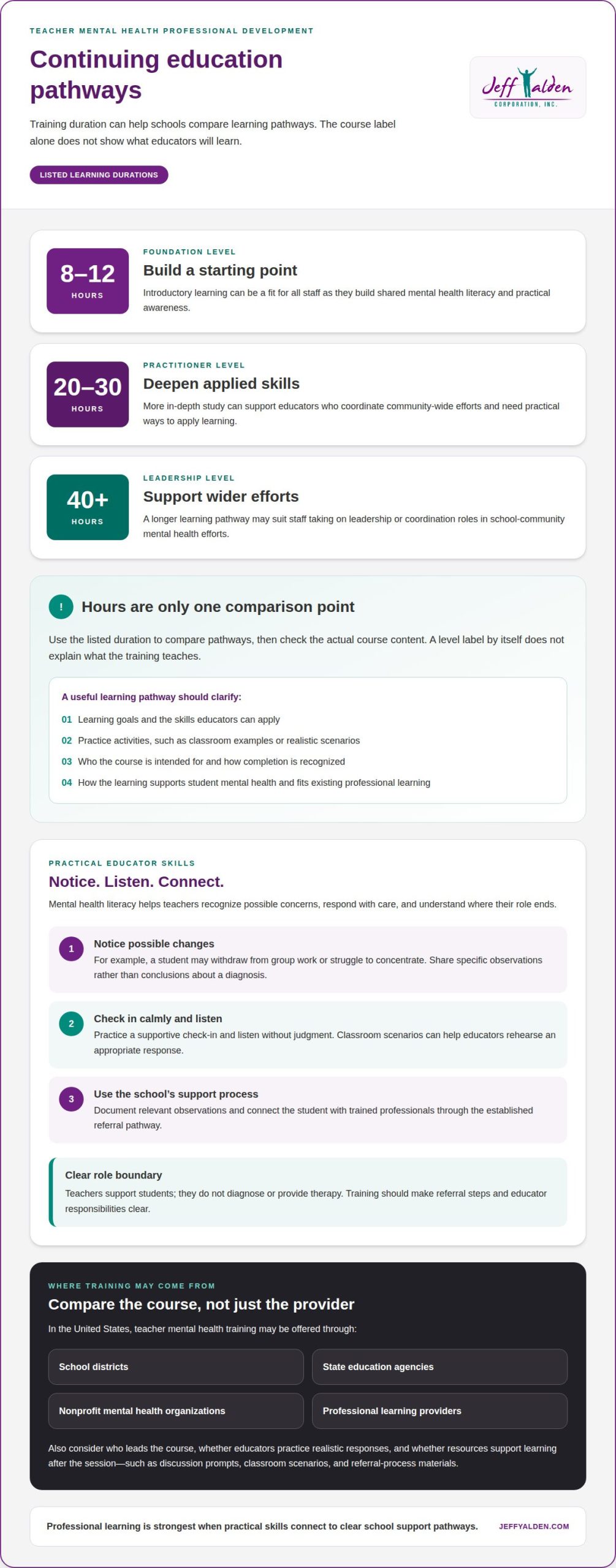
In the United States, teacher mental health training may be offered through school districts, state education agencies, nonprofit mental health organizations, and professional learning providers. Formats and credentials vary, so focus on course content, intended audience, and skills educators can apply.
Continuing Education
Continuing education can help educators build knowledge over time, rather than treating one workshop as the finish line. Foundation-level training is listed at 8-12 hours, practitioner-level training at 20-30 hours, and leadership-level training at 40+ hours. These durations can help schools compare learning pathways, but the label alone doesn’t show what a course teaches.
Look for clear learning goals, practice activities, and an explanation of how completion is recognized. A school team might choose introductory learning for all staff, then deeper study for educators coordinating community-wide efforts. Ask how the content supports student mental health and fits existing professional learning.
Educator Mental Health Literacy
Mental health literacy helps educators recognize possible concerns, respond with care, and understand where their role ends. Training might use classroom examples, such as a student withdrawing from group work or struggling to concentrate. Educators can practice a calm check-in, listen without judgment, and follow the school’s established support process.
Useful learning also addresses educator well-being. A staff session might include a brief reflection on stress, peer discussion, and ways to connect with colleagues or school administrators. This can help foster a healthier school community without asking teachers to diagnose or treat students.
Training Organizations and Resources
Training may come from school systems, state education agencies, nonprofit mental health organizations, or professional learning providers. Compare what each course teaches, who leads it, and whether educators practice realistic responses. Video examples can make scenarios concrete: pause after a classroom interaction, discuss what the educator noticed, then identify an appropriate next step.
Use resources that support learning after a session, such as discussion prompts, classroom scenarios, and referral-process materials. School-community mental health education works best when staff can engage families and colleagues with consistent, accessible language. A practical next step is to connect each resource to a specific staff learning goal.
Collaboration with counselors and school psychologists
Teachers see students in daily routines; counselors and school psychologists bring mental health expertise. Share specific observations, such as a sudden change in participation, rather than conclusions about a diagnosis. Together, staff can identify a supportive next step and help avoid making the student repeat their story to every adult.
Make the school referral process clear before a concern becomes urgent. Training can show educators whom to contact, what observations to share, and how to follow up. For example, a teacher might note when a student began withdrawing, describe the effects in class, then speak with the designated counselor. An administrator can clarify how staff share updates while respecting student privacy.
Implementation takes more than one staff meeting. A school can schedule case-based practice, agree on staff roles, and revisit the process after educators use it. Counselors can explain how they prefer teachers to raise concerns; teachers can share what they observe in class. This exchange helps make support part of school practice, rather than a last-minute response.
School refusal calls for coordinated, student-centered support. A counselor, family, and school team can explore what makes attendance difficult, such as stress, peer concerns, or worries about falling behind. They can plan manageable steps toward reconnecting with school and review what helps. Teachers can contribute classroom observations without labeling the student or promising a quick return.
Staff wellness belongs in the same conversation. Educators need space to discuss the emotional strain of supporting students experiencing depression or distress, and to identify where colleagues can share the load. Evidence-informed training can include realistic scenarios, time for staff reflection, and a clear route for raising concerns. Schools seeking to strengthen student mental health conversations can explore school-community mental health support as part of that wider effort.
Teacher boundaries and referral to trained professionals
Educators can notice concerns and support students, but they aren’t expected to diagnose or provide therapy. Effective training combines practical classroom strategies with clear referral steps and role boundaries.
Competency and Training Outcomes
Before training, assess educators’ confidence and mental health knowledge to identify specific learning gaps. Topics should include recognizing possible warning signs, listening without judgment, responding supportively, and connecting students with trained professionals. Practice scenarios help educators choose informed next steps without taking on a clinical role.
Measure more than satisfaction. Scenario-based evaluations can show how staff make decisions, while behavioral measures can track whether they apply strategies in practice. Reviewing referral patterns can also help a district assess whether support services are being used appropriately. These measures can reveal where a program needs adjustment.
Keep the boundary clear in every classroom: notice, listen, document relevant observations, and use the school’s referral pathway. If a student shares a concern, an educator can acknowledge their experience and involve appropriate school staff. Teachers shouldn’t promise confidentiality or attempt treatment; the response should connect the student with trained support.
Choosing and Implementing Training
Choose training that meets the district’s needs, builds practical skills, and explains how staff should refer concerns. Establish referral pathways before training begins, including who receives concerns and how educators share observations. Use realistic scenarios to practice these steps, then offer follow-up learning so staff can apply them consistently.
Schools can sustain training by involving administrators, counselors, and educators in planning and review. Identify competency gaps, set learning objectives that address them, and assess outcomes through scenarios and behavioral measures. Adjust the program if results reveal uncertainty or inconsistent referral practices.
Program costs depend on its scope, delivery format, and intended audience; pricing is provided after a quote request. A district can define those factors while setting learning goals and an implementation plan. This keeps the decision focused on usable skills, clear boundaries, and a process staff can maintain.
Mental-health-focused professional development
Effective professional learning connects emotional support with everyday instruction. Educators can practice giving advance notice before schedule changes, asking open-ended questions that don’t pressure students, and using predictable routines. These small choices shape how students experience learning, social connection, and classroom safety. The goal is a supportive environment, not a clinical role.
Use classroom scenarios to make strategies concrete. For example, teachers can offer several ways to participate and let a student pass rather than forcing an answer. Differentiated instructional approaches and resources help educators respond to different learning needs. Training can also show teachers how to frame mistakes as part of learning, recognize effort, and encourage students to try challenging work.
Belonging deserves its own place in professional development. Teachers can learn to connect individually with students, encourage positive peer connections, and notice students’ strengths. Children who feel they belong at school are described as more engaged in schoolwork, performing better academically, and less likely to experience loneliness, anxiety, and depression. A practical exercise might ask educators to identify one routine that helps each student feel noticed.
When a student shares distress, a calm response matters. Teachers can listen actively, validate what the student says, and remind them they aren’t alone. Regular, nonjudgmental check-ins can make it easier for students to express concerns. Educators can practice these conversations through role-play, focusing on respectful language and attentive listening rather than trying to solve every problem themselves.
Professional learning should include educators’ own wellness, too. Schools can make sessions collaborative and protect time for teachers to step away from screens, virtual meetings, and email. Build reflection and peer connection into the plan, then revisit which practices teachers can sustain. For school teams ready to make these conversations part of student support, explore teacher professional development focused on mental health and resilience.
Jeff Yalden: Teacher Professional Development
Jeff Yalden’s Teacher Professional Development helps school teams bring mental health conversations and resilience into their work with students. Turn to this support when educators need a shared, practical approach to engaging young people while maintaining clear boundaries between classroom support and clinical care.
Professional learning can complement school mental health staff by helping teachers foster open, respectful conversations and reinforce a culture where students feel heard. For a broader student-facing experience, High School Assemblies and High School Assembly Programs can also create space for honest discussion about mental health.
Every school community has its own needs. Jeff Yalden connects educator development with student-centered mental health conversations through Teacher Professional Development. Contact Jeff Yalden to discuss how this support can fit your school’s goals.
Make the Next Step a Shared One
Lasting support grows when a school turns good intentions into a shared commitment. Choose one practical next step: bring educators together to discuss how they want students to experience care, connection, and resilience in daily school life. Build from that conversation, keeping student needs and staff roles clear.
Mental health professional development for teachers can build that foundation, especially when it makes room for honest conversation and meaningful student engagement. Jeff Yalden offers Teacher Professional Development alongside High School Assemblies, High School Assembly Programs, and Teen Motivational Speaker presentations. These offerings can support school communities working to make mental health and resilience easier to discuss.
If you’re ready to explore a next step for your school, contact Jeff Yalden. The work begins with a conversation about what your educators and students need. Keep showing up with care, clarity, and courage. Those choices can help make school a place where young people feel seen and supported.
Frequently Asked Questions
What Are Some of the Best Ways Teachers Can Create a Supportive Classroom Environment?
Make everyday classroom routines predictable and give students respectful choices. For example, post the day’s agenda, offer a quiet way to participate, and let students choose between speaking or writing a response. After a conflict, follow up privately instead of correcting a student publicly. These small, repeatable actions can help students feel respected and make it easier to take part in learning.
What mental health professional development is available for teachers?
Mental health professional development for teachers can take the form of district learning sessions, facilitated workshops, or self-guided courses. Some focus on mental health literacy; others help staff practice classroom responses and understand school support procedures. Compare learning goals, practical exercises, and completion requirements. Courses that include realistic school situations can help educators connect new knowledge with decisions they may face during the school day.
Are there free mental health training courses or certifications for teachers?
Free learning may be available through school or district sessions and openly accessible educational materials. However, free training doesn’t automatically include a certificate or continuing education credit. Before selecting a course, review its stated learning objectives, intended audience, and proof of completion. If staff learning needs to count toward professional development, align the course with the district’s requirements.
What training helps teachers recognize and respond to student mental health concerns?
Look for training that combines recognizing concerns, communication practice, and school response procedures. A useful exercise might present a student who has stopped joining group activities, then ask educators to describe observable changes without diagnosing the cause. Staff can rehearse a supportive check-in and identify the appropriate school contact. This prepares teachers to respond thoughtfully while leaving assessment and treatment decisions to trained professionals.
What are teachers’ legal and ethical responsibilities when a student needs mental health support?
Teachers should follow their school’s referral and safety procedures, share relevant observations with designated staff, and avoid diagnosing or providing therapy. If a student discloses a concern, listen respectfully and explain that appropriate adults may need to help. Keep records factual, such as noting missed assignments or a change in participation. Specific legal duties vary by location, so schools should communicate applicable procedures clearly to staff.
How effective is mental health professional development for teachers?
Training is useful when educators can apply what they learned in realistic situations, not just describe the session as helpful. For example, ask a teacher to practice responding to a student who says they feel overwhelmed, then consider whether the response is supportive and follows school procedures. A workshop can build awareness, while ongoing practice and school support help learning become part of daily work.
