
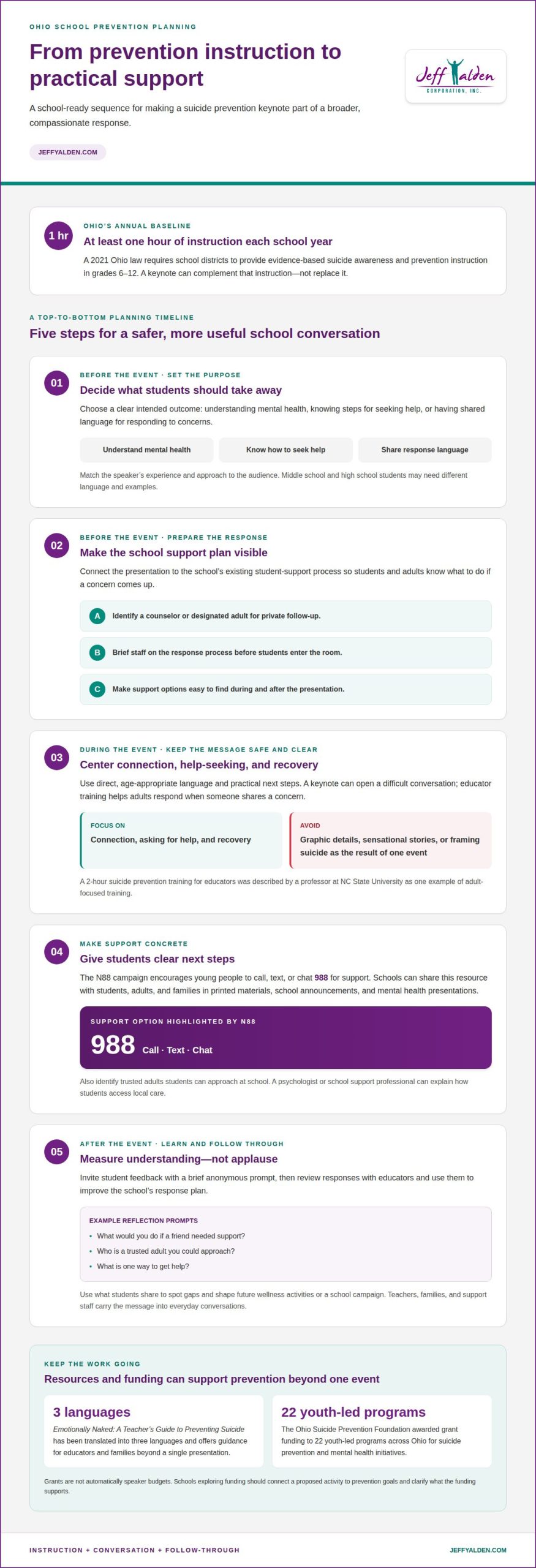
Ohio school districts must provide at least one hour of evidence-based suicide awareness and prevention instruction each school year in grades 6-12, according to Ohio Laws. A teen suicide prevention speaker in Ohio can bring that subject into a live, human conversation through a keynote and educator training. These sessions can complement required instruction, not replace it. The distinction matters. Students and educators need clear, compassionate ways to talk about mental health and recognize when someone may need support.
You already know this work takes more than a single presentation. Students need language they can use, space for honest conversation, and practical guidance from the adults who support them. Here, you’ll learn how a teen suicide prevention speaker in Ohio can address adolescent mental health in assemblies and educator training, what Ohio’s school-year requirement means, and how these approaches work together. The goal is not to create fear. It is to build understanding, strengthen connection, and make it easier to speak up when a young person is struggling.
Key Takeaways
- Understand how Ohio’s school-year suicide prevention instruction can sit alongside broader conversations about adolescent mental health.
- Learn how a keynote and educator training can help schools approach difficult conversations with care and practical purpose.
- See how the N88 campaign encourages young people to call, text, or chat 988 for support.
- Explore the kinds of speakers and Ohio organizations connected with school and youth-group prevention efforts.
Mental health and suicide prevention in adolescence
Ohio schools have a defined starting point. According to Ohio Laws, a 2021 Ohio law requires school districts to provide at least one hour of evidence-based suicide awareness and prevention instruction each school year in grades 6-12. That instruction can introduce warning signs and response steps; a keynote can bring those ideas into a direct conversation about mental health, resilience, and asking for help. School leaders should connect any presentation with their existing student-support process.
For immediate support information, the N88 campaign encourages young people to call, text, or chat 988. Schools can share this resource with students, adults, and families in printed materials, school announcements, and mental health presentations. Make the response concrete: explain that reaching out is a step toward support, and identify trusted adults students can approach at school. A psychologist or school support professional can help explain how students access local care.
Funding can support prevention work, though grants are not automatically speaker budgets. The Ohio Suicide Prevention Foundation awarded grant funding to 22 youth-led programs across Ohio for suicide prevention and mental health initiatives. Girl-led community efforts can build on that model by developing peer-led awareness activities, family conversations, or school campaigns. A school exploring funding should connect the proposed activity to its prevention goals and clarify what the funding supports.
Before a keynote or conference session, define the intended outcome: clearer steps for seeking help, stronger understanding of mental health, or shared language for responding to concerns. Afterward, invite student feedback with a brief anonymous prompt, such as asking what they would do if a friend needed support. Review the responses with educators and use them to improve the school’s response plan. Applause alone does not show whether a presentation made a difference.
Books and educational resources can keep the conversation going after an event. Emotionally Naked: A Teacher’s Guide to Preventing Suicide has been translated into three languages and offers educators and families guidance beyond a single presentation. Schools can pair a book discussion with staff learning and share appropriate materials with families. Mental health education belongs in ongoing school conversations, not only during a crisis or awareness event.
Suicide prevention keynotes and educator training
A keynote can open a difficult conversation; educator training turns that conversation into a focused response. A professor at NC State University described a 2-hour suicide prevention training for educators. That example highlights two distinct needs: students need clear, compassionate language, while adults need to know how to respond when someone shares a concern.
What evidence-based guidelines should speakers follow when discussing suicide with teens? Keep the message direct and age-appropriate, avoid graphic details or sensational stories, and focus on connection, help-seeking, and recovery. Speakers should give students practical next steps and avoid presenting suicide as the result of one event, such as trauma, addiction, or a relationship crisis.
What experience should schools look for in a teen suicide prevention speaker? Look for experience working with adolescents, a clear understanding of mental health and prevention, and the ability to coordinate with school leaders and clinicians. A speaker drawing on lived experience should share personal material thoughtfully, connect it to practical learning, and make clear that personal experience is not treatment or a substitute for professional support.
Plan before students enter the room. Identify a counselor or other designated adult for private follow-up, brief staff on the response process, and make support options visible after the presentation. This gives students a clear next step if the topic causes distress or someone raises an immediate concern. It also helps adults respond consistently instead of improvising in a difficult moment.
Afterward, gather feedback about understanding, not performance. An anonymous prompt can ask students to name a trusted adult or describe one way to get help. Educators can review responses, spot gaps, and shape future wellness activities or a school campaign. A keynote can raise awareness; follow-through from teachers, families, and support staff carries the message into daily school life and the conversations adults model.
Who are reputable teen suicide prevention speakers available in Ohio?
For Ohio schools, a suitable speaker can discuss suicide responsibly, connect with teens, and work within the school’s support plan. The right fit could be a mental health professional, an educator with prevention experience, or a speaker who draws carefully on lived experience. These backgrounds differ. What matters is a clear purpose, age-appropriate delivery, and practical guidance students can use.
Match the speaker’s experience and approach to the audience. A middle school assembly needs different language and examples from a high school conference. Ask what students will learn, how sensitive questions will be handled, and what happens if a student becomes distressed. A strong presentation makes room for honest discussion without graphic details or dramatic storytelling, and connects students with trusted adults and appropriate support.
Review the speaker’s approach, not just a biography or promotional description. Look for a clear session outline, specific learning goals, and a plan to coordinate with school staff. Ask how the speaker distinguishes awareness from clinical treatment and frames personal stories. A session might, for example, focus on recognizing concern, starting a supportive conversation, and guiding a peer toward an adult.
Ohio’s prevention landscape includes the Ohio Suicide Prevention Foundation, an organization connected with statewide youth-focused initiatives. Its work illustrates why schools should consider how a guest presentation fits broader local efforts instead of treating one event as a complete prevention plan. Review the speaker’s materials, discuss the intended audience, and plan staff follow-up before the event.
After the session, use student feedback to see what was clear and what needs more explanation. An anonymous prompt can ask students to name a trusted adult or describe one way to seek help. Share themes with school support staff, not identifiable responses in public. This follow-through helps show whether the message supported the school’s goals and where future education should focus.
Which Ohio organizations provide suicide prevention speakers for schools and youth groups?
Ohio organizations contribute to prevention through youth programs, education, and community initiatives. The Ohio Suicide Prevention Foundation supports statewide prevention work. OhioGuidestone’s Tuscarawas County Youth to Youth program planned a student-led mental health and suicide prevention summit for middle and high school leaders from all seven county school districts. These examples show how schools can connect a guest presentation with local youth leadership and ongoing activities.
The Ohio Suicide Prevention Foundation’s Youth Advisory Council developed the youth-focused N88 campaign. Its materials help schools bring a youth-centered message into conversations about seeking support. The foundation has also awarded grant funding to youth-led prevention programs across Ohio. Those efforts are distinct from booking a keynote: they can inform a school’s broader prevention planning and student engagement.
County and community groups can contribute, too. High school students planned and implemented the Lawrence County Youth-Led Prevention Summit entirely themselves. This model gives young people leadership roles and creates space for them to shape conversations about mental health. Schools and youth groups can draw on such initiatives when planning prevention events or deciding how a speaker fits their goals.
To choose the right organizational connection, first define the event’s purpose. A school may need a student keynote, staff learning, or a youth-led community gathering. Align the format with the audience, local partners, and support available after the event. A speaker can open the conversation, for example, while a youth council or school team carries it into future activities.
Organizations and speakers serve different roles, but they can work toward a shared outcome: clearer conversations and stronger connection. If your school is planning a prevention-focused event, explore options for a school presentation that can support student engagement and fit the event’s purpose.
Jeff Yalden
Jeff Yalden helps Ohio schools bring teen mental health and suicide prevention into direct, engaging conversations with students. As a teen motivational speaker specializing in teen suicide prevention and crisis intervention, he connects these topics with resilience and reaching out for support. His High School Assemblies and High School Assembly Programs help schools make space for these conversations as part of broader student education.
Turn to Jeff when your school is planning a presentation on adolescent mental health and wants an engaging speaker with a clear, human message for teens. A school assembly can raise awareness, while educators continue supporting students through the school’s existing response and care processes. Contact Jeff Yalden to discuss a presentation for your students.
Take the Next Step Toward Meaningful Conversations
A school presentation is strongest when it contributes to a wider culture of listening. Before choosing your next step, consider what you want students to take away: a way to start an honest conversation, confidence to approach a trusted adult, or a stronger sense of connection at school. Then give educators room to continue those conversations in everyday interactions.
If you’re considering a teen suicide prevention speaker in Ohio, look for a message that respects students and leaves room for continued support. Jeff Yalden works with schools through High School Assemblies, Teen Motivational Speaker presentations, and High School Assembly Programs. These options help schools shape events around student engagement and mental health awareness.
Each school community has its own needs. A thoughtful conversation about your goals can help clarify the right direction for your event. Contact Jeff Yalden about speaking and take a meaningful step toward conversations that help students feel heard and connected.
Frequently Asked Questions
What topics and formats do teen suicide prevention speakers cover?
Speakers can address adolescent mental health, suicide prevention, resilience, and ways students can connect with trusted adults. Formats include student assemblies and professional development for educators. A school might pair a student presentation with a staff session on using supportive communication in everyday interactions. Choose a format that fits the audience and the event’s purpose.
How can an Ohio school book a speaker and prepare students and staff?
When contacting Jeff, share your school’s goals, student age group, and preferred format. Before the event, designate staff members who can support students, brief educators on the presentation’s focus, and clarify how students can seek help afterward. Explain the event’s purpose to students and plan a follow-up conversation so the message continues beyond the assembly.
