
A strong in-service day does more than fill a schedule. A keynote speaker for a teacher in-service day can make staff well-being part of the conversation, using interaction to help educators reflect on burnout, resilience, and the conditions that support students. The goal is a shared starting point, not a one-size-fits-all fix.
Educators give a lot of themselves. When exhaustion becomes routine, another presentation full of abstract advice can feel like one more demand. Staff need a chance to feel seen, participate, and connect their well-being with the work happening in classrooms.
This article explores why an education keynote can be a meaningful part of professional development, how an interactive session can open an honest conversation about burnout, and why staff wellness matters to student outcomes. You’ll also find practical considerations for choosing a speaker and shaping a day that leaves your team with ideas they can carry forward.
Key Takeaways
- Choose a speaker whose message fits your staff’s needs and gives the in-service day a clear purpose.
- Look for an interactive approach that invites educators into an honest conversation about burnout and well-being.
- Connect staff wellness with the classroom environment and the support students experience each day.
- Explore how Jeff Yalden’s school assembly programs can support conversations about resilience and mental health in school communities.
Why Book an Education Speaker?
An in-service day can bring educators together around a shared priority, from classroom engagement to staff well-being. A keynote gives the day a common focus, while a faculty meeting may call for a shorter, more targeted session. For district professional development, connect the speaker’s message to instructional priorities across schools, not only one team’s immediate needs.
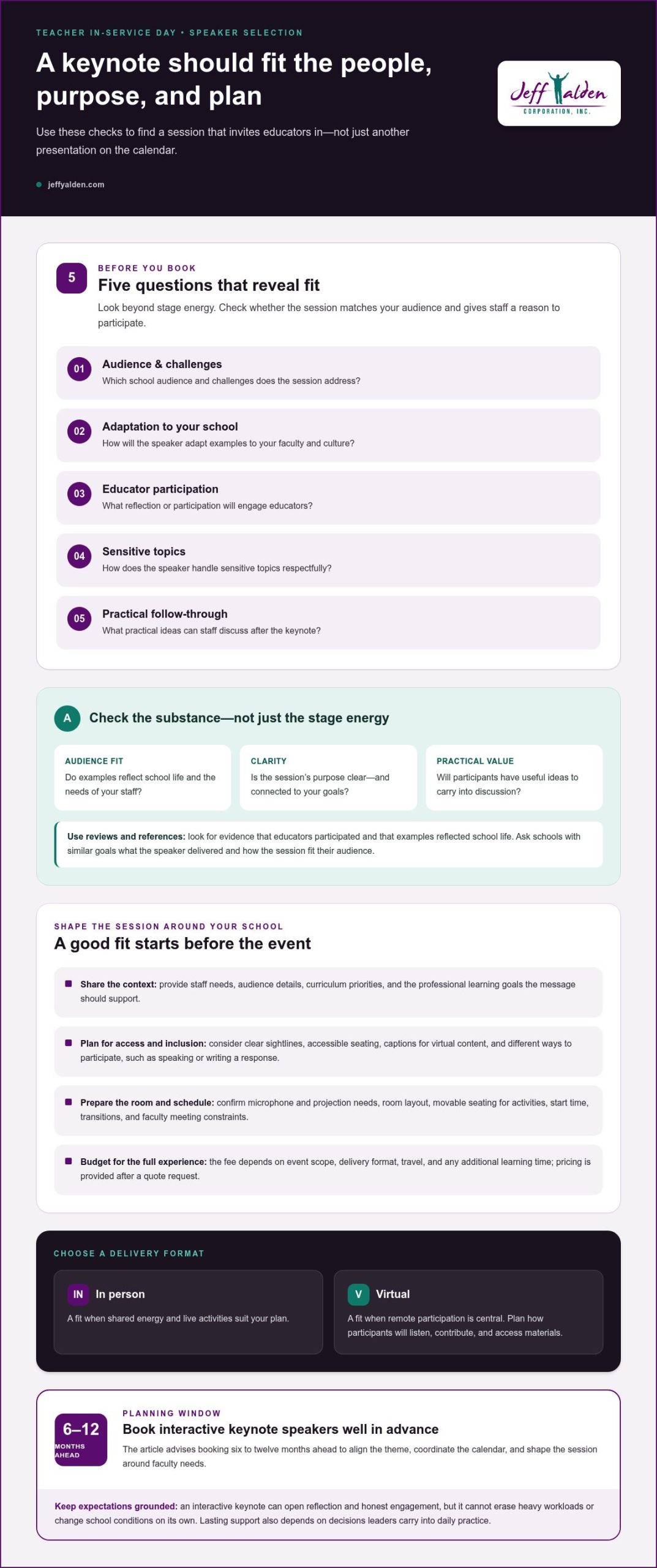
Compare speakers by audience fit, clarity, and practical value, not stage energy alone. Look for details in reviews: did educators participate, and did the examples reflect school life? Ask for references from schools with similar goals. A useful reference explains what the speaker delivered and how the session fit the audience.
Before booking, ask what the keynote covers, how the speaker adapts the content for teachers, and how participants will engage. Discuss how the message can connect with your district’s professional learning goals. The answers will show whether the session supports your plan or simply adds another presentation to the calendar.
Set expectations for the room and schedule early. Confirm microphone and projection needs, room layout, and whether activities require movable seating. Share the start time, transitions, and any faculty meeting constraints. For a virtual session, plan how participants will listen, contribute, and access presentation materials.
Build accessibility and inclusion into the plan. Consider clear sightlines, accessible seating, captions for virtual content, and different ways to participate, such as speaking or writing a response. Share context about the audience so examples and language respect the range of roles, experiences, and school communities.
Budget for the full professional learning experience, not only the keynote. The fee depends on the event’s scope, delivery format, travel, and any additional learning time, and is provided after a quote request. A keynote can energize an in-service day, while sustained professional learning may better serve goals that require practice, reflection, and follow-through.
Choose in-person delivery when shared energy and live activities suit your plan. Choose virtual delivery when remote participation is central. Either way, identify the instructional change you hope to support, then select a speaker whose approach makes the next step concrete.
Can an interactive keynote address educator burnout?
An interactive keynote can give faculty a structured way to examine burnout, name shared pressures, and consider practical responses. It cannot erase heavy workloads or change school conditions on its own. Its value is in creating space for honest engagement, followed by decisions leaders can carry into daily practice.
Start with your school’s actual needs. If staff describe feeling isolated, build in paired reflection and shared problem-solving. If the district is addressing staff culture, use scenarios about communication, boundaries, and team support. A curriculum change may call for examples of discussing new demands without losing sight of educators’ capacity.
Match the speaker’s expertise to the audience and purpose of the day. A session for new teachers might focus on asking for support and building routines. A faculty group facing difficult student conversations may need content on mental health, resilience, and compassionate communication. Ask how these themes connect to educators’ real responsibilities.
Before booking, organize the conversation around five questions:
- Which school audience and challenges does the session address?
- How will the speaker adapt examples to our faculty and culture?
- What reflection or participation will engage educators?
- How does the speaker handle sensitive topics respectfully?
- What practical ideas can staff discuss after the keynote?
These answers help distinguish a relevant session from a broad motivational talk. A keynote speaker for a teacher in-service day should understand the school audience, not just the stage. Share your goals, staff context, and curriculum priorities in advance so the content fits the day’s purpose.
Plan ahead. School organizers are advised to book an interactive keynote speaker six to twelve months in advance. This gives teams time to align the theme, coordinate the calendar, and shape a session around faculty needs. Interactive content can open reflection, but leaders still need to address the working conditions behind staff strain.
Connection between staff well-being and student outcomes
Nearly half the workforce is running on fumes. In schools, educator strain can affect daily classroom interactions, including patience, attention, and consistency. A tired teacher may find it harder to offer calm support during a difficult lesson. Staff well-being does not determine student success on its own, but leadership should treat staff support as part of the conditions that help learning happen.
Notice everyday signals. A faculty team might see rushed transitions, fewer check-ins, or less time for thoughtful feedback. These examples are useful starting points for discussion, not proof of a single cause. Leaders can ask which classroom moments feel hardest, then identify changes within their control. Clear communication, peer collaboration, and protected planning time can make support visible in the workday.
Equity matters. Students experience classrooms differently, and educators need space to reflect on whose needs are being heard. Teams might review how they respond when students disengage, miss work, or ask for help. A staff conversation about well-being can include these moments without blaming teachers or students. Keep the focus on practical support and respectful relationships.
Turn the conversation into a simple follow-through plan:
- Choose one classroom interaction staff want to strengthen, such as welcoming students after an absence.
- Identify a leadership action that supports it, such as creating time for educators to share approaches.
- Revisit the example in a faculty meeting and discuss what staff have learned.
Connect student outcomes to observable practice, not broad promises. A keynote can help staff name the human side of teaching; leaders then need to link that insight to school routines. When educators feel heard and supported, they have more room to build steady, caring relationships with students. That foundation supports learning, belonging, and the conditions for success across classrooms.
Where can schools find keynote speakers specializing in teacher professional development?
Start with your goal, then look to trusted connections within your school community. Ask district professional development leaders which speakers have addressed similar needs. A neighboring school’s principal may recommend someone whose session supported staff through a curriculum shift or difficult student conversations. Specific examples help you assess fit beyond a polished biography.
Use past in-service programs as a practical record. Review faculty feedback, session descriptions, and follow-up notes to identify themes that still need attention. If educators valued a session on resilience but wanted more discussion, look for a speaker who builds participation into the program. For a focus on staff well-being, prioritize relevant experience and an approach grounded in school life.
Make a shortlist by matching each speaker’s focus to one clear outcome. A school seeking stronger mental health conversations, for example, needs a different emphasis from a faculty team working on instructional collaboration. Compare sample topics, audience activities, and experience with educators. Discuss the shortlist with staff representatives so the choice reflects more than leadership’s assumptions.
Before making a decision, organize your findings in a simple comparison:
- Audience fit: Note whether the speaker’s examples apply to your grade levels and school community.
- Session approach: Record how participants engage, reflect, or practice during the keynote.
- Goal alignment: Connect the proposed topic to a specific staff or student need.
- Follow-through: Identify how faculty can revisit the ideas after the event.
This process turns “find a speaker” into a focused school decision. Once the need is clear, explore Jeff Yalden’s education-focused work and consider how it aligns with your staff’s goals. A well-matched speaker can give the day direction, while school leaders carry the conversation into ongoing professional learning.
Jeff Yalden: High School Assemblies
Jeff Yalden’s High School Assemblies can extend a school’s focus on well-being into conversations with students. They fit naturally when educators want students to hear messages about mental health and resilience alongside staff efforts to build a supportive school culture.
Use an assembly to complement, not replace, professional learning for teachers. Staff can reflect on the themes through their own work, while students engage with the message in a setting designed for them. As a Teen Motivational Speaker and High School Speaker, Jeff Yalden brings a youth-centered perspective to school communities.
If you’re planning an in-service day and want to connect staff well-being with student support, consider how a student assembly could fit the broader plan. Contact Jeff Yalden to discuss your school’s goals.
Make the Next Step Count
The most valuable in-service day doesn’t end when the room empties. Carry one commitment into the next faculty conversation: name the change your team wants to make, decide who will help move it forward, and make time to revisit what staff are learning. That’s how a meaningful keynote becomes part of a school’s ongoing work, rather than a moment that fades by Monday.
Choosing a keynote speaker for a teacher in-service day is a chance to set that work in motion with purpose. Jeff Yalden’s High School Assembly Programs can also support schools connecting educator well-being with student-facing conversations. Bring your school’s priorities and intended audience to the planning conversation.
Contact Jeff Yalden about your in-service day and take a thoughtful next step toward a more supportive school community.
Frequently Asked Questions
Can this keynote connect educator well-being and student outcomes?
Yes. A keynote can connect educator well-being and student outcomes by showing how adult support shapes daily interactions. After a tense classroom moment, for example, a calm, respectful response can help a student re-engage with learning. Leaders can reinforce that connection by discussing staff needs alongside student support plans, rather than treating educator wellness as separate from school success.
How Do You Choose a PD Speaker for Your School?
Choose a speaker whose approach fits a specific professional learning goal. Write down the change you hope educators will make, such as responding more confidently to student distress. Then compare each speaker’s session plan with that goal. A clear match shows how the content speaks to your school community and what educators can discuss or apply afterward.
What topics make an effective keynote for a teacher in-service day?
Effective topics address real challenges educators face, such as burnout, resilience, mental health, or supportive communication. A session on resilience might use a student conflict scenario to prompt reflection on adult responses and team support. Choose a theme that gives staff useful language for future conversations, rather than trying to cover every school priority in one keynote.
How do schools find and evaluate keynote speakers for teacher in-service days?
Build a shortlist from professional recommendations, then review each speaker’s proposed content. Ask how the examples will reflect your school community and whether the speaker can share references from relevant events. Before booking, agree in writing on the audience, session goals, and event logistics. Afterward, gather faculty feedback to guide future professional learning decisions.
What is the average fee for a teacher in-service keynote speaker?
An average fee is less useful than a quote based on your event’s requirements. The fee depends on the event and is provided after a quote request. For budgeting, clearly describe the audience, delivery format, event length, and travel needs. Comparing quotes for the same scope helps your school understand what each engagement covers.
What factors affect keynote speaker fees, including travel and event length?
Fees depend on the event’s scope, format, length, and travel requirements. A virtual address and an in-person session involve different arrangements, as does a keynote paired with additional learning time compared with a standalone talk. Share the schedule, location, audience, and requested format to help shape a quote around the actual program.
